
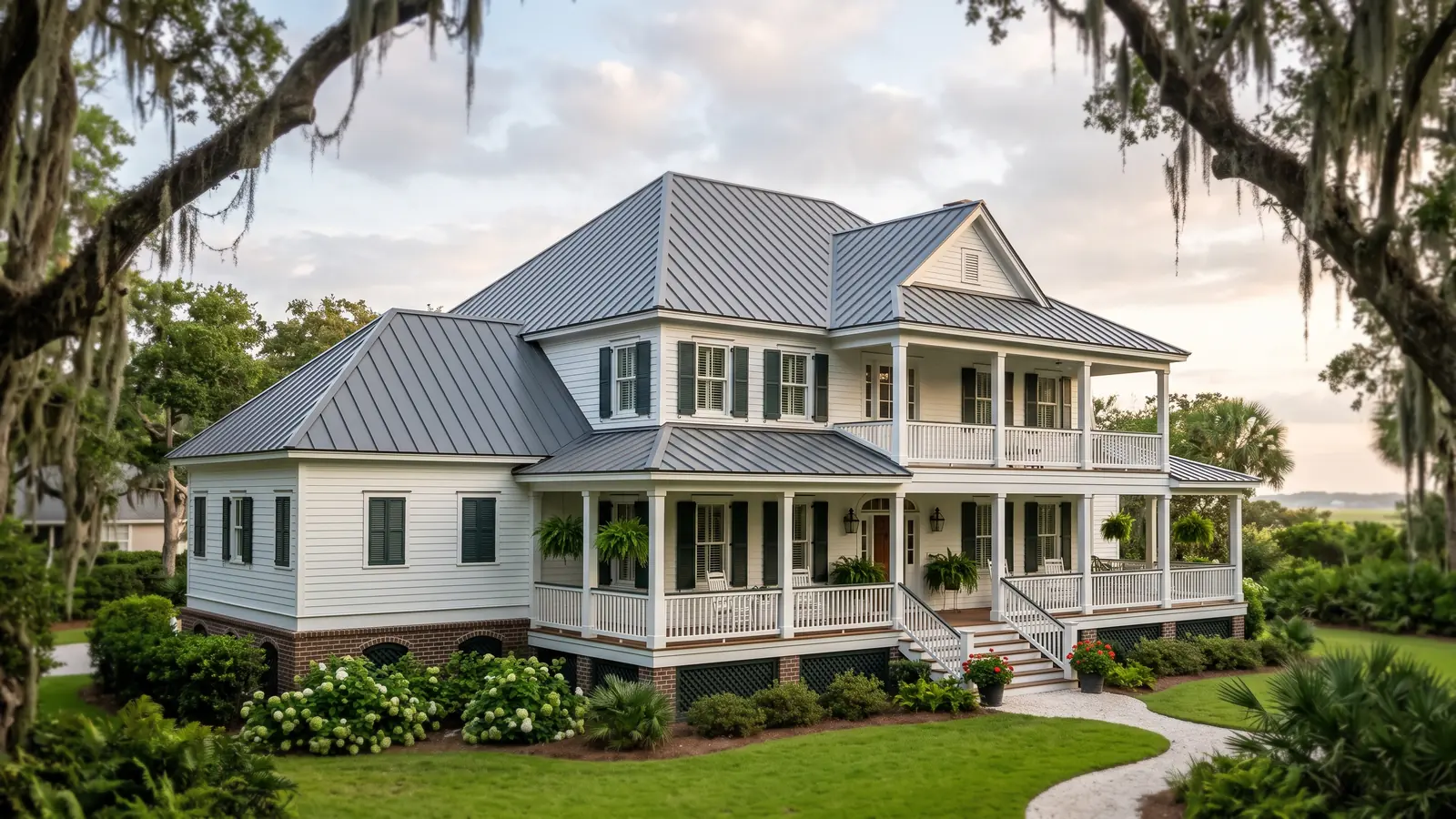
Storm Damage Roof Repair Types on Metal Roofs
Hurricane and thunderstorm damage on metal shows up in four main forms, and each needs different work.
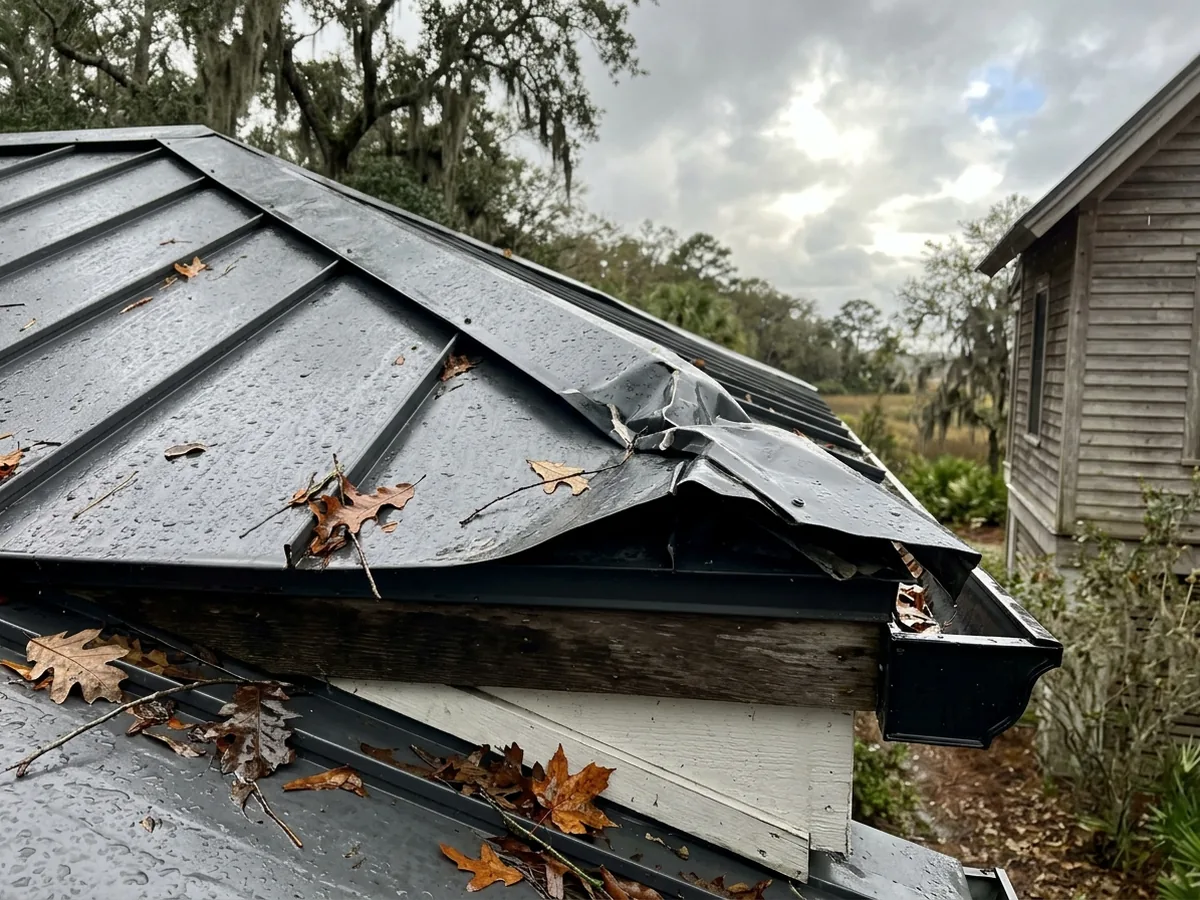
Wind-Lifted Panels and Opened Seams
Uplift pulls hardest at the eaves, rakes and corners. A panel that has lifted even an inch has usually pulled its clips or screws, and the panels next to it may be loose too. A repair means re-securing or replacing the panel and checking the clips under its neighbours, not caulking the gap. On screw-down panels, look for screws that have backed out along the edge rows. How a roof should be built to resist this in the first place is on Hurricane Metal Roofs.
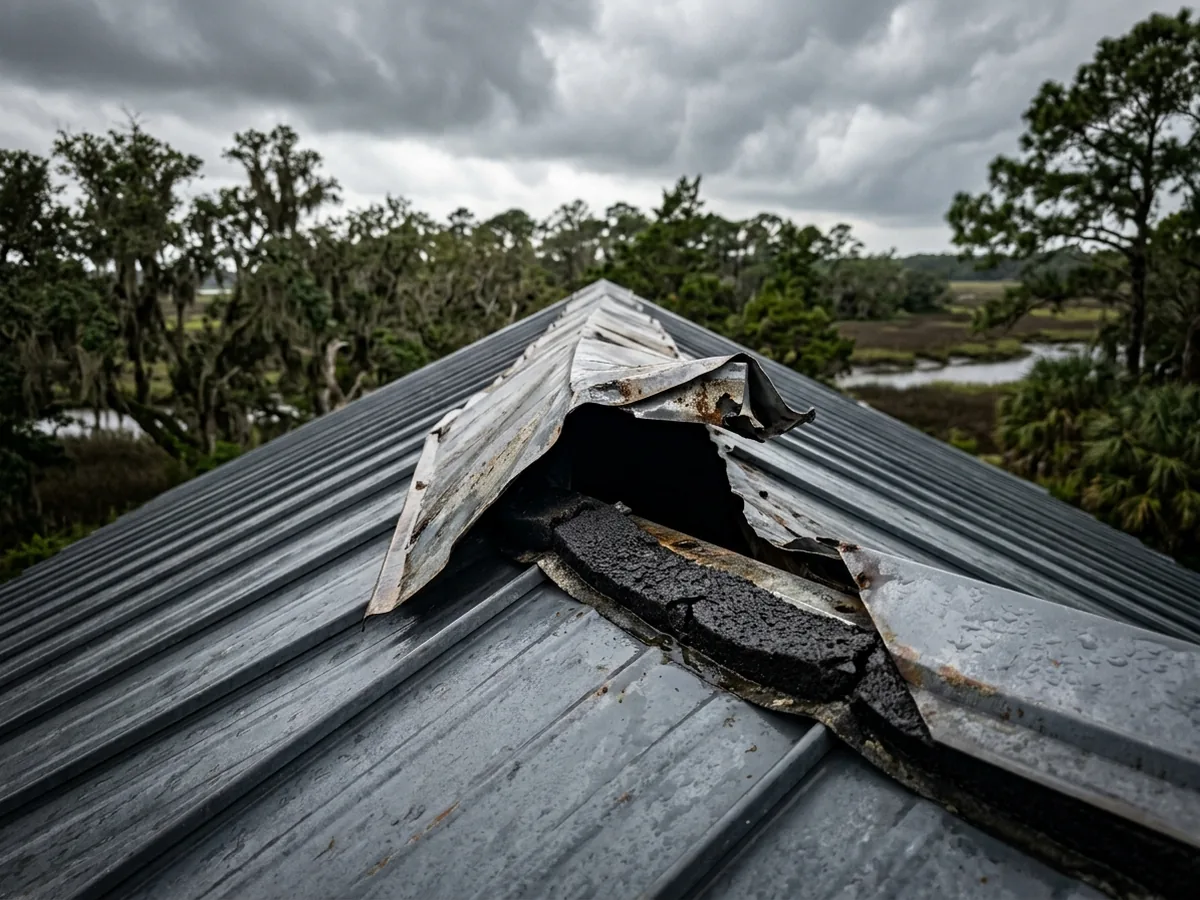
Torn Ridge Caps, Rake Trim and Flashing
Trim is thin and sits exactly where wind accelerates over the roof. A ridge cap pulled loose lets wind-driven rain straight into the ridge vent, and torn rake trim exposes panel edges to the next storm. Flashing at walls and chimneys can rip away from the masonry. These parts are usually bent or custom-cut sheet metal, so ask for replacements in the same metal as the roof, because mixed metals corrode each other.
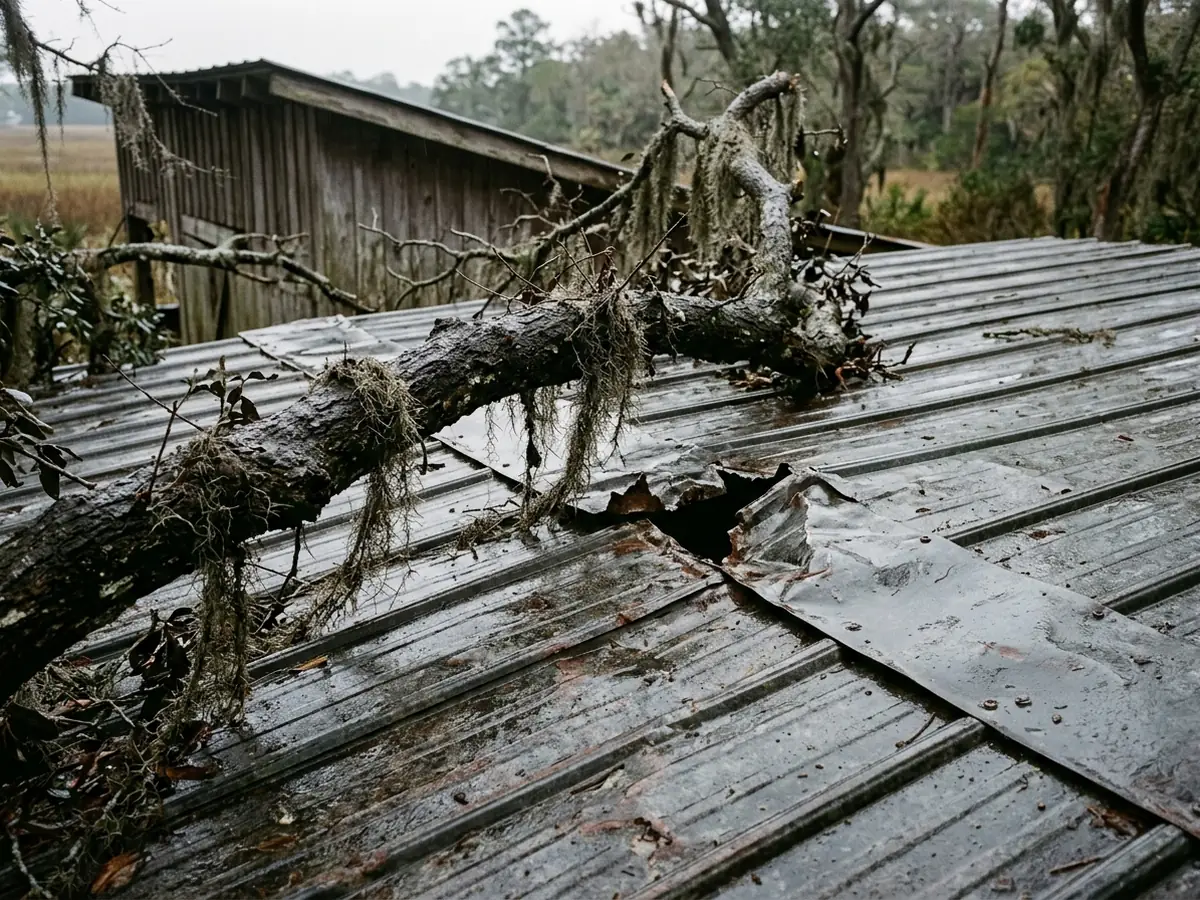
Punctures and Dents From Limbs and Debris
Live oak limbs and flying debris dent panels, crush seams and occasionally puncture the metal. A shallow dent with the paint unbroken is mostly a looks problem, though policies treat cosmetic dents differently, so read yours. A crushed seam or a tear lets water in and usually means a panel swap. Hail damage is judged the same way. Impact ratings for metal shingles are on Metal Shingles.
Emergency Tarps and Temporary Dry-In
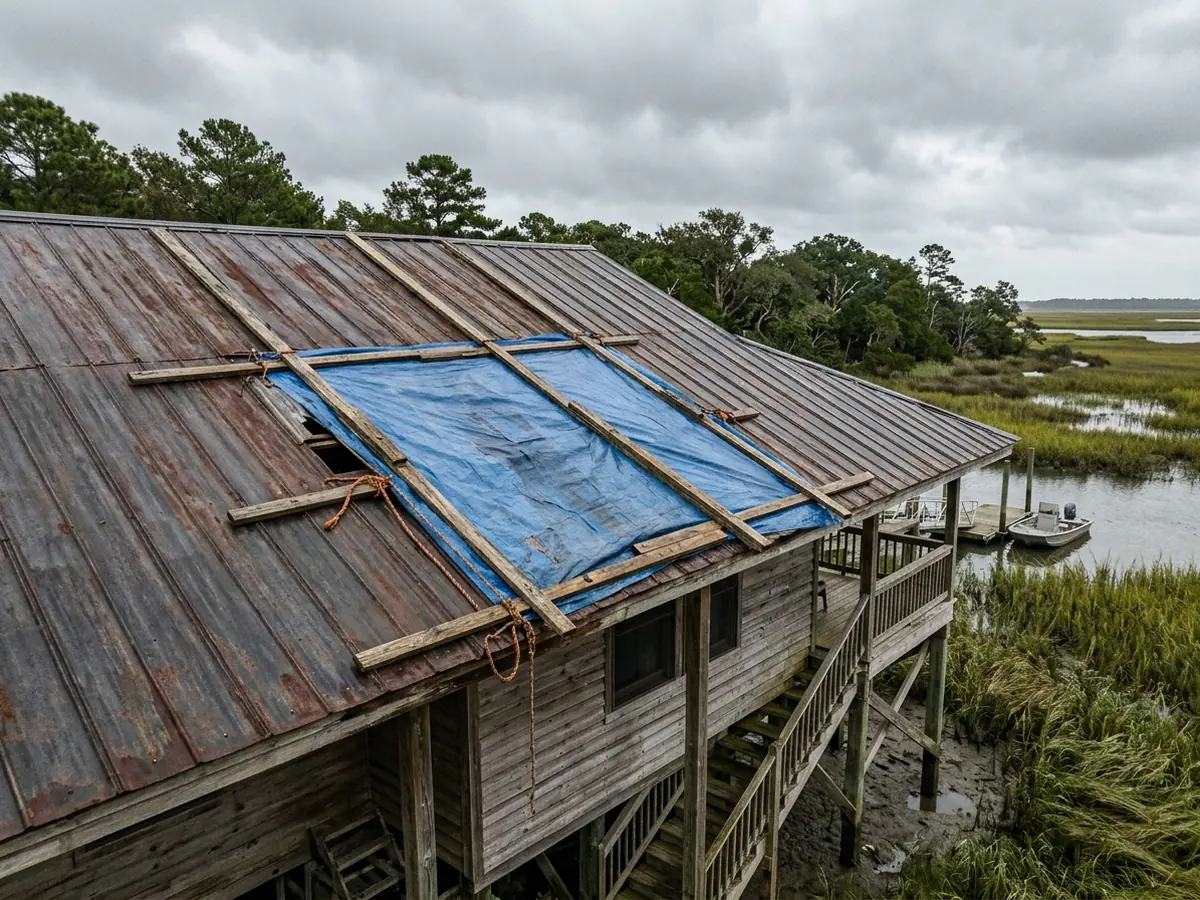
When a section is open, the first job is stopping the water. South Carolina's Department of Insurance tells homeowners to make temporary repairs to prevent further damage, to find out the insurer's preference for temporary repairs first, and to cover holes in the roof with materials such as plywood and heavy-duty plastic. A tarp on metal has to be held by battens or clamps, since nails through good panels make new leaks. Keep every bill and receipt for the temporary work.
Why Charleston homeowners call Charleston Metal Roofing Co.
- Estimate at no cost to you
- Metal, seam and fasteners named on paper
- Your request goes to a single local roofer
- Referral is free; you pay only the roofer you hire
Storm Damage Claims and Your Insurer
The Department of Insurance's disaster guide gives a clear order, and following it protects the claim:
Photograph first
Take photos of the damage before cleanup, and keep records that show the roof's age and condition.Temporary repairs only
Don't contract for permanent repairs, beyond temporary ones, until you have agreement with the adjuster or agent.Don't be rushed
The guide advises against signing repair contracts under pressure, suggests checking a contractor's credentials with your agent or adjuster, and says to discuss payment terms before you sign.Line-by-line bids
Written bids that list materials and prices line by line make the claim faster to adjust. Ask for the panel profile, metal, trim pieces and fastener type on the estimate.Flood is separate
Homeowners policies generally don't cover flood damage, which needs its own policy.Disputes
If you and the insurer disagree on building damage, review the estimate item by item with your contractor and the adjuster. The policy's appraisal provision is the next step.
A good roofer will give you dated photos of what they found on the roof itself, since most owners can't safely see the eaves and ridge from the ground.
Storm Season Timing in Charleston
The Atlantic hurricane season runs from June 1 to November 30, with its peak on September 10 and most activity between mid-August and mid-October. Rain piles onto the same months. Charleston International Airport's 1991-2020 normals show 52.51 inches of rain a year, with 74.4 days of a tenth of an inch or more, and June through September bring 25.79 inches of it, about 49%.
That timing shapes storm repairs in three ways:
Damage arrives in the wettest months
A roof opened in September can see heavy rain within days, so the temporary dry-in can't wait for the adjuster.Calls pile up after a named storm
Sending photos and the address early means the roofer arrives knowing what to bring.Pre-season checks are cheaper
Loose trim and backed-out screws found in May cost far less than a panel lost in September. See Metal Roof Inspection.
Storm Damage Repair or Replacement
Most storm damage on a metal roof is repairable panel by panel, if matching panels are still made and the rest of the roof is sound. Replacement makes sense when the damage runs across large areas, the profile or color is discontinued, or the roof was near the end of its life anyway. Ask the roofer to say which parts are storm damage and which are old wear, because the insurer will ask the same question.
Matching is the practical problem. Panel profiles and paint colors change over the years, and a replacement panel that is a slightly different rib height won't lock into its neighbours. If you still have the original paperwork, the panel name and color name save time. If you don't, ask the roofer to record them from the roof during the visit, so the next repair doesn't start from scratch. If the answer is a new roof, the permit and contractor rules are on Metal Roof Replacement.
See Metal Roof Repair in Charleston. See Metal Roof Inspection in Charleston.