
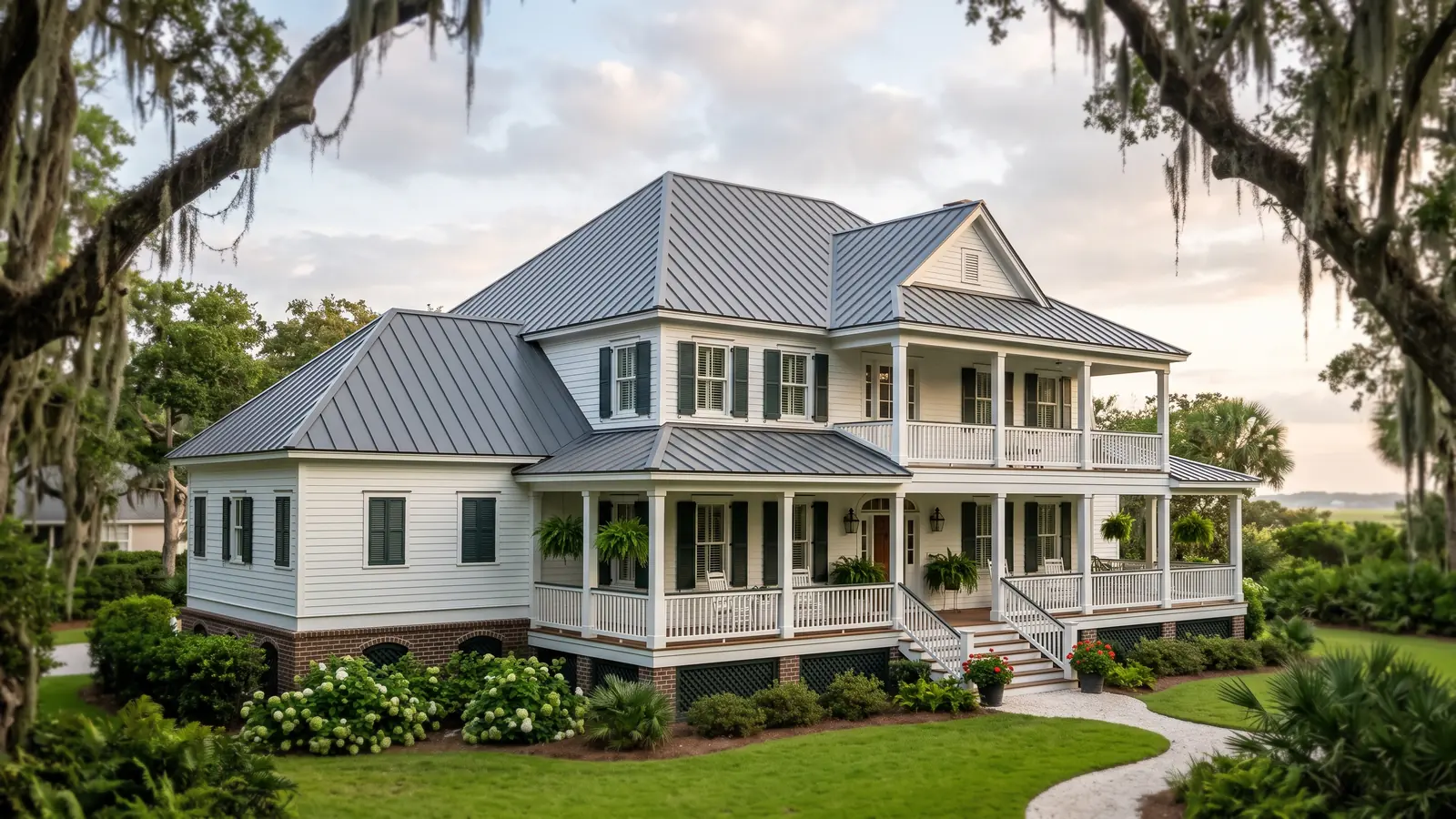
Metal Roof Repair Types by Where the Water Gets In
A repair starts by finding the entry point, and the fix depends on which part failed. Four kinds of repair come up again and again.
Screw and Washer Replacement
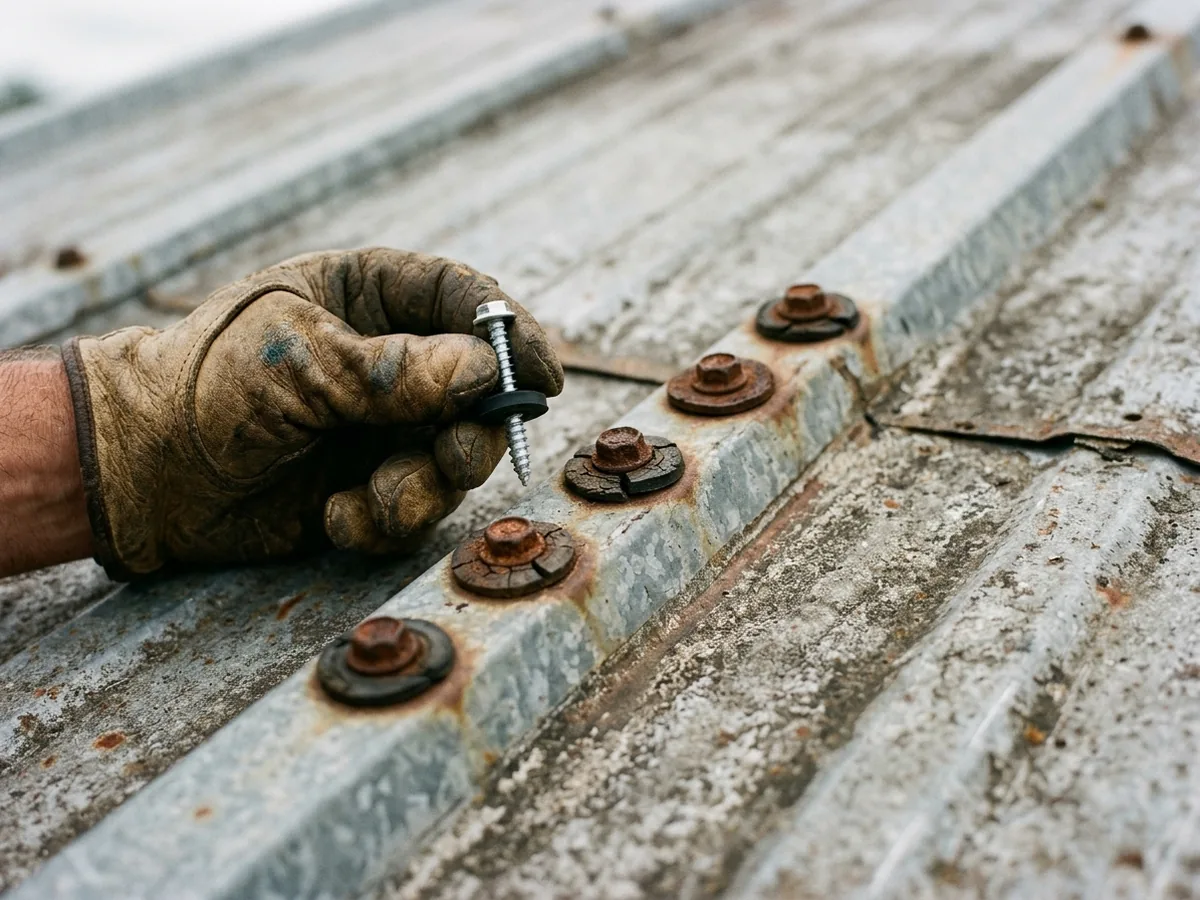
On 5V crimp, corrugated and R-panel roofs, every screw is a hole through the roof sealed by a rubber washer. When washers crack or screws back out, water follows the screw shank into the deck. The repair is new fasteners, often one size up so they bite fresh wood, with new washers.
What the new screws are made of matters as much as the washer. When the panel maker gives no instructions, the 2021 IRC calls for galvanized fasteners on steel roofs and copper, brass, bronze or 300-series stainless on copper roofs, and accepts stainless steel on metal roofs generally. A Metal Construction Association field study found that 300-series stainless fasteners aged well, while 400-series stainless fasteners corroded at some sites and will need replacing before the roof itself is worn out.
Stainless over coated steel near the water comes with a caveat, covered under mixed metals below.
Seam and Lap Leak Repair
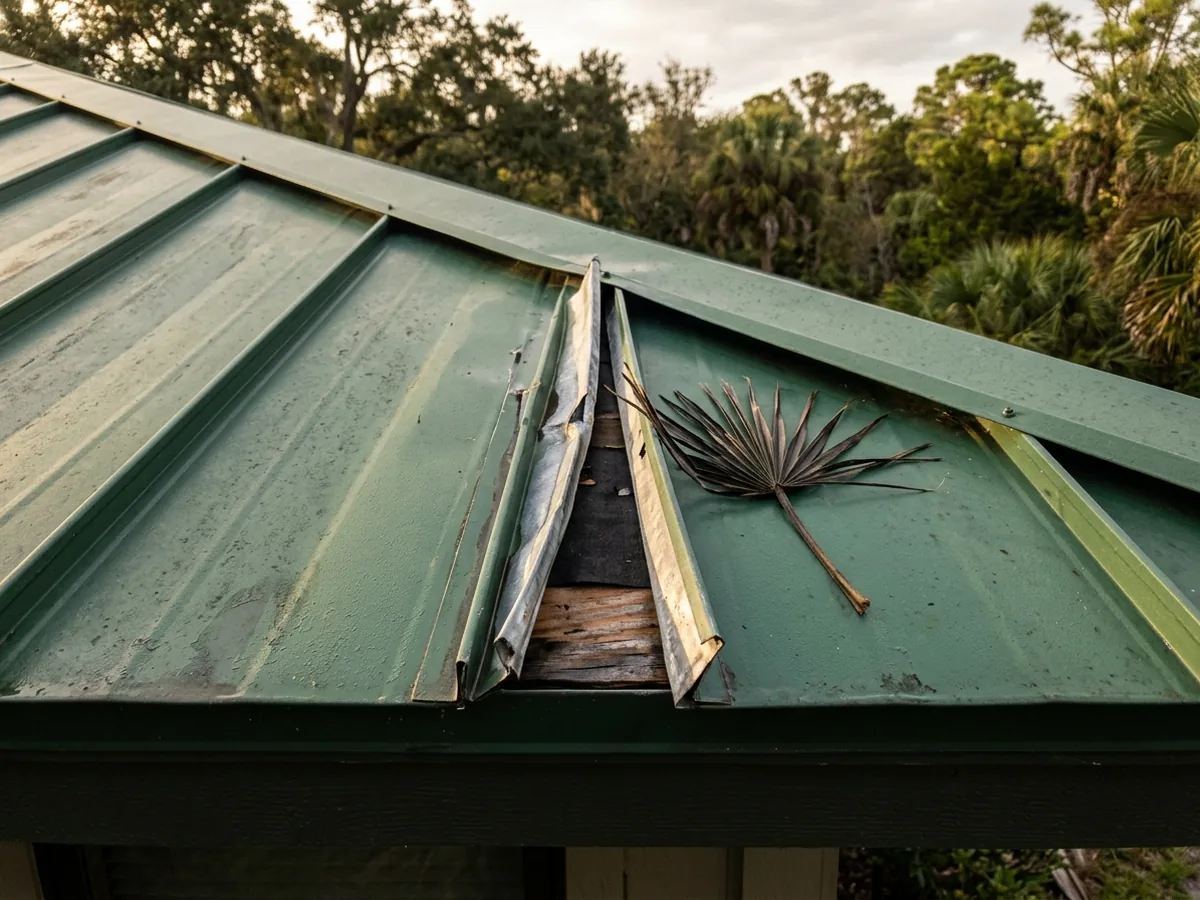
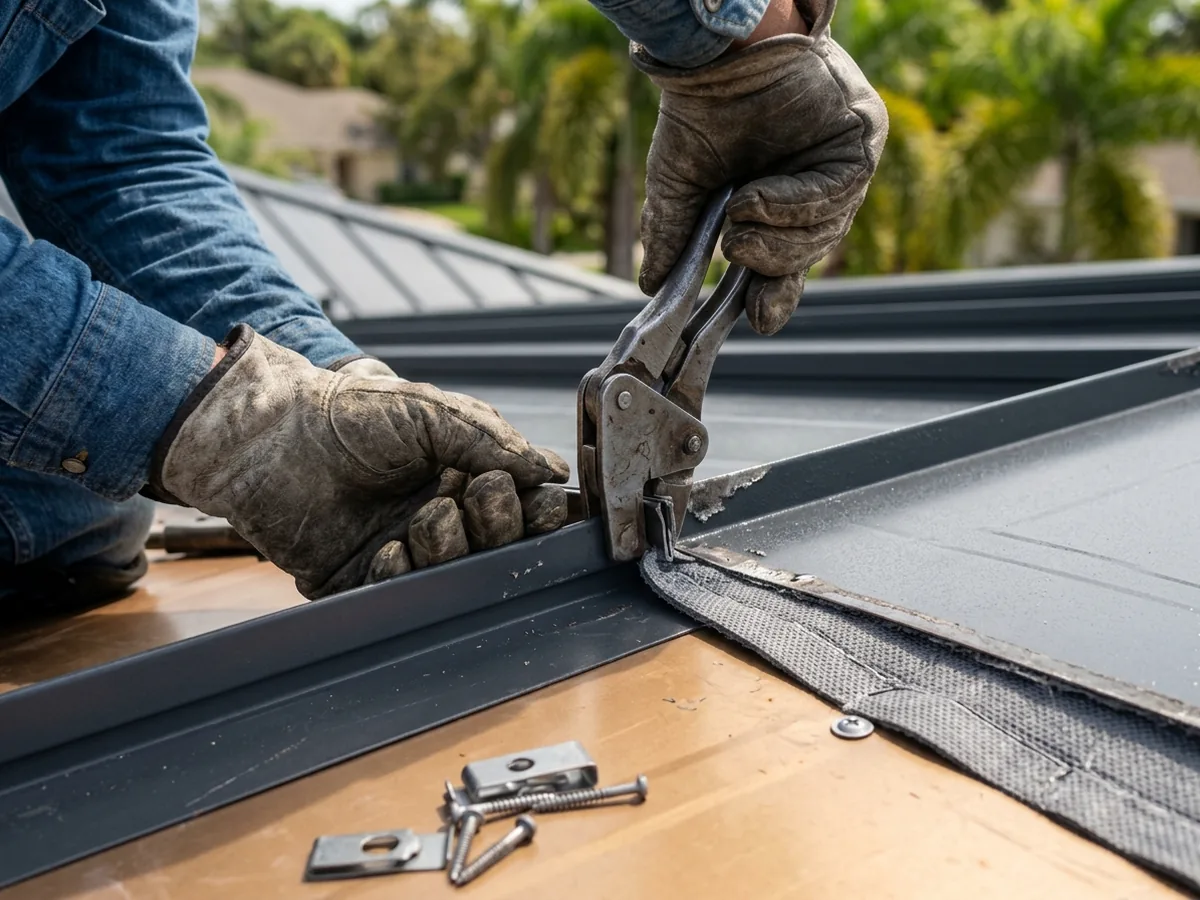
On standing seam, leaks come from seams pulled open by wind, snap-lock seams that have disengaged, and seams damaged by foot traffic or a falling limb. A mechanically seamed roof can be re-seamed. A snap-lock seam is re-engaged or the panel is replaced, depending on the damage.
On exposed-fastener roofs, water also gets in at the side laps, where panels overlap, and at the end laps on long slopes. The fix is new sealant at the lap and re-fastening, done to the panel maker's details. Those laps matter over the long run: the MCA field study found that the service life of the roofs it inspected depended more on the butyl sealant at laps and joints than on the hardware. On low slopes the code requires lap sealant where lapped panels go below the no-sealant minimum; those slope figures are on Metal Porch Roofs.
Flashing and Penetration Repair
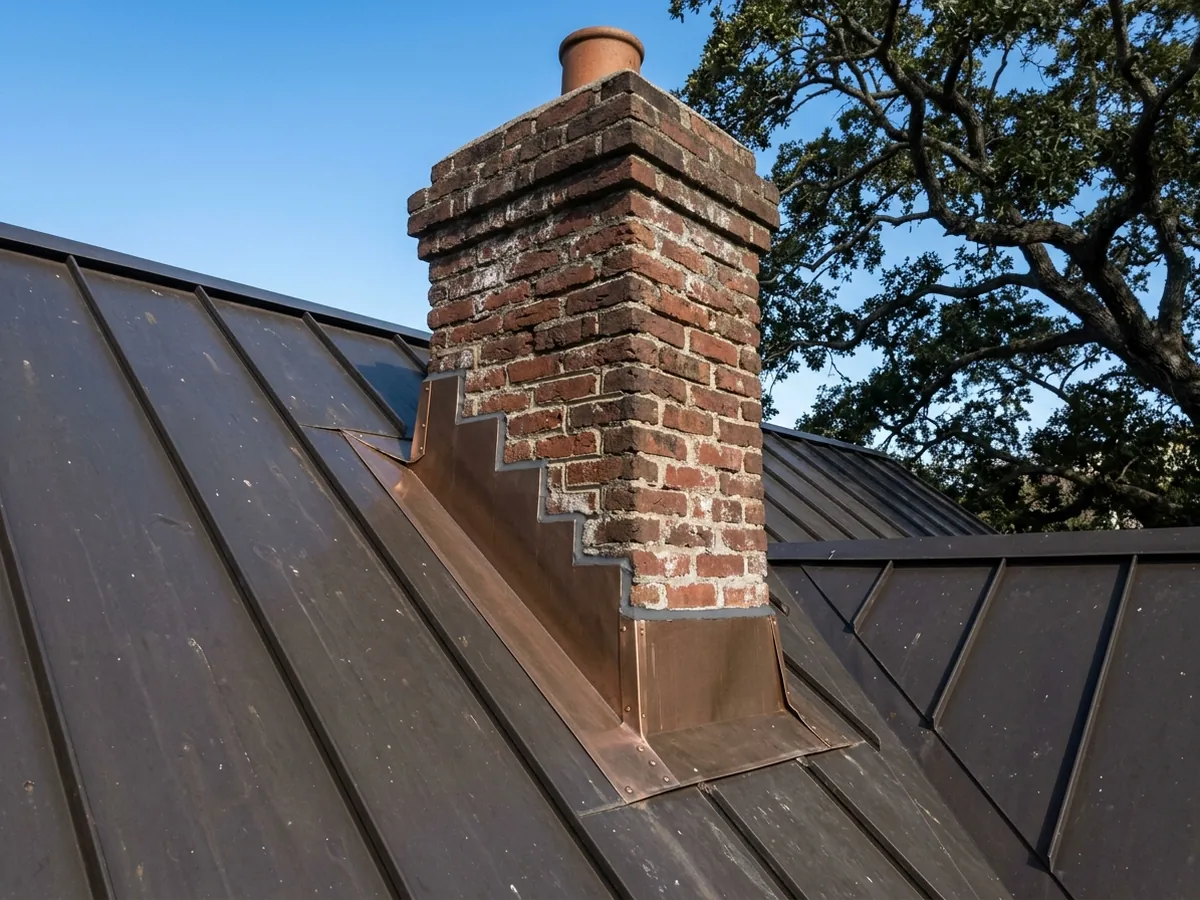
Wall flashing, chimney flashing, plumbing vent boots, skylights and roof-mounted equipment all interrupt the panels, and each joint has to shed water on its own. Rubber pipe boots crack in the sun. Chimney counterflashing pulls out of old mortar joints. Wall flashing tucked behind siding can be missing altogether.
The new flashing also has to be a metal that won't react with the roof; copper touching coated steel is the pairing a coil maker warns about. Flashing details for each spot are on Metal Roof Flashing.
Rusted Panel Replacement
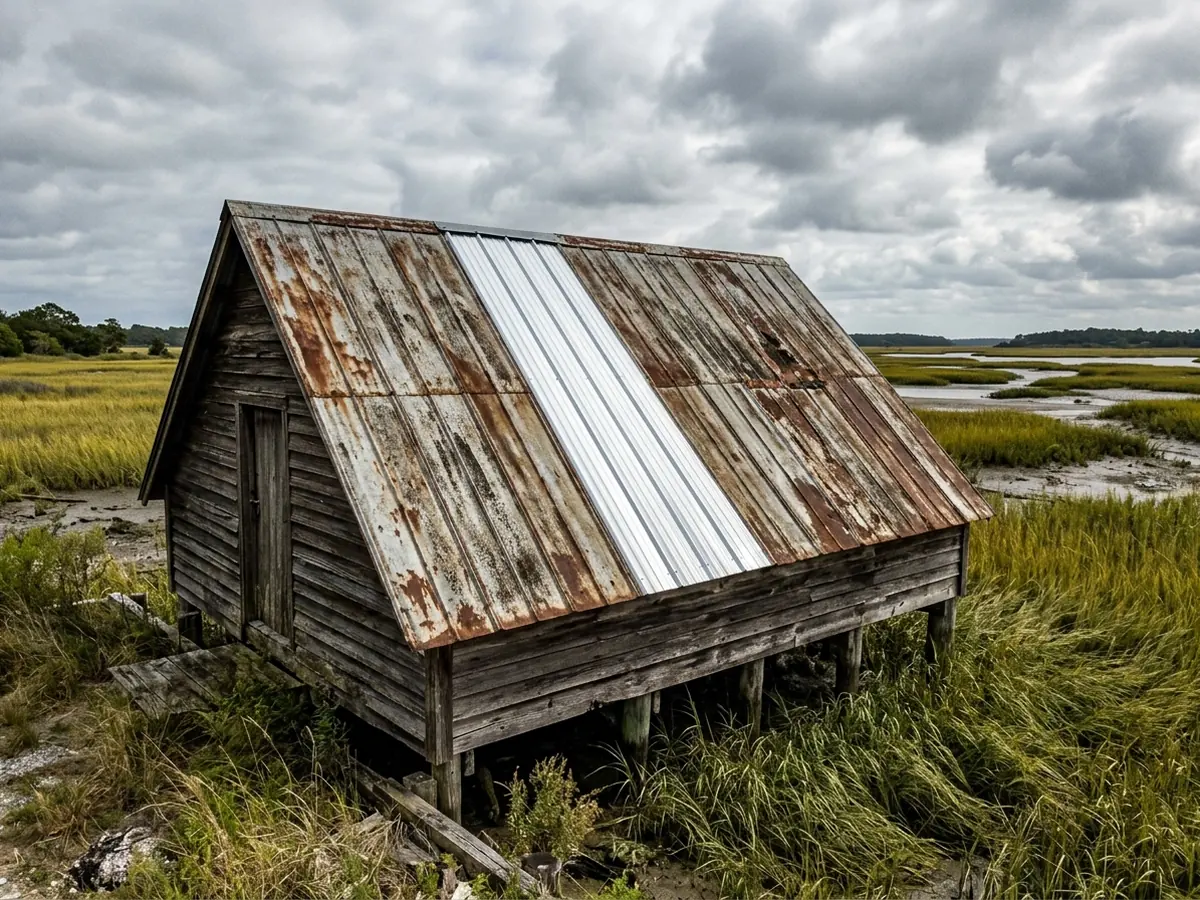
A panel with a rust hole, a dent that holds water, or a cut from a fallen limb can be replaced on its own. On exposed-fastener roofs, the bad panel is unscrewed, slid out from under its neighbors and replaced. Standing seam is harder, because seams interlock; one manufacturer designs its symmetrical seam so any single panel can come out without disturbing the panels beside it, but with other systems the neighboring seams may have to be opened.
Matching is the part to ask about: the same profile, the same gauge and a close color. A new panel that's a slightly different profile won't lap tightly with the old ones.
Why Charleston homeowners call Charleston Metal Roofing Co.
- Estimate at no cost to you
- Metal, seam and fasteners named on paper
- Your request goes to a single local roofer
- Referral is free; you pay only the roofer you hire
Metal Roof Repair Near Salt Water: Mixed Metals
Corrosion where two metals meet is one repair problem that sealant won't solve. The coil maker's bulletin lists three conditions for galvanic corrosion: two different metals, contact between them, and a corrosive environment such as salt air or water. Charleston supplies the third condition everywhere near the harbor, marsh and creeks.
Here are the bulletin's examples, put in roofing terms:
Stainless hardware on coated steel
Light fixtures, clips, rivets and screws of stainless set into aluminum-zinc coated panels. The bulletin says stainless isn't intended for these panels in corrosive environments and pairs it with aluminum panels instead. The MCA study, by contrast, saw no harm to the Galvalume coating from its 300-series fasteners, so near the water, ask what the panel maker specifies for your exposure.Copper against the roof
Copper flashing or other copper parts touching aluminum-zinc coated steel, which then corrodes faster.Copper-treated lumber
Treated wood touching metal panels or trim. Copper leached out by rain or condensation pits aluminum-zinc coatings even without contact.
The bulletin's remedy is to replace the corroded panels and to remove or relocate the mismatched metal. Sealing over the spot leaves the cause in place. The salt-water distance rules that steer the choice between steel and aluminum are on Aluminum Roofing.
Metal Roof Repair or Replacement: How to Tell
Repair is the better call when the damage is local: a run of failed screws, one leaking chimney, a few bad panels. The 2021 IRC also allows a protective coating over existing metal roof panels without a tear-off, so a roof with sound panels and tired paint can often be coated rather than replaced; see Metal Roof Coating and Painting.
Replacement makes more sense when rust has gone through panels across the roof, when the flashing and edge metal are rusted everywhere, or when every rain finds a new leak. A replacement brings its own permit and code steps, covered on Metal Roof Replacement. On historic buildings in the review districts, the Board of Architectural Review expects repair first, so start with Historic Metal Roof Restoration.
Metal Roof Repair Quotes: What to Ask For
The cause, with photos
Where the water got in and what failed, photographed before and after.Fastener material and size
Galvanized, 300-series stainless or another metal, and whether it matches what the panel maker specifies.Sealant and tape
The product used at laps and flashing, and whether it suits the panel's finish.Matching metal
Flashing and trim in a metal that won't react with the roof.Replacement panels
Profile, gauge and color, and where they come from.