
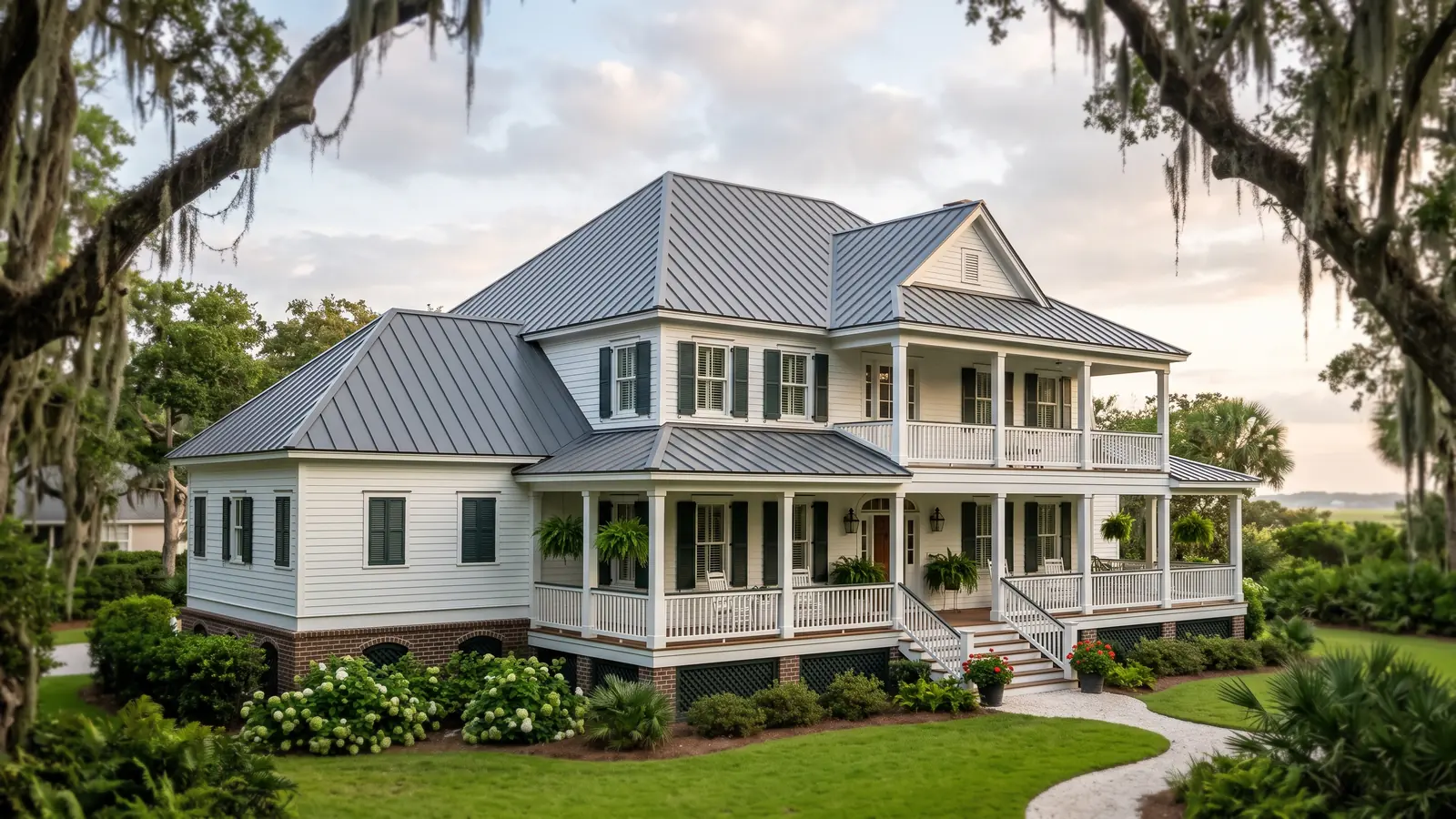
Stone Coated Steel Roofing Profiles
Stone-coated panels come in a handful of shapes. Each panel is roughly 16 inches by 4 feet, covering what would take several tiles or shingles, and is turned up and down at its edges so courses overlap. One manufacturer's specification lists the profiles below.
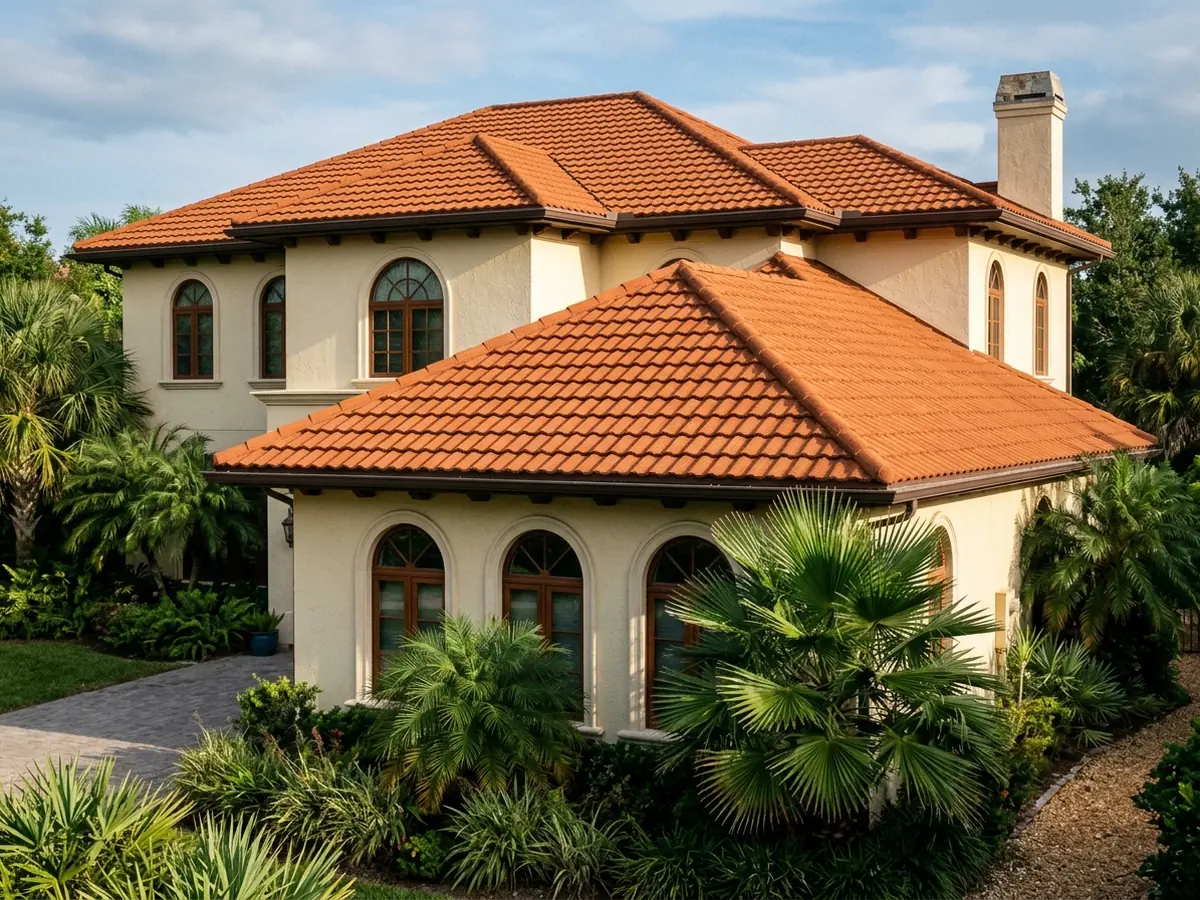
Stone-Coated Tile Panels
The tile profile copies a traditional low roofing tile. On a stucco house, or one that once had clay or concrete tile, it gives the same rhythm of shadow lines with steel underneath. In a terracotta or weathered red, the matte granule face is closer to clay than any painted panel gets.
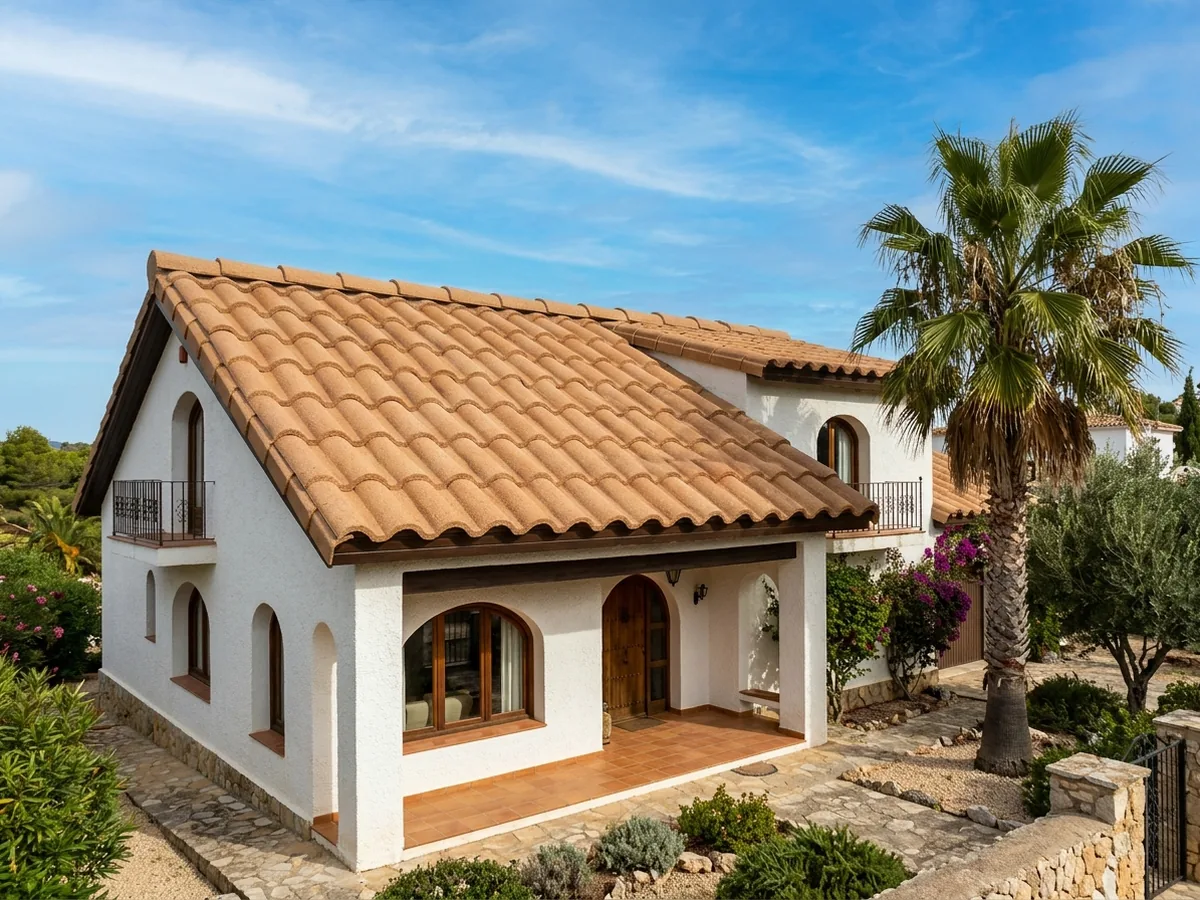
Stone-Coated Barrel-Vault Panels
Barrel-vault panels copy the rounded Spanish S-tile, with deep curves. It's the boldest of the profiles. Expect more trim and closure work at hips, ridges and eaves, where the open ends of the curves have to be finished. In our view it fits Mediterranean and Spanish revival houses and looks odd almost anywhere else.
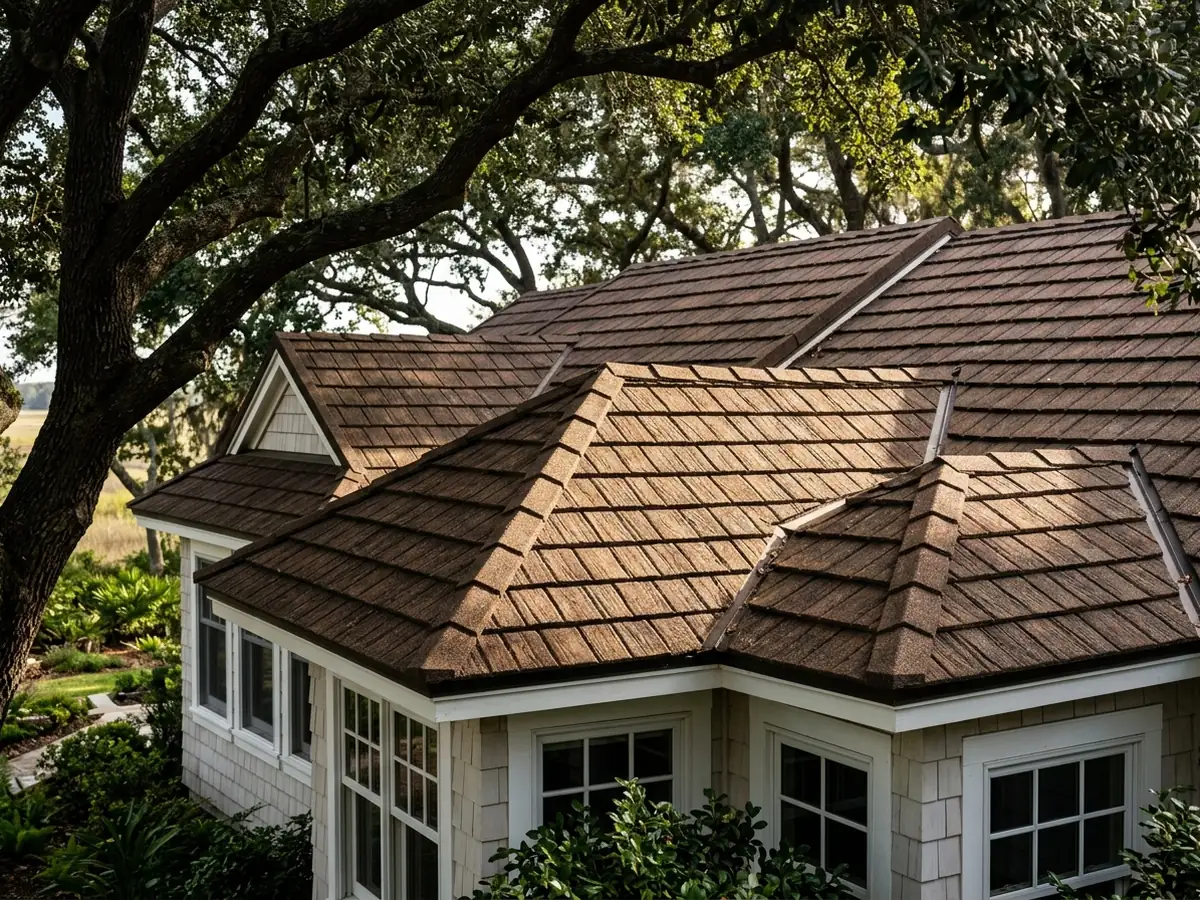
Stone-Coated Shake Panels
Shake panels are pressed with a wood-grain texture, and the granules soften the metal look further than a painted shake shingle can. On a cottage or shingle-style house they give the look of cedar in steel.
Stone-Coated Shingle Panels
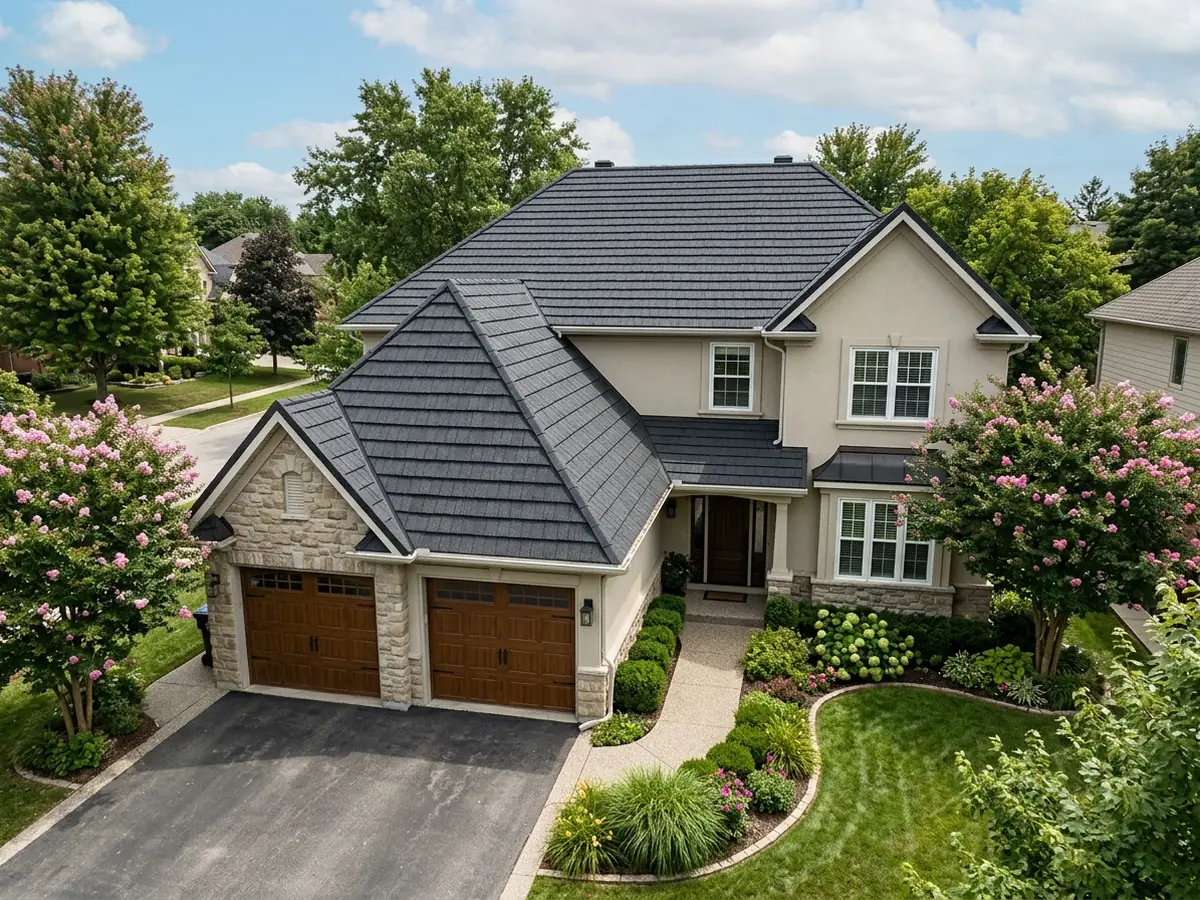
Shingle panels imitate dimensional asphalt shingles, one heavy-shingle version and one flatter version that interlocks along its front and back edges. This is the profile to choose when the goal is a roof that looks like the neighbors' shingle roofs, in a neighborhood or HOA that expects that look.
Why Charleston homeowners call Charleston Metal Roofing Co.
- Estimate at no cost to you
- Metal, seam and fasteners named on paper
- Your request goes to a single local roofer
- Referral is free; you pay only the roofer you hire
Stone-Coated Steel Panel Construction
One maker's specification spells out the layers:
Steel core
AZ50 Galvalume coated steel (ASTM A792), 0.017 inch thick.Base coat
An acrylic resin layer that holds the stone.Stone
Colored stone granules pressed into that base coat.Glaze
A clear acrylic coat over the granules.
The finished panel weighs about 1.3 pounds per square foot. That's about three times the weight of the aluminum shingle described on our metal shingles page, though still a light roof. Ask the roofer to confirm the framing if the house is old or the roof has sagged.
The granules are the look, and the coated steel under them does the work. Once a protective coating is worn or cut, the steel beneath can rust, so ask how cut edges at hips, valleys and rakes are finished and touched up.
Stone-Coated Steel Installation: Battens or Direct to Deck
The same specification allows several ways to install the panels:
Direct to deck
Panels fastened straight onto the sheathing, without battens.Battens
Panels hung on rows of 2-by-2 wood or formed steel battens.Counter battens
A second layer of battens running the other way, used on re-roofs.Elevated battens
A raised batten system that lifts the panels off the deck.
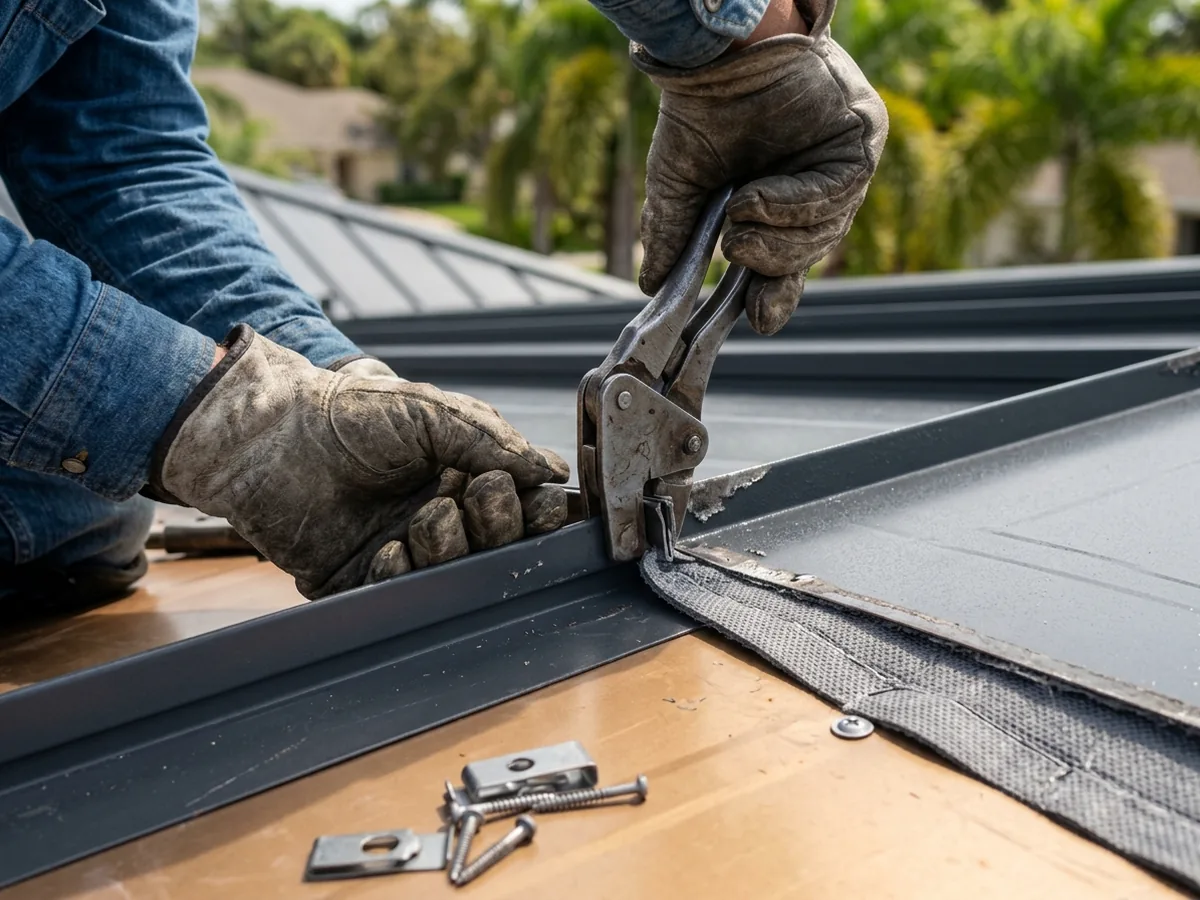
Three warnings in the same document matter on a Charleston house. First, it rules out treated lumber that may contain copper for the battens. Second, it rules out copper and lead flashings because the metals aren't compatible with the coated steel. If the house has copper bay roofs, copper valleys or copper gutters, raise that on the visit; the copper roofing page explains why mixed metals cause trouble. Third, the panels dent if stepped on in the wrong place, so foot traffic should stay on the joints or over the battens. Satellite installers, painters and gutter cleaners need to know that.
The spec also calls for screws that resist at least 1,000 hours of ASTM B117 salt spray, colored to match the panel. Ask what the screws in your quote are rated for.
Stone-Coated Steel Near Salt Water and Historic Districts
Under the granules, stone-coated steel is still Galvalume steel. Steel warranties often exclude homes close to surf, bays and marshes, and the distances are on aluminum roofing. Check your address against the warranty before you choose stone-coated steel for a house on the water.
Inside the city's historic districts, the Board of Architectural Review's roofing policy calls artificial slate and tile generally inappropriate, and expects historic roofs to be repaired or replaced in kind. A stone-coated tile roof is a hard sell on a historic building there; see historic metal roof restoration.
For wind, ask which uplift or wind test the exact panel and fastening pattern have passed. The test standards the code names for metal shingles are listed on metal shingles.
Stone-Coated Steel Estimates: What to Ask For
A stone-coated quote has more parts than a panel quote. Make sure it names:
Profile and color
Tile, barrel, shake or shingle, and the color by name.Install method
Direct to deck, battens or counter battens, and the batten material.Underlayment
The spec calls for a self-adhering membrane at the eaves and rakes and in the valleys on new work, with felt or synthetic underlayment elsewhere. Ask which yours gets.Flashing metal
Valley and wall flashing in aluminum-zinc coated or G-90 galvanized steel, not copper or lead.Screws
The salt-spray rating and whether they're color matched.Cut edges
How field-cut edges are sealed or touched up.Walking rules
Where on the roof it is safe to step after the job, for anyone who works up there later.
If you hold this quote up against another one, check that both use the same profile and install method, or the prices won't compare.
See Metal Shingles in Charleston. See Metal Roof Replacement in Charleston.