

Copper Gutter Types for Charleston Houses
Gutter shape, the metal, and how it hangs on the house decide how a copper system looks and how much rain it carries. These are the options a roofer will usually quote.
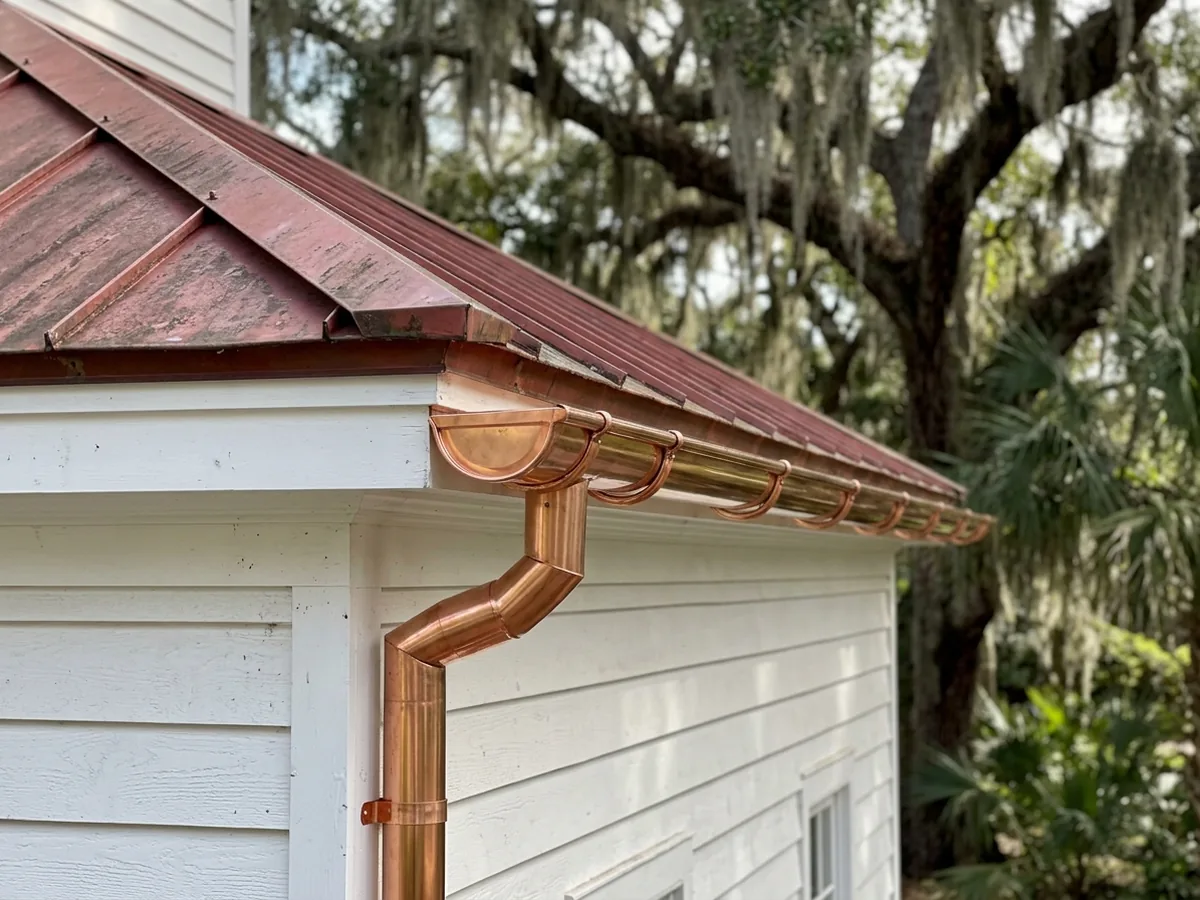
Half-Round Copper Gutters
Half-round gutters are the traditional profile on older Charleston houses: a semicircle hung from the fascia on exposed copper hangers, with round downspouts. They suit a house with a copper or terne roof and look right on a piazza eave. The Copper Development Association's guide specification calls for 16-ounce copper for hung gutters and downspouts.
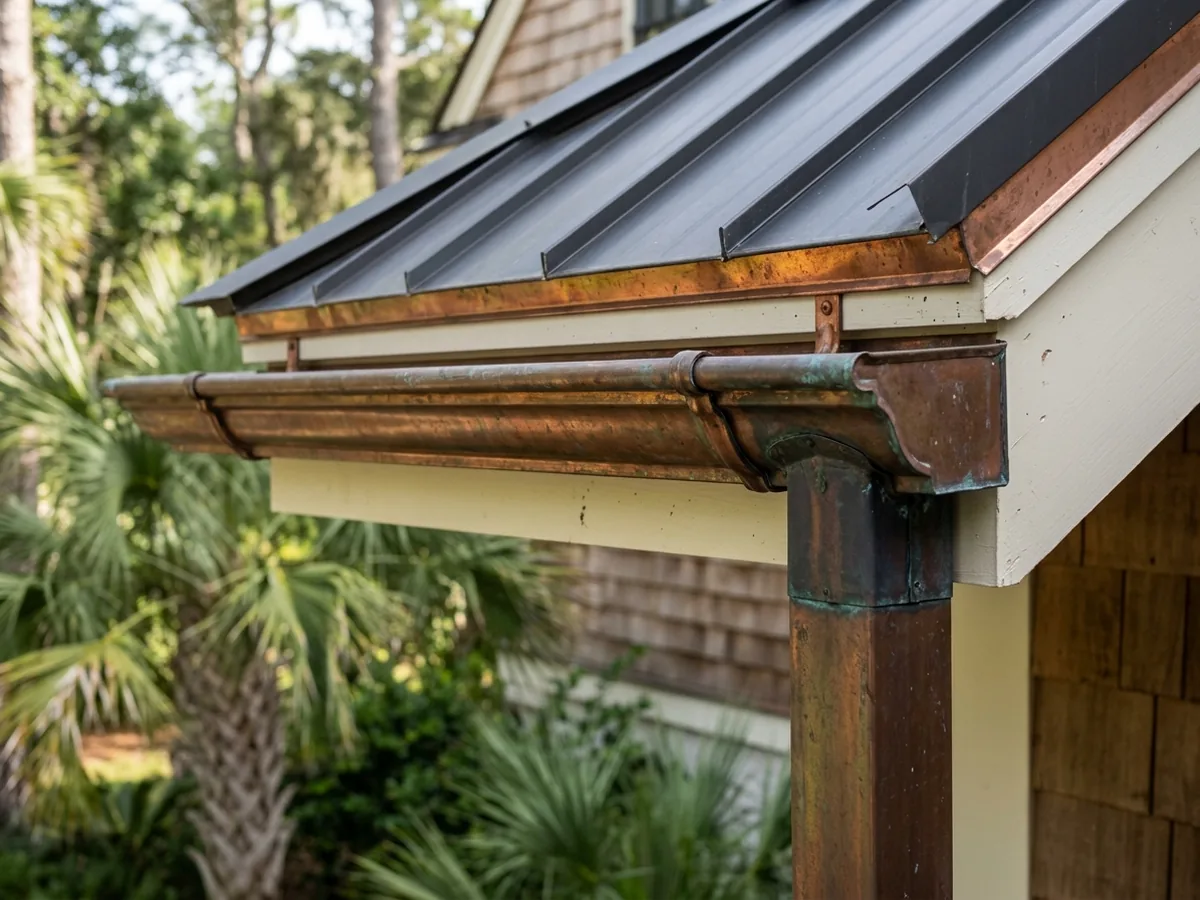
K-Style Copper Gutters
K-style (ogee) copper gutters have a flat back and a decorative front shaped like crown molding. They fit tight against a fascia board with hidden hangers, so they suit later houses and additions where a half-round would look out of place. Downspouts are usually rectangular to match. On a big roof plane, ask how the gutter width and downspout count were sized for that area of roof, whichever profile you pick.
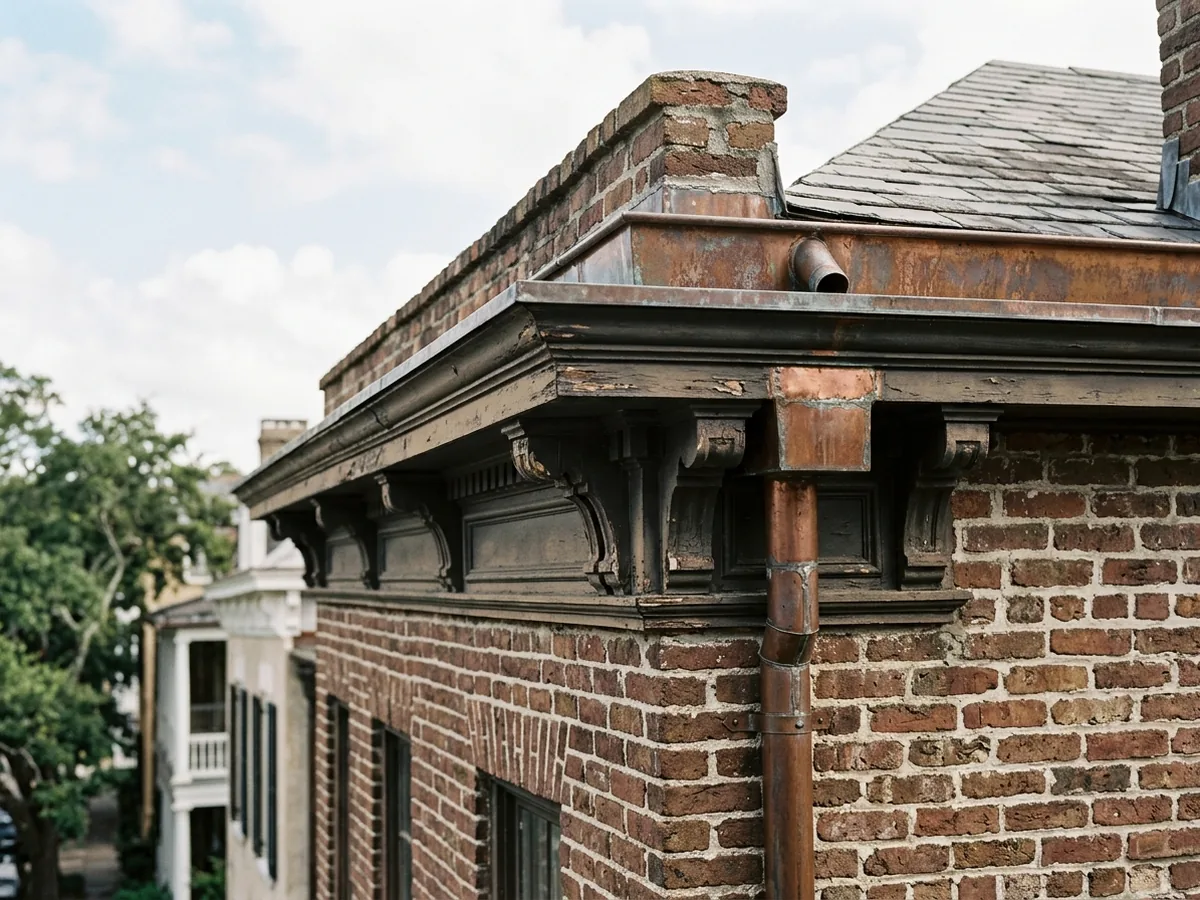
Built-In and Box Gutters
Some older Charleston houses don't have hung gutters at all. The gutter is built into the cornice or sits behind a parapet, lined with sheet metal, and you only see the downspout. These liners are a roofing job more than a gutter job: the CDA specification moves up to 20-ounce copper for built-in gutters, with lapped, riveted and soldered seams. A leaking box gutter can rot the cornice and the wall framing behind it, so it is worth relining before the wood goes.
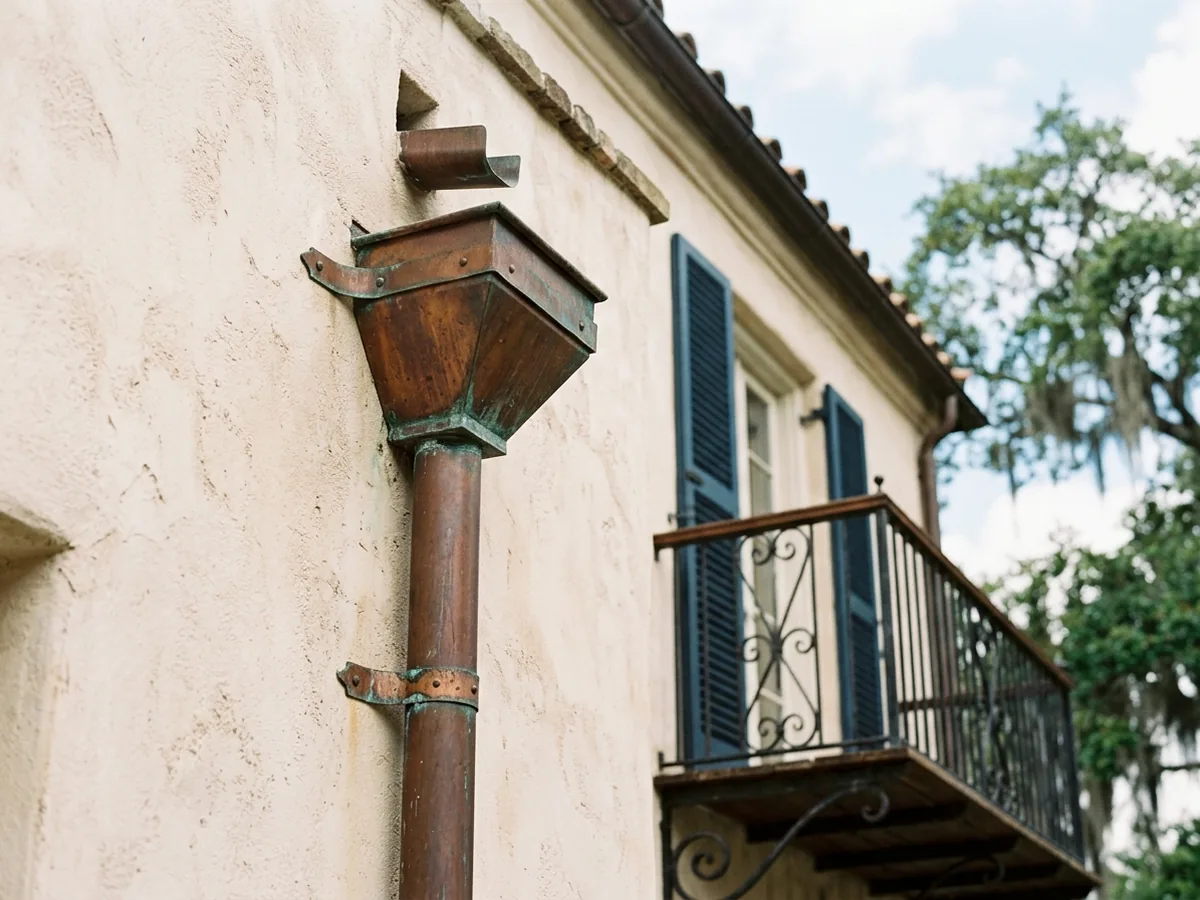
Copper Downspouts and Conductor Heads
Downspouts come round, square or corrugated, fixed to the wall with copper straps. A conductor head (also called a leader head) is the box at the top that collects water from a scupper or a built-in gutter outlet. Each downspout can only empty so much of the gutter, so ask how many there are and where they land. Water dumped against a foundation in a July downpour is a problem the gutter was meant to solve.
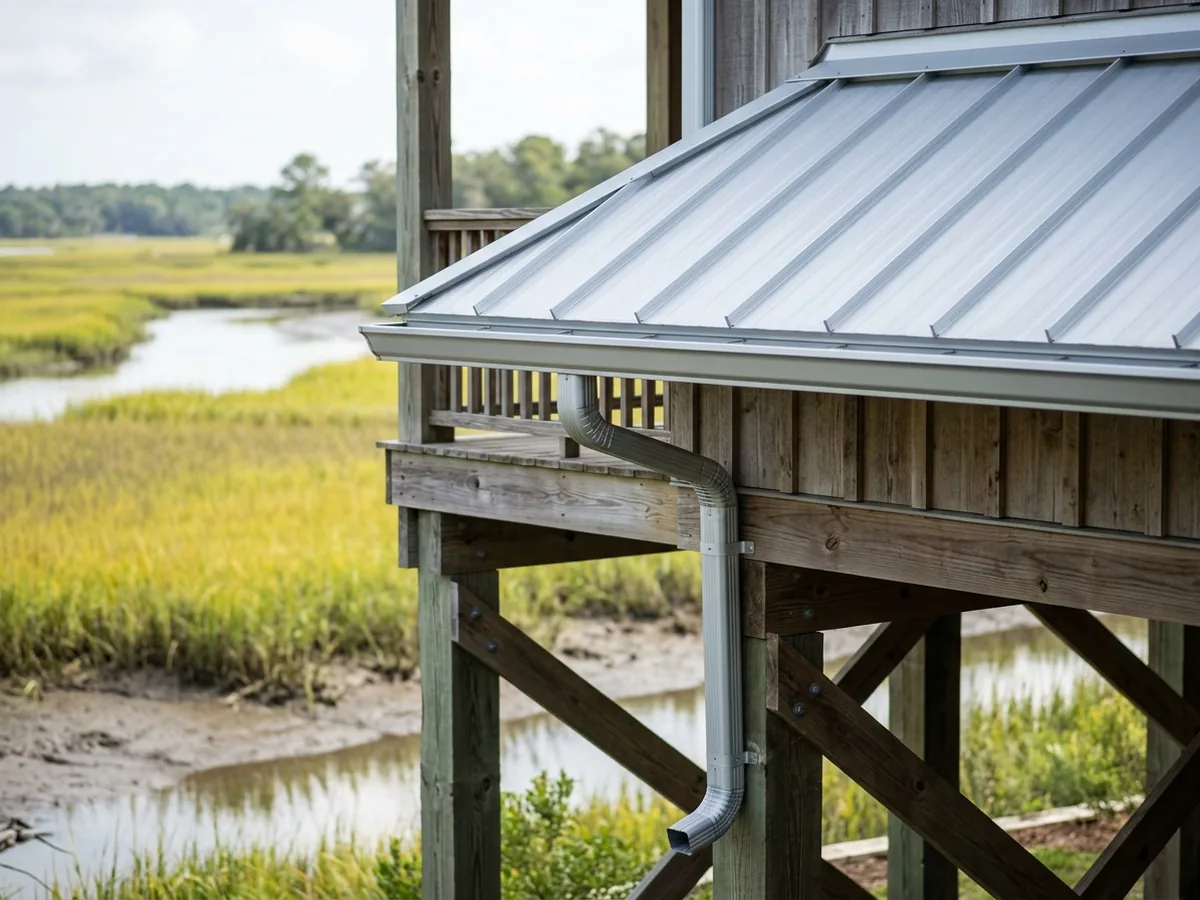
Aluminum Gutters Under a Metal Roof
Not every metal roof should get copper gutters. Under an aluminum roof, or a painted Galvalume roof, a seamless aluminum gutter in a matching finish is the usual match. Copper is the wrong neighbor for those roofs, and the reason is in the next section.
Why Charleston homeowners call Charleston Metal Roofing Co.
- Estimate at no cost to you
- Metal, seam and fasteners named on paper
- Your request goes to a single local roofer
- Referral is free; you pay only the roofer you hire
Copper Gutter Details That Decide How Long They Last
On a copper gutter, trouble usually starts at the joints, the hangers and the places where the metal can't move. The CDA guide specification for copper gutters sets out the details to ask for:
Slope
Gutters pitched at least 1/8 inch per foot toward the outlets, so water doesn't sit in the trough.Expansion joints
No more than 48 feet apart, and no more than 24 feet from a corner, because a long copper run grows in summer heat.Hangers
Copper straps or hangers at no more than 30 inches apart.Seams
Lapped, riveted and soldered, not caulked.Fasteners
The same metal as the gutter, so a steel screw isn't corroding inside a copper system.
An estimate that lists these is easier to compare than one that says "copper gutters, installed".
Ask, too, how the gutter will be hung on your fascia or cornice. On an old house the wood behind the gutter is often softer than it looks, and a new copper run screwed into rotten fascia will pull loose in the first heavy storm. Rotten boards should be found and priced before the gutter goes up.
Copper Gutters Next to Other Roof Metals
Copper and less noble metals corrode each other. The National Park Service's roofing brief describes galvanic corrosion between copper and iron in direct contact, and notes that rainwater can carry the reaction even when the metals don't touch. The CDA specification calls for asphalt mastic wherever copper meets a dissimilar metal.
In practice that means watching which way the water runs. Rain off a copper roof or copper flashing should not run into aluminum or galvanized gutters below it. Copper gutters under a painted Galvalume roof carry less of that risk, since the water runs from the steel into the copper rather than off the copper onto steel, but the hangers and fasteners still have to be copper or compatible. Ask the roofer to walk through what touches what. For copper on the roof itself, see Copper Roofing; for matching flashing metals, see Metal Roof Flashing.
Copper Gutter Upkeep Under Live Oaks and Summer Storms
Charleston's summer rain comes hard and fast (the rainfall figures are on Storm Damage Roof Repair), and live oaks drop leaves and catkins into gutters through spring. The National Park Service brief says gutters and downspouts need periodic cleaning because debris backs water up under the roofing. When a copper gutter spills over at the corners in every storm, check for a blocked outlet or too few downspouts before blaming the gutter size.
Copper gutters can usually be repaired rather than replaced. Failed solder joints at corners and outlets get cleaned back to bright metal and re-soldered; a hanger that has pulled loose gets re-set into sound fascia; a section that was dented by a falling limb gets cut out and a new piece soldered in. Sealant smeared over a copper seam is a sign someone patched it the quick way, and it will need doing again. Ask for soldered repairs, and for any section that is replaced to be the same weight of copper as the rest.
Guards help on houses under big trees; the CDA specification uses bronze mesh guards on copper systems so the metals stay compatible. Ask for guards in the same family of metal as the gutter.
See Copper Roofing in Charleston. See Historic Metal Roof Restoration in Charleston.