
Copper Roofing Types for Charleston Houses
Most copper in this city goes on the parts of a house people look at. Whole copper roofs exist, but the everyday requests are smaller and fussier: a bay, a pair of dormers, the hood over a front door.
Copper Standing Seam Roofs
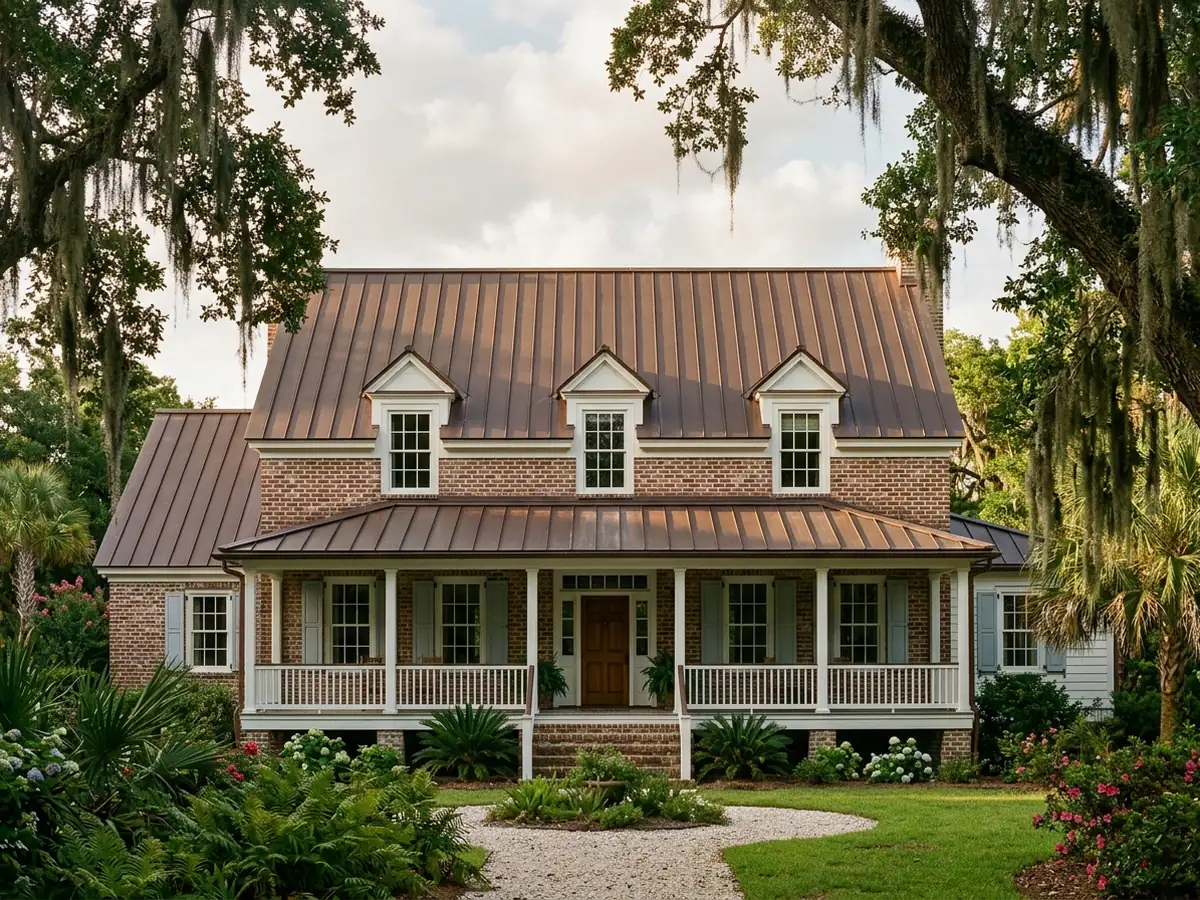
A full copper roof is laid in long pans joined by raised seams, held down by copper cleats hidden in the seams. Nothing pierces the face of the pan. The look is the same as a steel standing seam roof from the street, and the seam is folded by hand or with a seamer the same way.
Inside the city's historic districts, a copper standing seam roof is one of the few materials the review board will accept in place of an old terne roof. The rules and the exceptions sit on our historic metal roof restoration page.
Flat-Seam Copper on Cupolas and Curves
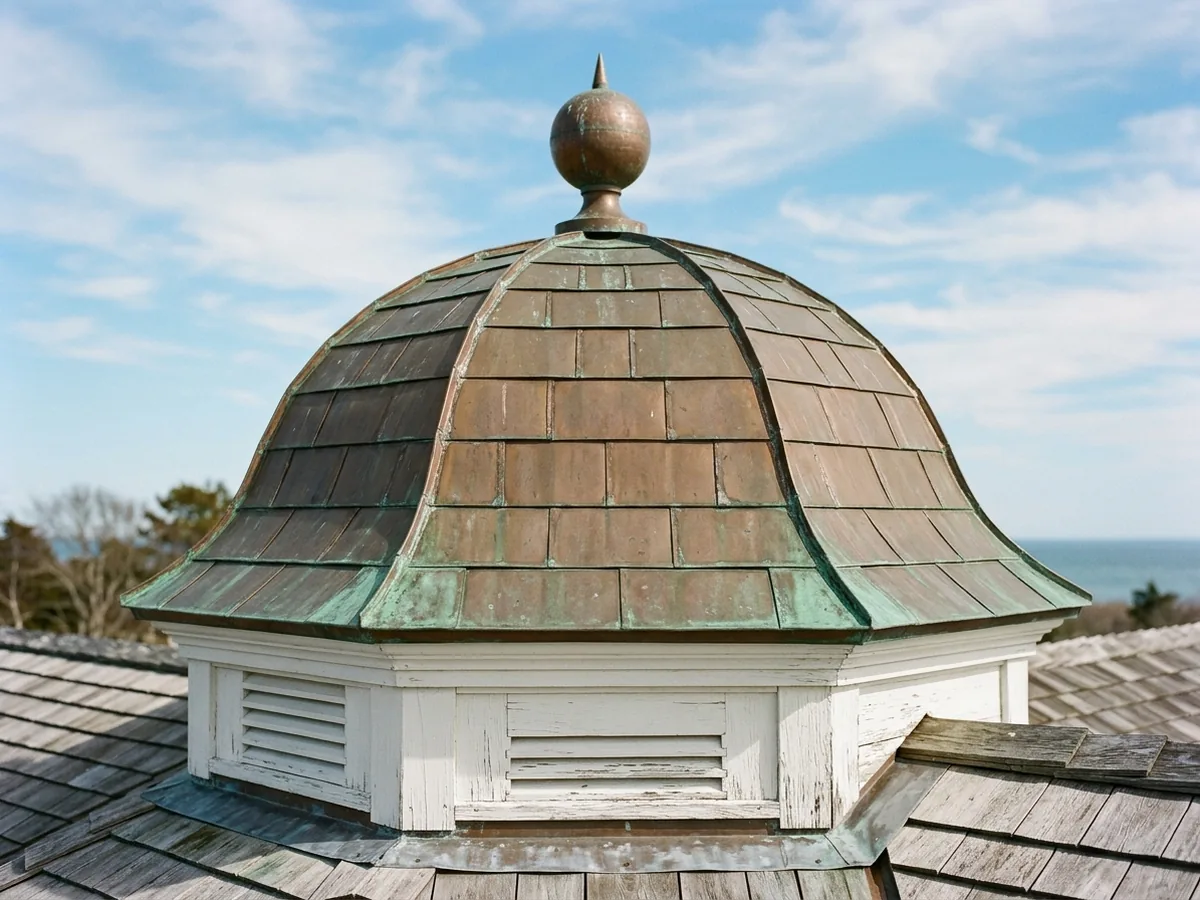
Flat-seam copper uses small sheets with their edges folded into each other, laid flat and soldered shut. It bends around shapes a long pan can't: cupolas, domes, bell-cast eaves, the curved roof of a turret. Flat-seamed copper turns up on many old domes and cupolas, and standing seam copper on some of the best-known early American roofs, according to the National Park Service's roofing brief.
Soldering is slow, skilled work, so ask how many hours of soldering the price assumes.
Copper Bay Window and Dormer Roofs
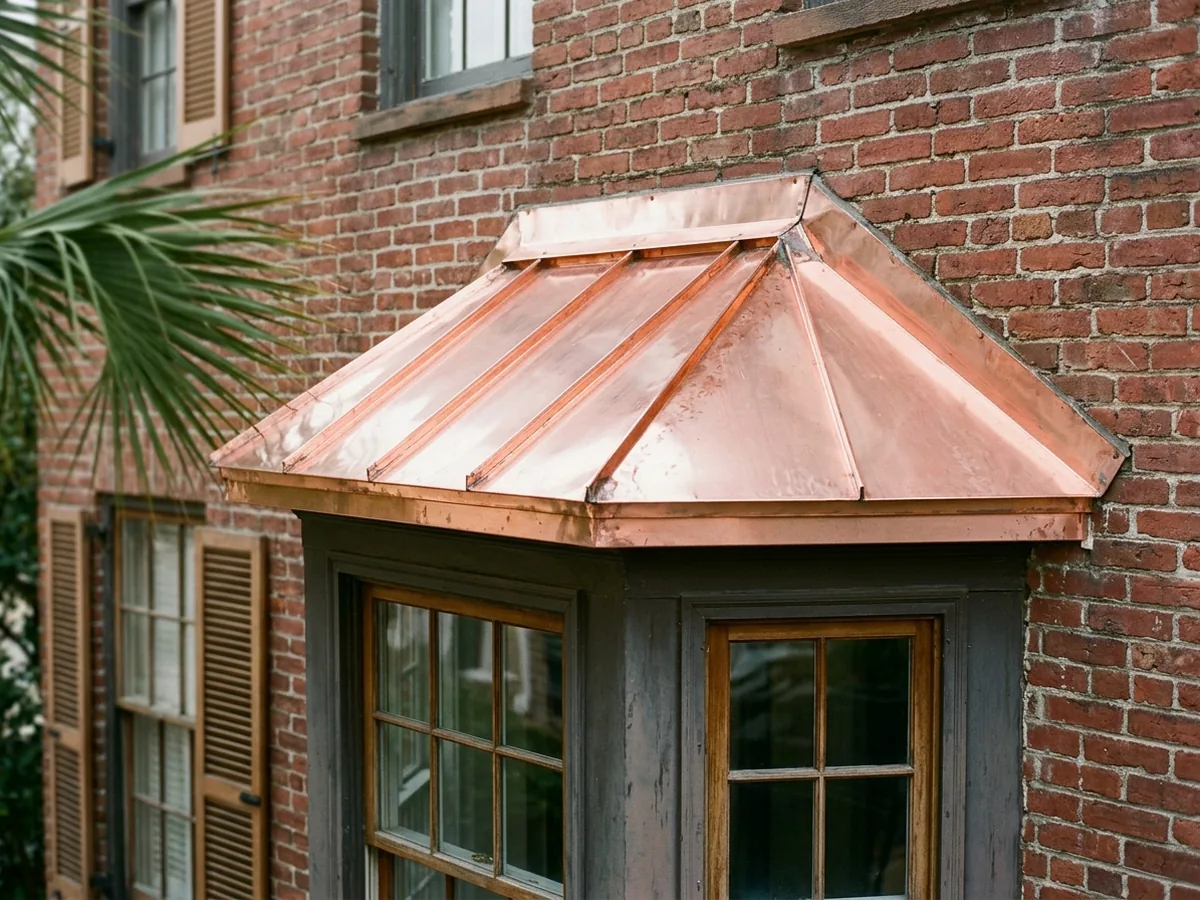
Bay windows and dormers are the classic spot for a small copper roof. The roof is tiny, it sits at eye level from the street or the piazza, and it has to tie into a wall on one side. A copper bay roof is usually a few faceted panels soldered at the hips, with a copper apron flashing up the wall behind it.
These little roofs leak where they meet the house, not in the middle. A good roofer will rebuild the step and counter flashing in copper as part of the job, rather than caulking the old flashing in place.
Copper Portico and Entry Hood Roofs
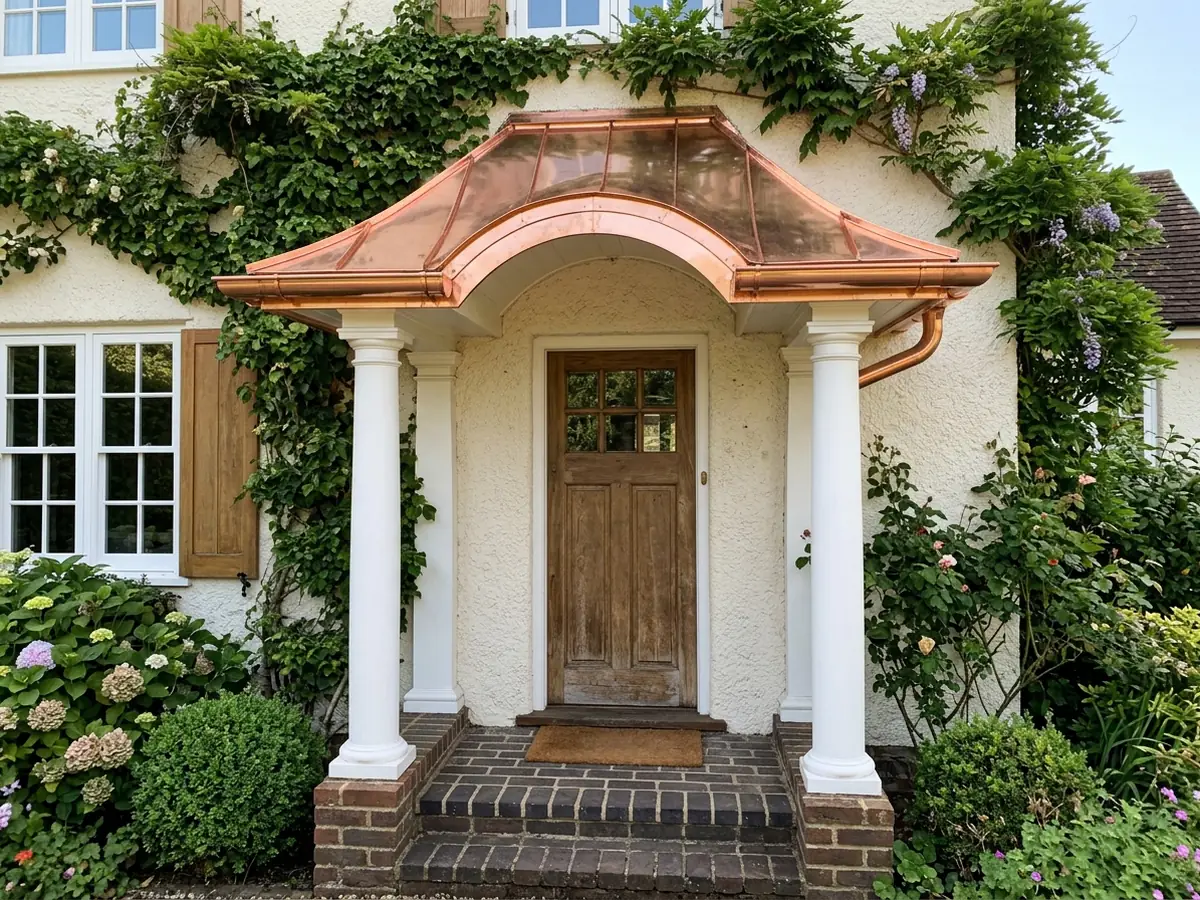
Porticos, door hoods and small porch roofs over a front entry are another common copper job. Many are curved or arched, which is flat-seam territory, and a few are so close to flat that a soldered seam makes more sense than a folded one. Copper here often pairs with half-round copper gutters; see copper gutters if the gutters need replacing at the same time.
Why Charleston homeowners call Charleston Metal Roofing Co.
- Estimate at no cost to you
- Metal, seam and fasteners named on paper
- Your request goes to a single local roofer
- Referral is free; you pay only the roofer you hire
Copper Roofing Weight and Cost
The 2021 IRC sets the floor for copper roofing at 16 ounces per square foot, or 12 ounces for high-yield copper (ASTM B370). Heavier sheet is stiffer and costs more. Ask for the estimate to state the weight in ounces and whether the copper is high-yield, not only "copper".
Copper is the most expensive metal on the roof. A national cost guide prices installed copper roofing at $1,300 to $3,000 per square, a square being 100 square feet. Small jobs like a bay roof or a portico are priced more by hours of fabrication and soldering than by area, so the per-square figure says little about them. If the copper is part of a larger re-roof, ask for it as its own line on the estimate. That way you can see what the copper accents cost and decide on each one.
What drives a copper price up in Charleston:
Shape
Curves, cones and domes take flat-seam work and hours of soldering.Access
Second-floor dormers and bays over a garden or a narrow side yard need staging or a lift.Flashing
Old stucco or brick walls often need new counter flashing cut into the mortar joints.Weight and type
Sheet heavier than the code minimum, or lead-coated copper, raises the material cost.
Copper Patina and Salt Air
Copper is left bare. It needs no paint or sealer, and its patina sticks to the surface and protects the metal underneath. On the way there, new copper turns from salmon pink through russet and chocolate browns, then to a dull dark grey or near black, before the blue-green or grey-green patina takes over.
How fast depends on the air. A trade article on copper roofing puts the green stage at seven to 10 years in seacoast or industrial air, and 15 to 25 years in rural air. Charleston is seacoast air, so a new copper roof here should move through its brown years faster than one inland. Panels on the same roof can change at different rates, and that unevenness is normal. Our view: the deep brown stage is copper's best-looking years, but that's taste.
New copper next to old copper will not match for years. If that bothers you, ask whether lead-coated copper, which the Park Service lists as a replacement for tin and terne, suits the job, rather than trying a home-made patina wash.
Copper Next to Other Metals
Copper's weak point is its neighbors. When copper and iron or steel touch, or even just share the same rainwater, galvanic corrosion follows. The Park Service guide gives two classic examples: iron cresting on a copper roof, and steel nails in copper sheet. On a Charleston house this shows up where a new copper bay roof drains onto a painted steel roof below, or where a copper flashing sits against galvanized gutters.
Before signing, ask for:
Fastener and cleat metal
Copper, brass, bronze or a compatible stainless. The code list is on our metal roof repair page.Separation
How the copper is kept apart from any steel roof, gutter or flashing it touches.Runoff
Where water off the copper lands, and whether a steel roof sits underneath it.Permit
Whether the job needs a roofing permit; the city's requirements are on metal roof replacement.