
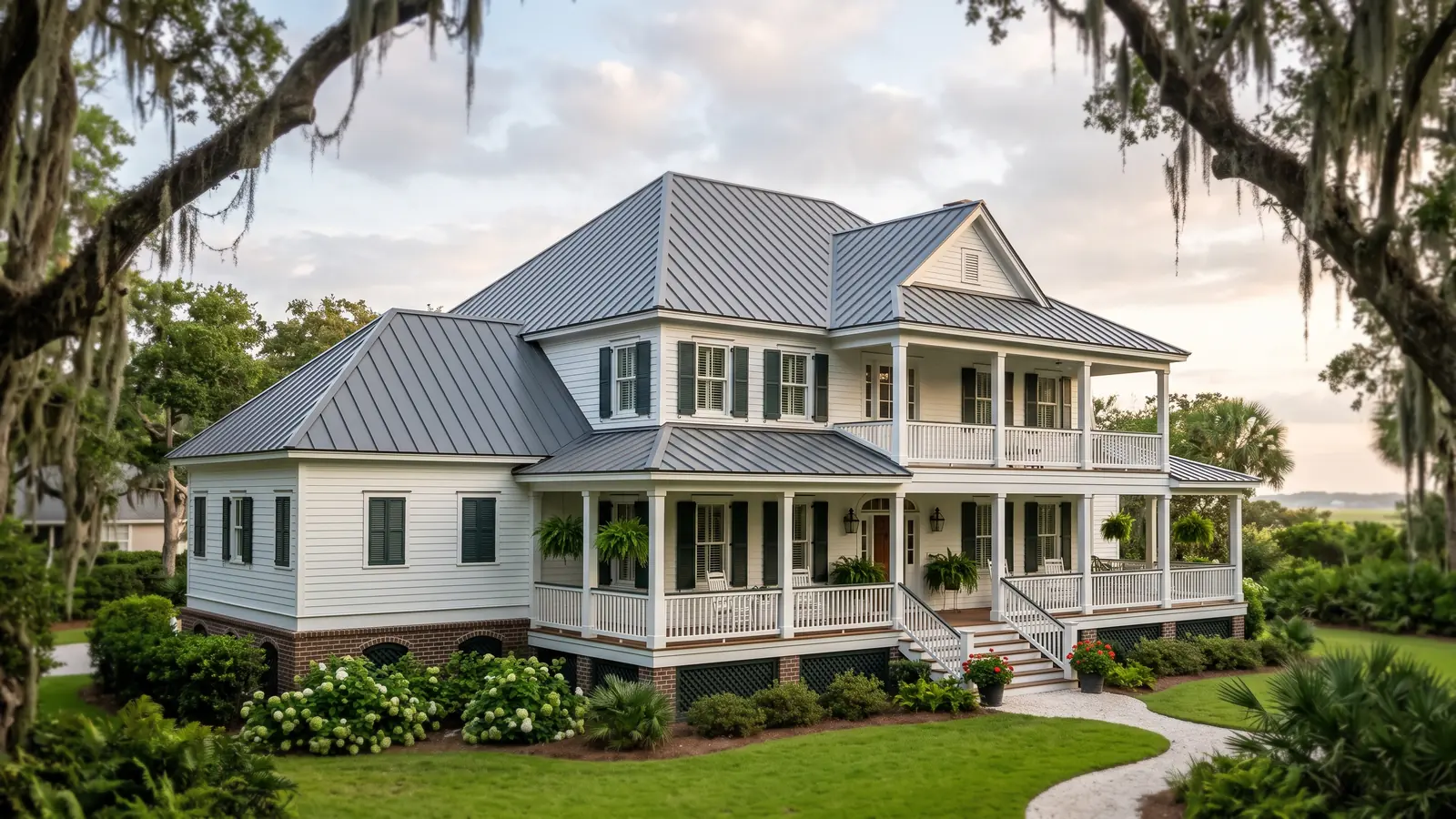
Standing Seam Metal Roof Types by Seam and Metal
Four kinds of standing seam roof cover most Charleston requests. They differ in how the seam is closed and in what protects the steel.
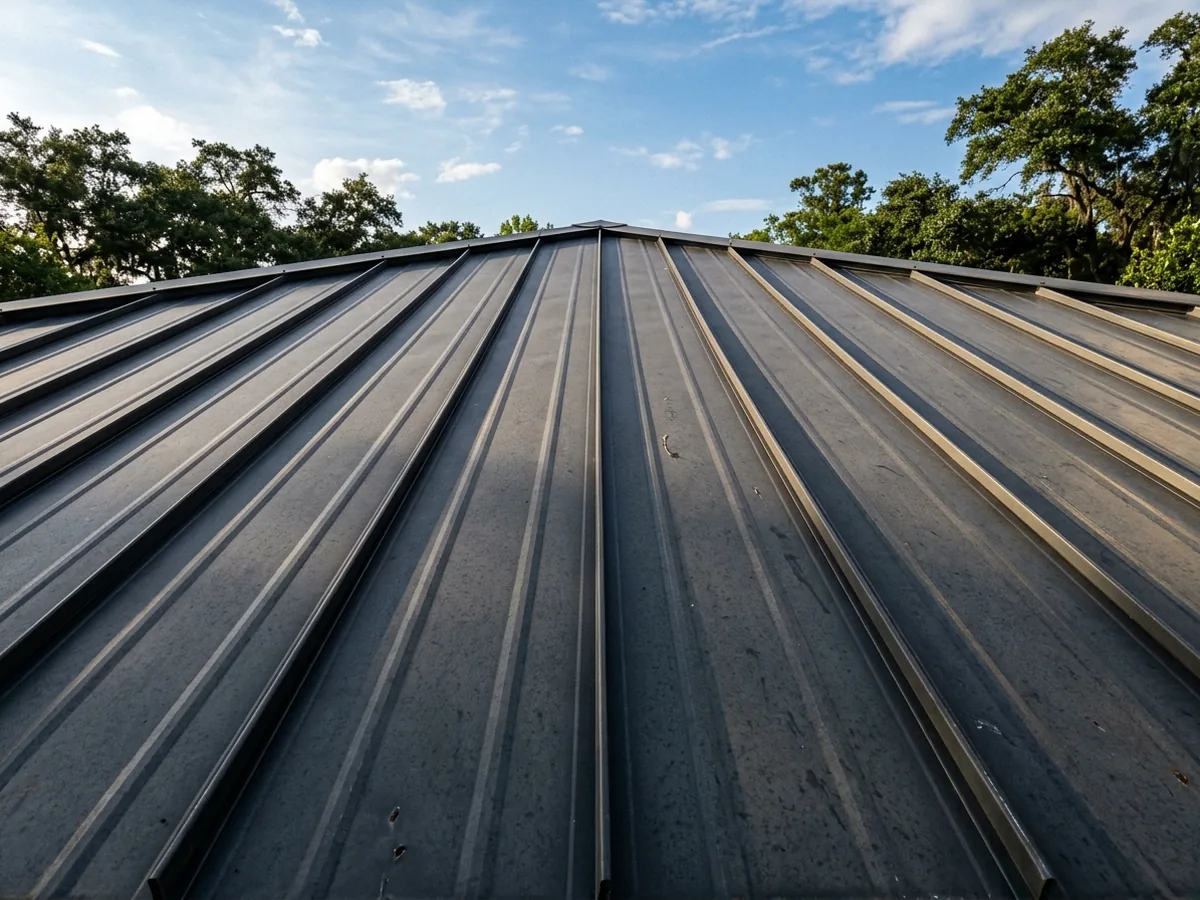
Mechanically Seamed Standing Seam
On a mechanically seamed roof the installer locks each seam with a seaming machine after the panels are set, folding the metal over once (single lock) or twice (double lock). The fold makes the tightest seal of the common systems and gives the best wind uplift values, and the panels can go on low slopes as well as steep ones. On shallow pitches, double lock is the recommended fold.
A typical spec sheet for this system, here one manufacturer's 2-inch panel, lists a 2.0-inch seam, 18-inch steel or 16-inch aluminum panels, and uplift testing to UL 580 and UL 1897. It costs more than snap-lock because seaming takes another pass with a machine.
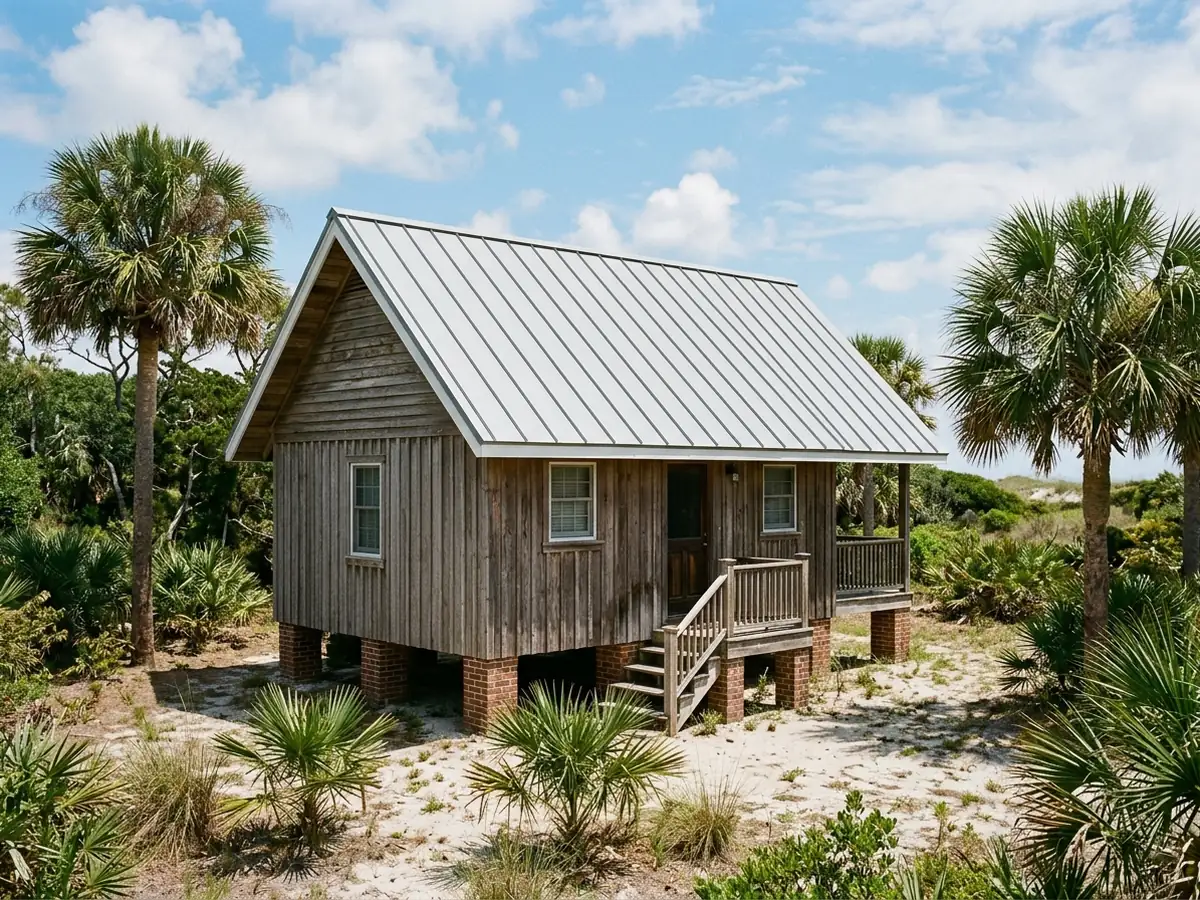
Snap-Lock Standing Seam
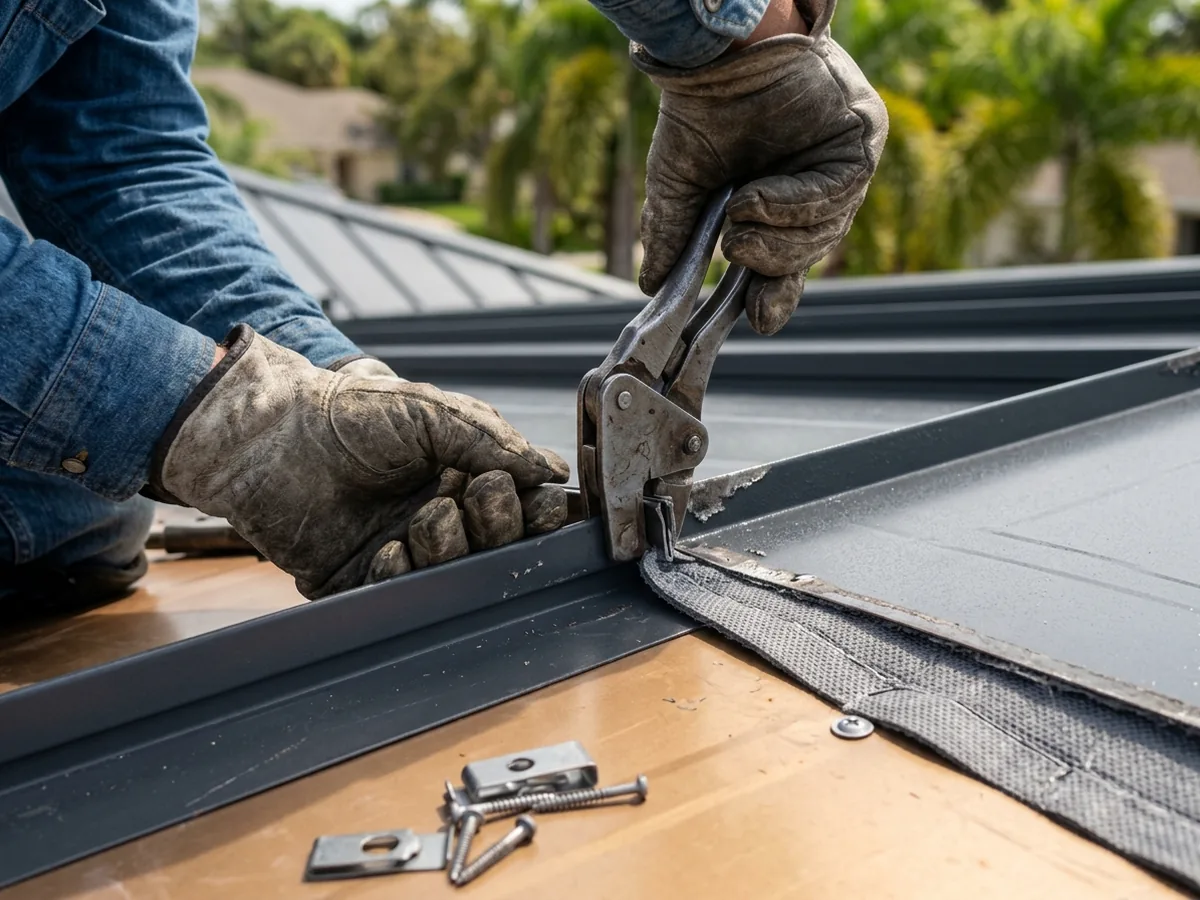
Snap-lock panels have a male and a female leg that press together by hand over clips screwed to the deck. No seamer is needed, which keeps the price down. A fastener maker's comparison recommends snap-lock for slopes of 3:12 or more, short panel runs and sites without extreme weather, and one panel maker's snap-lock data sheet limits its panel to 3:12 and steeper on plywood or metal deck.
Snap-lock is the system the Board of Architectural Review won't approve on historic buildings, where seams have to be hand-crimped. If the house is in a review district, start with Historic Metal Roof Restoration.
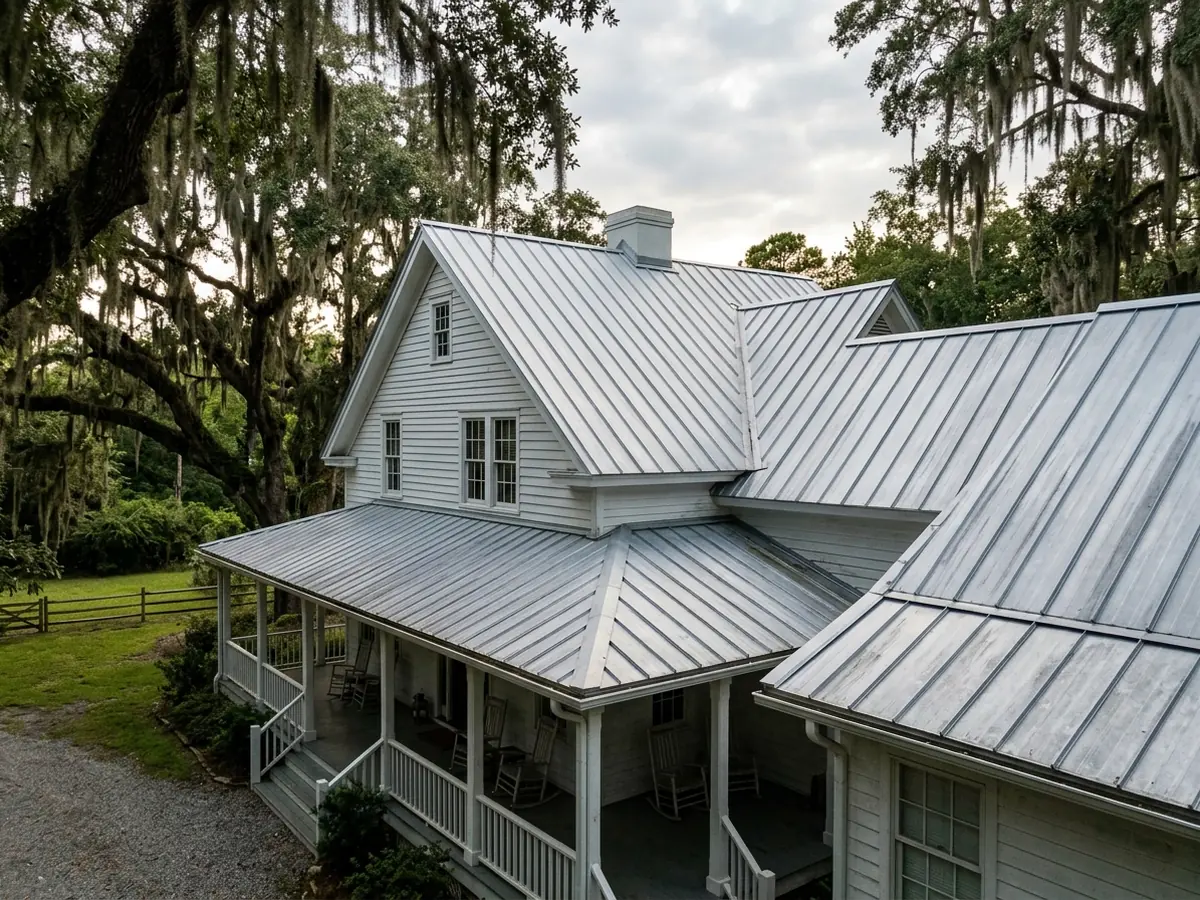
Bare Galvalume Standing Seam
Galvalume is steel coated in a 55% aluminum-zinc alloy, and plenty of owners leave it unpainted. The 2021 IRC sets the minimum coating for this kind of steel roof panel at AZ50 under ASTM A792; for galvanized steel the minimum is G90 under ASTM A653.
The longest service-life figure we have comes from this kind of roof. A Metal Construction Association field study looked at 14 unpainted Galvalume standing seam roofs with up to 35 years of service and projected more than 60 years of life for roofs built the same way today. The study covered low-slope roofs, and salt exposure matters: steel coatings carry distance limits near the water, set out on Aluminum Roofing.
Painted Steel Standing Seam
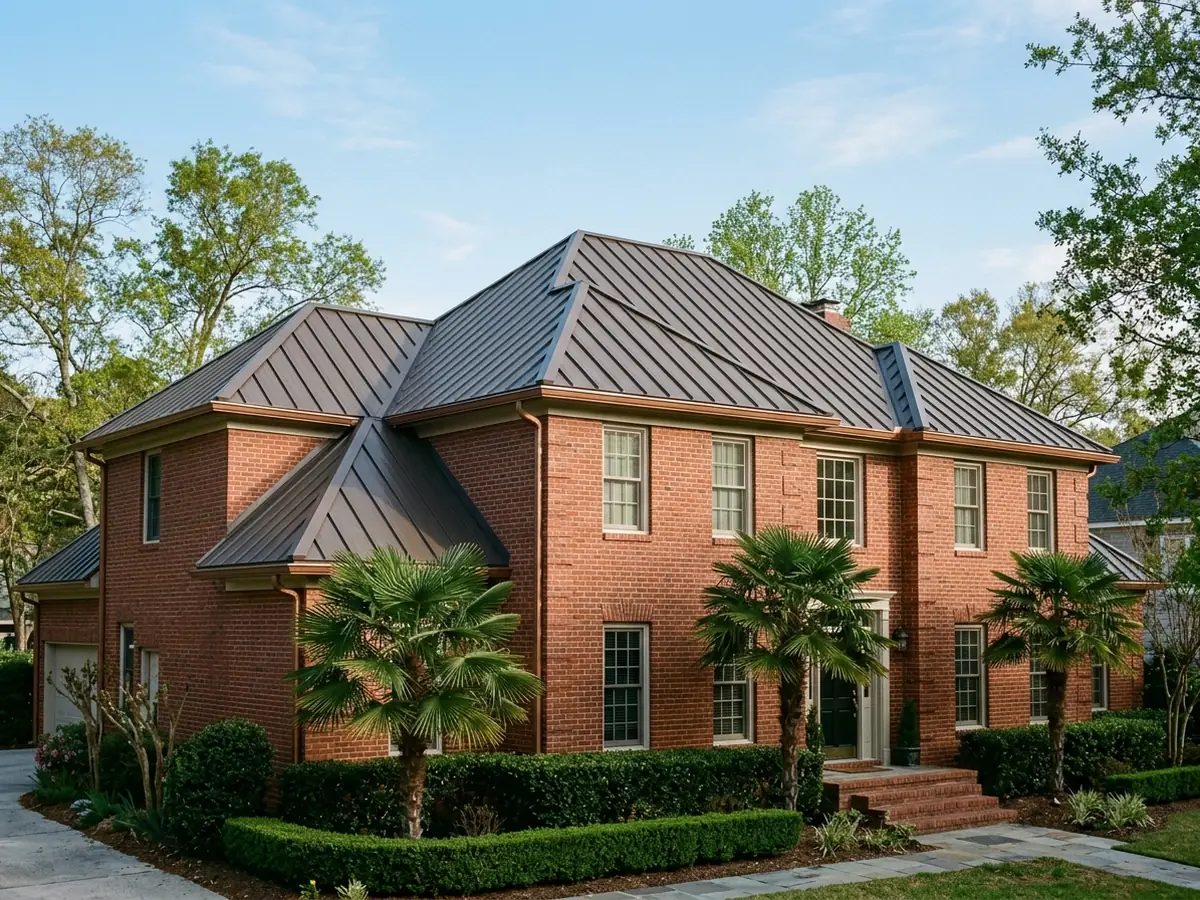
Colored steel standing seam starts from the same AZ50 or G90 coated steel, with a factory paint system on top applied to ASTM A755 under the code. The paint carries the color. The metallic coating under it is still the steel's protection wherever the paint is scratched or cut.
Paint systems vary, and the resin content that defines a Kynar 500 finish is on the aluminum page. Ask the contractor to write the finish name on the estimate rather than "painted" or "coastal-rated".
Why Charleston homeowners call Charleston Metal Roofing Co.
- Estimate at no cost to you
- Metal, seam and fasteners named on paper
- Your request goes to a single local roofer
- Referral is free; you pay only the roofer you hire
Standing Seam Panel Gauges and Seam Heights
Gauge and seam height are set by the panel maker, not the roofer. Here is what two manufacturers publish for four of their standing seam panels:
Mechanical seam, 2-inch
2.0-inch seam; steel at 24 gauge minimum with 22 gauge available; aluminum at .040 inch.Snap-lock, 1.5-inch
1.5-inch seam; steel at 24 gauge minimum with 22 gauge available; aluminum at .032 to .040 inch.Snap-lock, residential
24 gauge Galvalume standard, 22 gauge optional.Symmetrical mechanical seam
1 3/8-inch or 2 3/8-inch rib, 24 gauge Galvalume standard.
In gauge numbers, smaller means thicker, so 22 gauge is heavier than 24. None of the standing seam sheets we read listed 26 gauge. That doesn't make every 26-gauge quote wrong, but it does make a fair question: which tested panel is it, and does the test report name that gauge?
Seam height changes more than looks. The maker of the symmetrical system says its shorter 1 3/8-inch rib has lower uplift values and needs a steeper roof than the 2 3/8-inch version. Height also shows from the street: a 2-inch seam casts a bolder line than a 1.5-inch one, so the choice on a small cottage can come down to looks once the wind and slope numbers are met.
Standing Seam Clips, Slopes and Wind Uplift
Every standing seam panel is held to the roof by clips, and the clips do the work in a storm. Mechanically seamed systems use fixed clips on short panels and floating clips on long runs, so long panels can expand and contract along their length. On a dark roof in a Charleston summer, that movement happens every day.
The code allows standing seam on lower slopes than any lapped metal panel; the figures are on Metal Porch Roofs, where low slopes come up most. Within that range the panel maker's own minimum still applies, and the data sheets differ: the snap-lock panels above list minimums from 2:12 to 3:12.
A Charleston roof is designed around wind. The city's design wind speed, and the uplift classes a tested assembly can reach, are covered on Hurricane Metal Roofs. On a standing seam roof, the figure to compare between quotes is the uplift test listed for that exact panel, gauge and clip spacing. The data sheets above list UL 580 and UL 1897 testing.
Standing Seam Estimates: What Should Be Written Down
A standing seam quote that says "standing seam, 24 ga, color: charcoal" leaves most of the roof undefined. Ask for these lines:
Seam and profile
Mechanical single or double lock, or snap-lock, and the seam height.Metal and thickness
Steel gauge, or aluminum thickness in inches, with the panel's data sheet attached.Coating and finish
AZ50 Galvalume or G90 galvanized under the paint, and the paint system by name.Clips and spacing
Fixed or floating clips, and the spacing at the eaves, rakes and corners, taken from the tested assembly.Uplift test
The test standard and report for that panel, gauge and deck.Trim and fasteners
Edge metal, ridge and flashings in the same metal as the panels, and what the clip screws are made of.
The permit for a metal re-roof in the City of Charleston asks for the manufacturer's specifications, so a contractor who has those sheets ready is a good sign. Permit, registration and cost figures are on Metal Roof Replacement.
See Metal Roof Replacement in Charleston. See Aluminum Roofing in Charleston.