
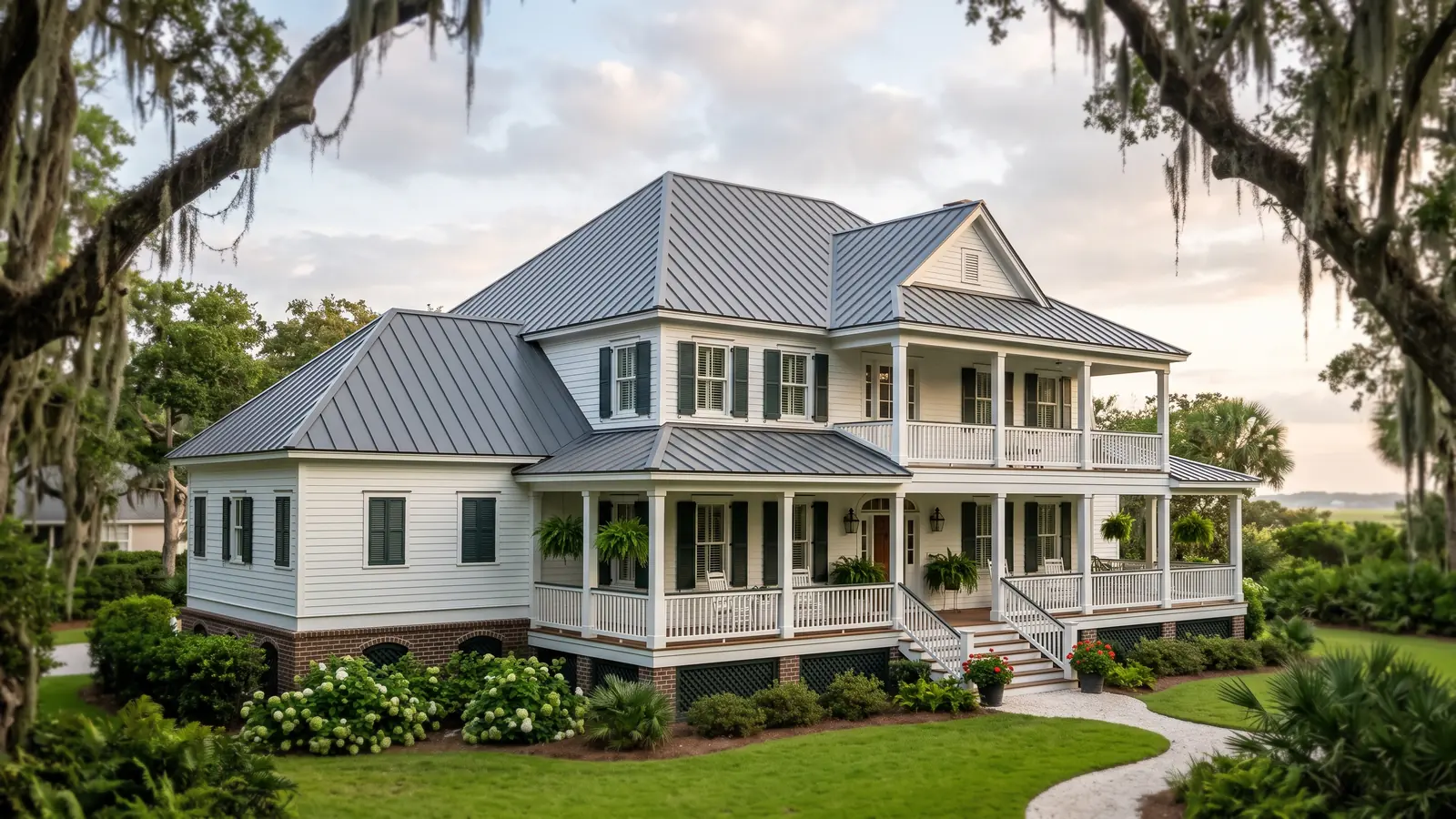
Commercial Metal Roof Repair by Panel System
Warehouses, shops, self-storage and light-industrial buildings tend to have one of two roof systems, plus the equipment that sits on top. Each fails in its own way.
Through-Fastened R-Panel and PBR Roofs
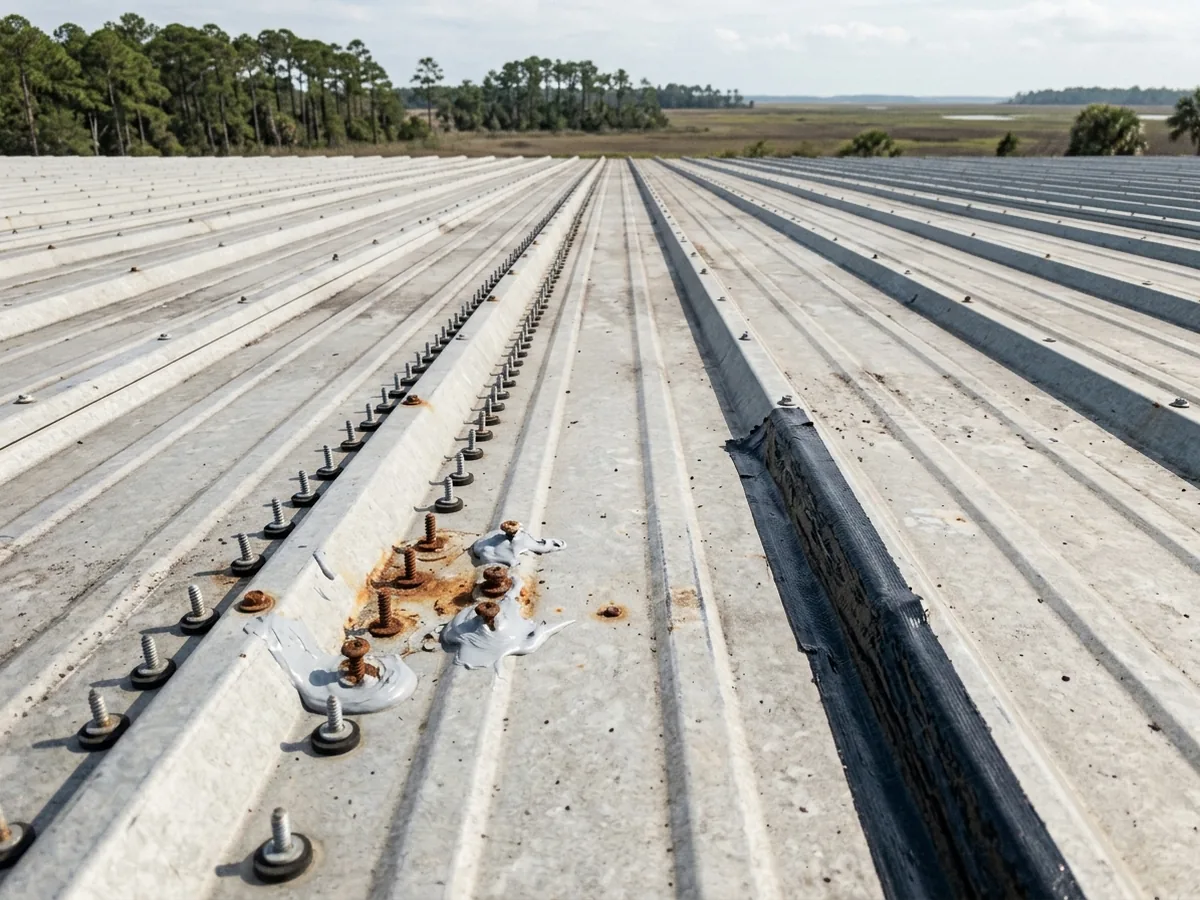
R-panel and PBR roofs are screwed through the panel into the purlins, and every screw is a hole sealed by a rubber washer. On a building with a long run of panel, thermal movement works the screws loose and the washers crack in the sun, and the side laps and end laps open up. Repair means replacing screws with oversized gasketed fasteners, re-sealing laps with tape mastic, and replacing panels that have rusted through at the laps. Under the 2021 IBC, stainless fasteners are acceptable on any metal roof when the panel maker gives no fastener spec, which matters on buildings near the harbor.
Structural Standing Seam on Metal Buildings
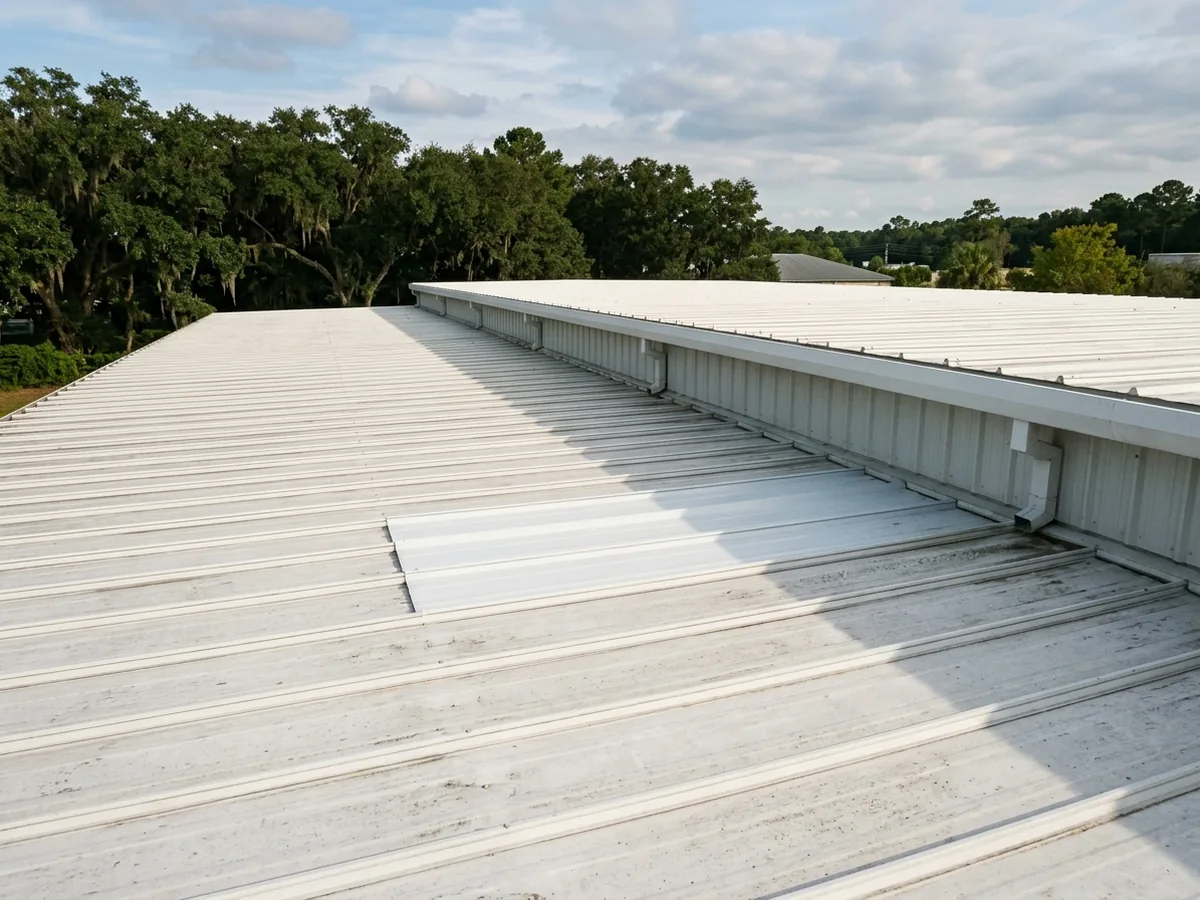
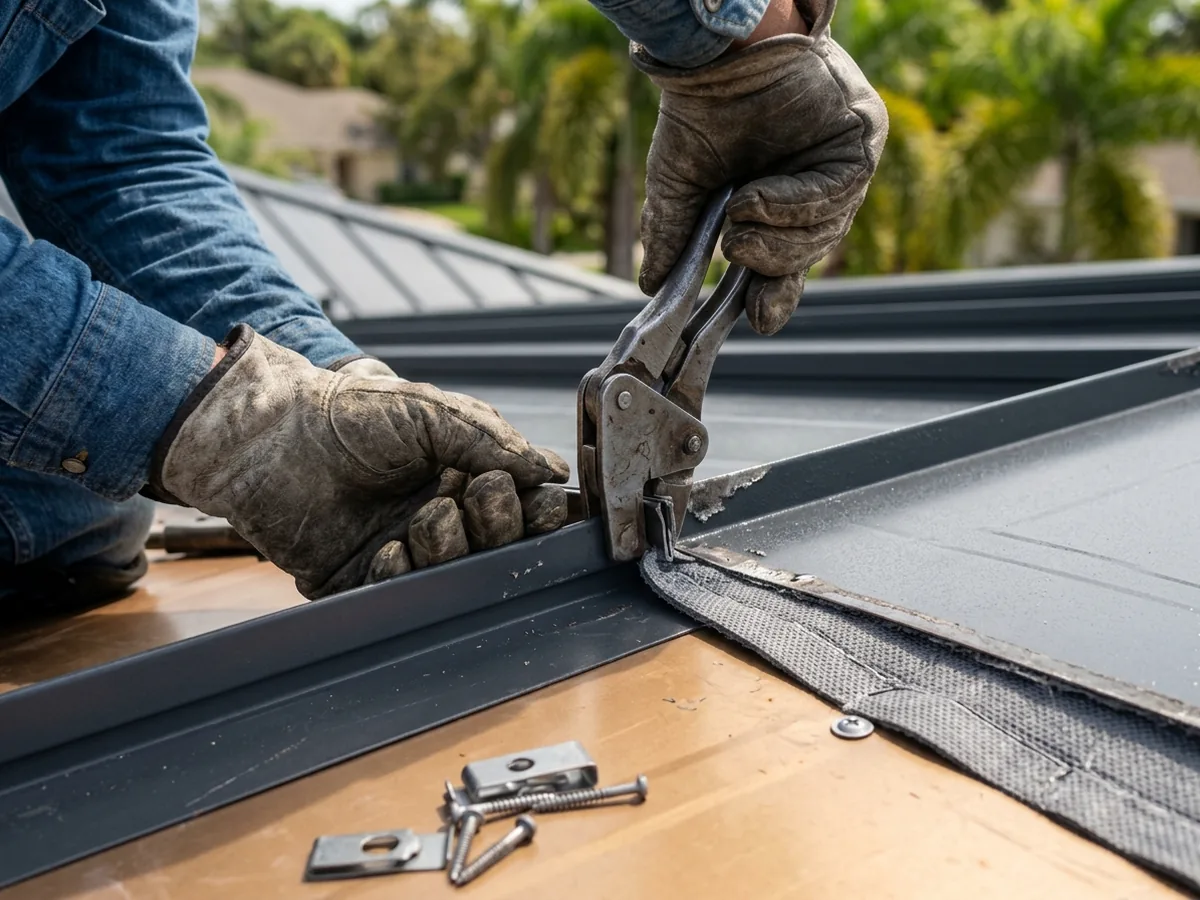
On many metal buildings the standing seam panel is both the deck and the roof, spanning between purlins on sliding clips that let it move. Leaks show up at end laps, at the ridge and eave closures, and where seams were damaged by foot traffic or a dropped tool. Seams have to be re-seamed with the right tool, not caulked, and a damaged panel has to be swapped with one that seams to its neighbors. The 2021 IBC tests these structural systems differently from panels over a deck: ASTM E1592 or FM 4474 for structural standing seam, and E1592, FM 4474 or UL 580 for structural through-fastened panels. Ask that replacement panels match the tested system.
Curbs, HVAC Units and Rooftop Penetrations
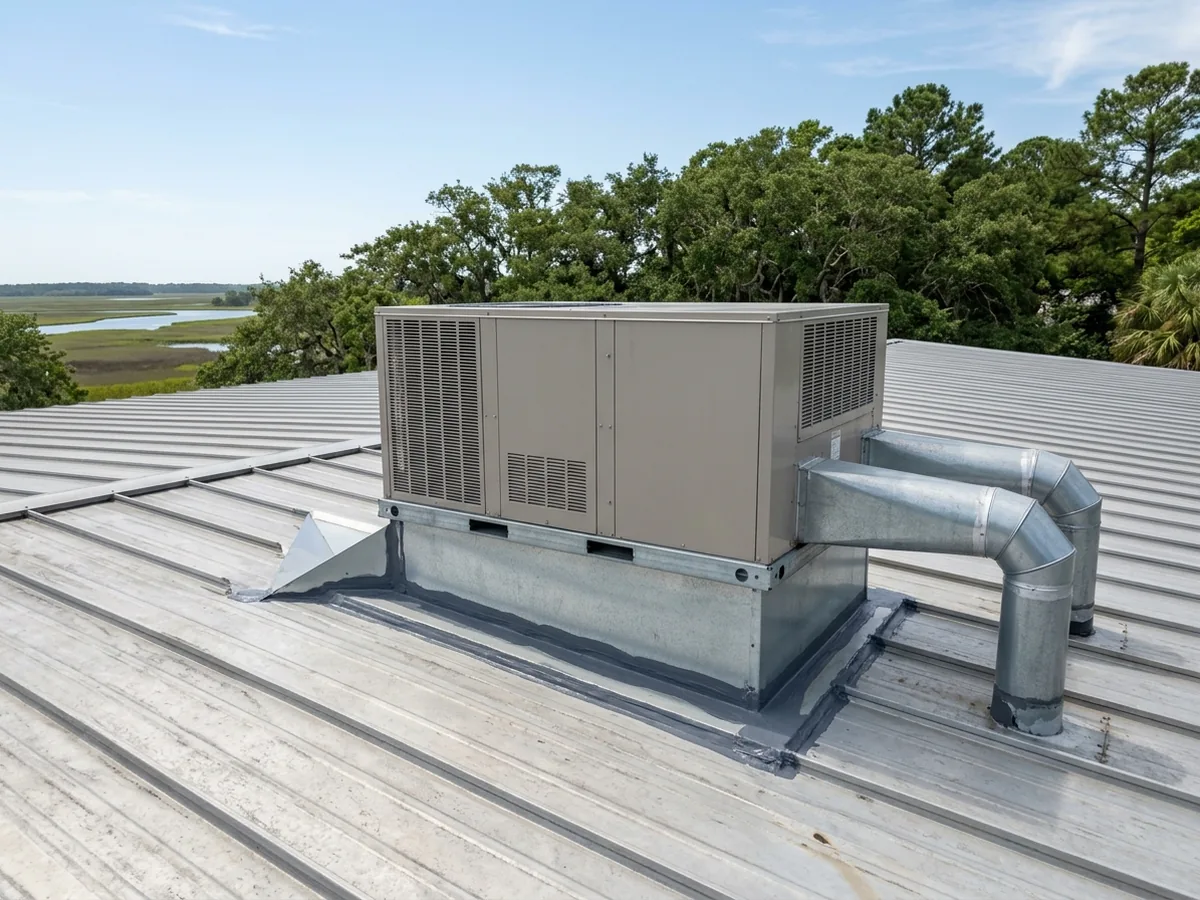
Rooftop units, exhaust fans, skylights and pipe stacks all sit on curbs or boots cut into the panels. Curbs leak when the uphill side has no diverter and water dams against them, when the curb isn't matched to the panel ribs, or when a unit swap leaves the old flashing behind. The 2021 IBC says existing collars, vent flashing and counterflashing can't be reused at a re-roof if they are rusted, damaged or deteriorated. Ask for each curb to be inspected and priced as its own line.
Eave Gutters, Ridge Closures and Trim
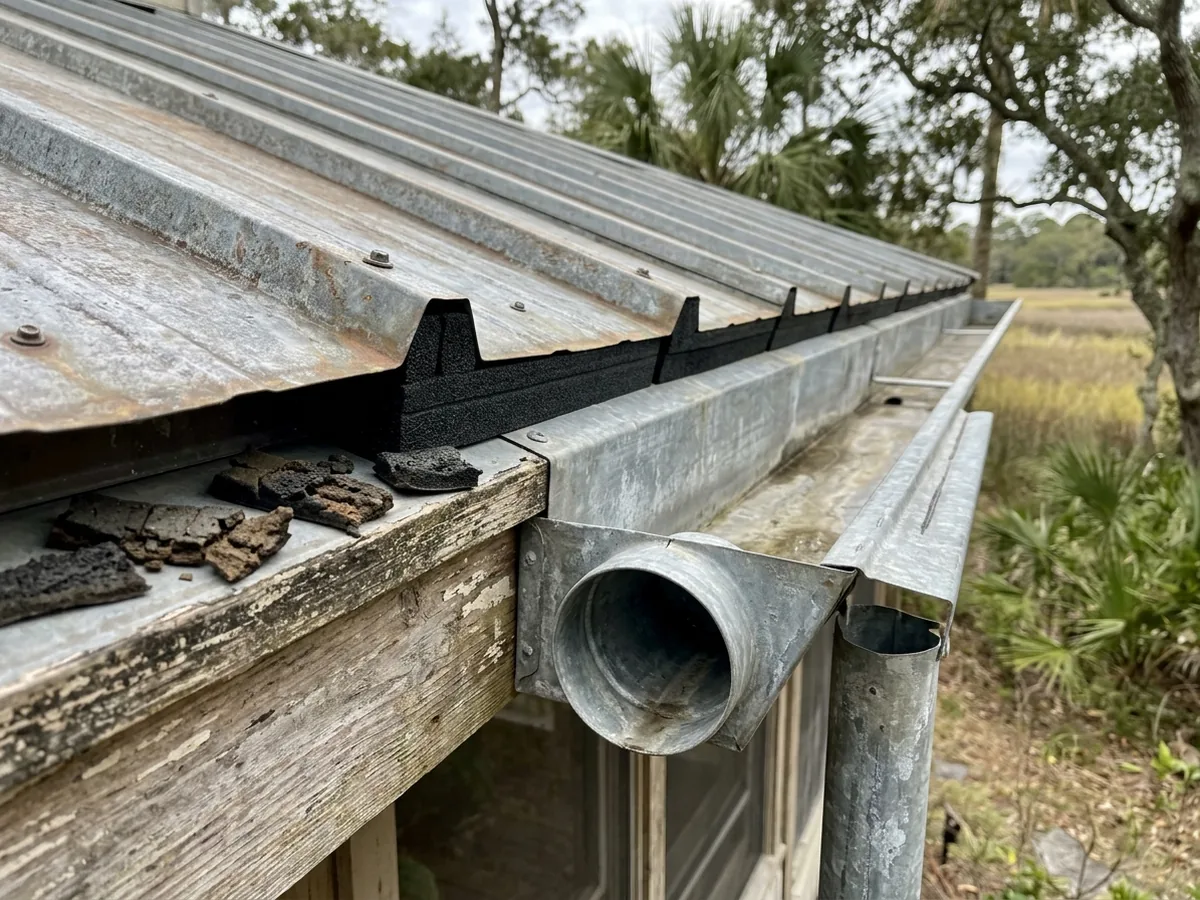
Low-slope metal buildings dump a lot of water into one eave gutter, and a gutter that sags, rusts at its seams or clogs with debris backs water up under the panel ends. Foam or metal closures under the ribs at the ridge and eave keep out wind-driven rain, birds and wasps, and they crumble over the years. The code requires flashing at gutters as well as at walls and roof openings, so a gutter replacement includes the flashing that ties it to the panel.
Coatings and Retrofit Framing Over Old Panels
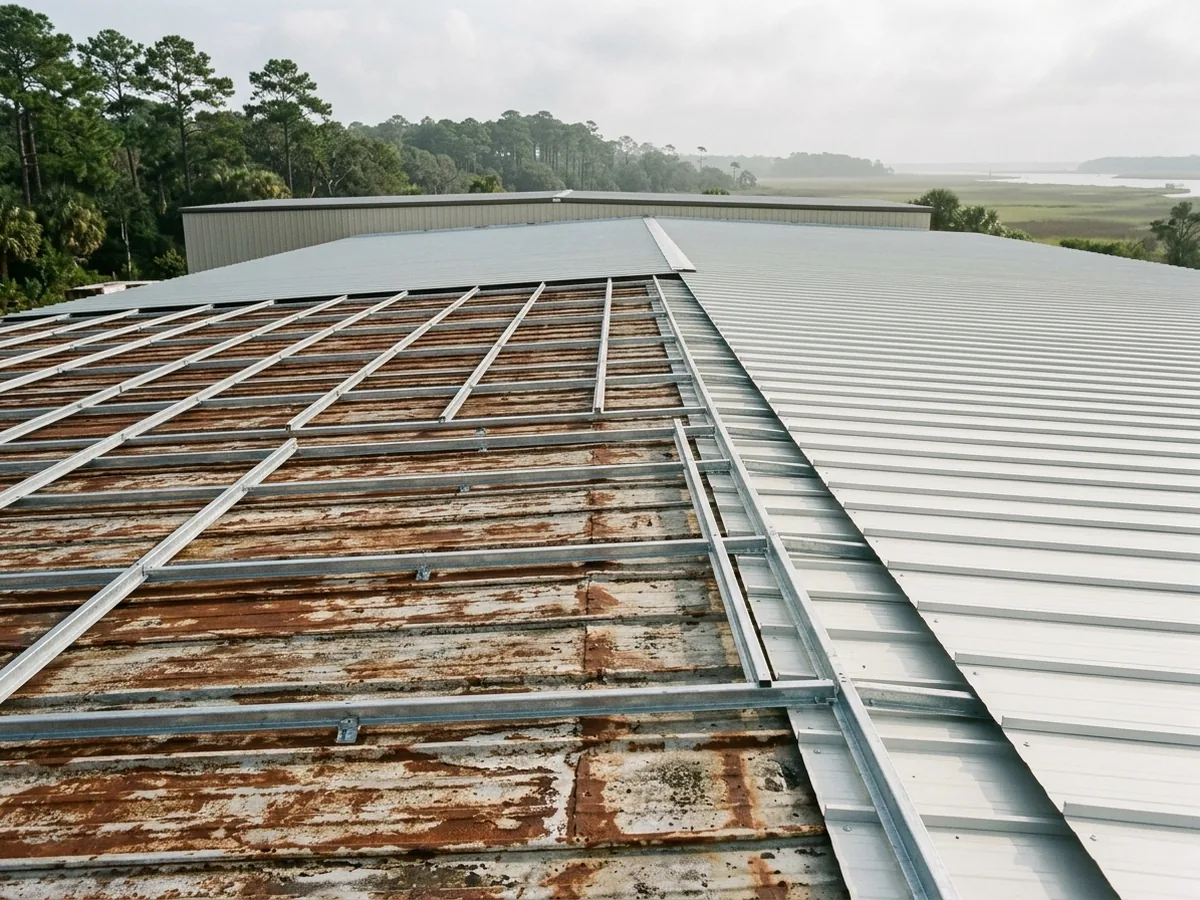
When patching stops keeping up, there are two ways to avoid a full tear-off. A fluid-applied coating system can go over existing metal panels, and the 2021 IBC allows that without removing the roof. Or new standing seam can be set on sub-framing fixed through the old roof to the structure, which the code also allows without removal because the new system carries its loads to the building frame. A coating needs panels that are still sound under the rust; a retrofit needs a structure that can take the new framing. For coating systems in more depth, see Metal Roof Coating and Painting.
Why Charleston homeowners call Charleston Metal Roofing Co.
- Estimate at no cost to you
- Metal, seam and fasteners named on paper
- Your request goes to a single local roofer
- Referral is free; you pay only the roofer you hire
Commercial Metal Roof Repair, Recoat or Replace
A repair is worth it while leaks are coming from identifiable points: fasteners, laps, curbs, a gutter. Once the panels themselves are rusting through across the roof, or the same areas leak after every repair, it's time to price a coating or a retrofit against another year of repairs. If the whole roof comes off, the job becomes a replacement with permit and code review; the building-type side of that is on Commercial Metal Roofing.
Before choosing, ask for a roof survey with a marked-up plan: every leak point, every rusted lap and every curb, photographed and numbered. On a large roof, a water test on suspect areas, run with someone watching inside, pins down the leaks that don't show up dry. That plan is also what you compare bids against, so each contractor is pricing the same list.
Two things to settle before choosing. First, wind: replacement panels, clips and fasteners should keep the roof's tested uplift rating, and the city's design wind speed is set out on Hurricane Metal Roofs. Second, the building's use: a coating applied over a roof with condensation problems inside won't fix those, and a cold-storage or humid process building may need the insulation looked at at the same time.
Commercial Metal Roof Repair Without Closing the Business
Scheduling
Ask for noisy work, crane lifts and any rooftop unit shutdowns to be planned around your hours and deliveries.Inside protection
Ask how stock, equipment and floors below the work area will be covered on the day screws or panels come out.Fall protection
OSHA requires fall protection for roofers on low-slope roofs with edges 6 feet or more above a lower level: guardrails, safety nets, personal fall arrest, or a warning line combined with one of those or a safety monitor. Ask how the crew will meet it on your roof.Documentation
Ask for dated before-and-after photos of each repair, keyed to the numbered survey plan, for your insurer and the next repair visit.Written scope
Ask for the fastener type, sealant, panel replacements and curb work itemized, so a second bid can be compared line by line.