
Historic Metal Roof Work by Type
Each of these jobs starts with the same question: can the roof be kept? The answer decides whether the work is paint, solder or a new roof made the old way.
Terne and Tin Roof Repainting
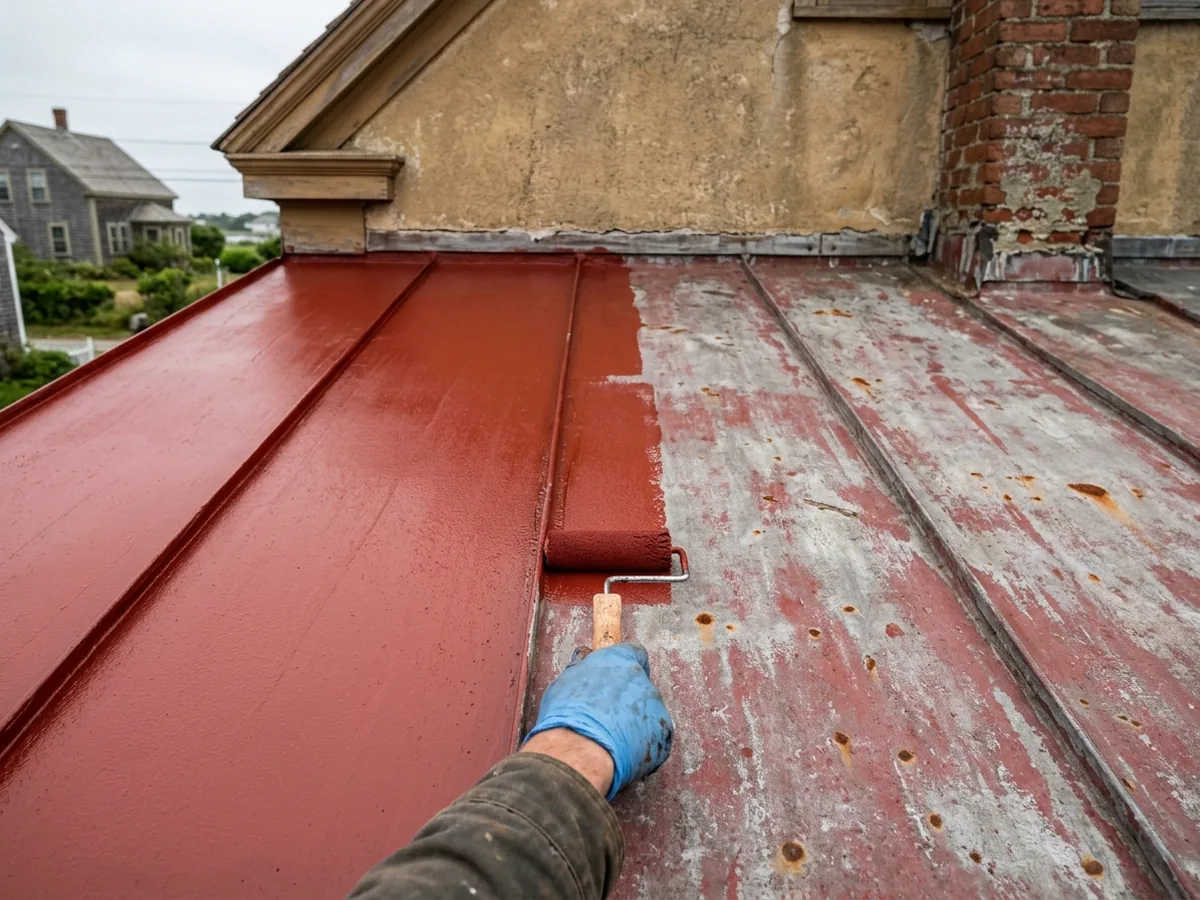
Paint is what keeps a terne or tin roof alive. The National Park Service's guide to historic roofing notes that tin roofs were kept well painted, usually red, and that any iron-based roofing needs an undercoat and a well-kept paint surface to stop corrosion. Once the plating is worn through, bare iron rusts.
A repaint is more than a color coat. Ask for loose paint and rust to be removed by hand, for a primer suited to terne and steel, and for the finish coat to be named in the estimate. Our view: a repaint done on time is the cheapest roofing work an old house will ever get.
Seam Re-Soldering and Patch Repairs
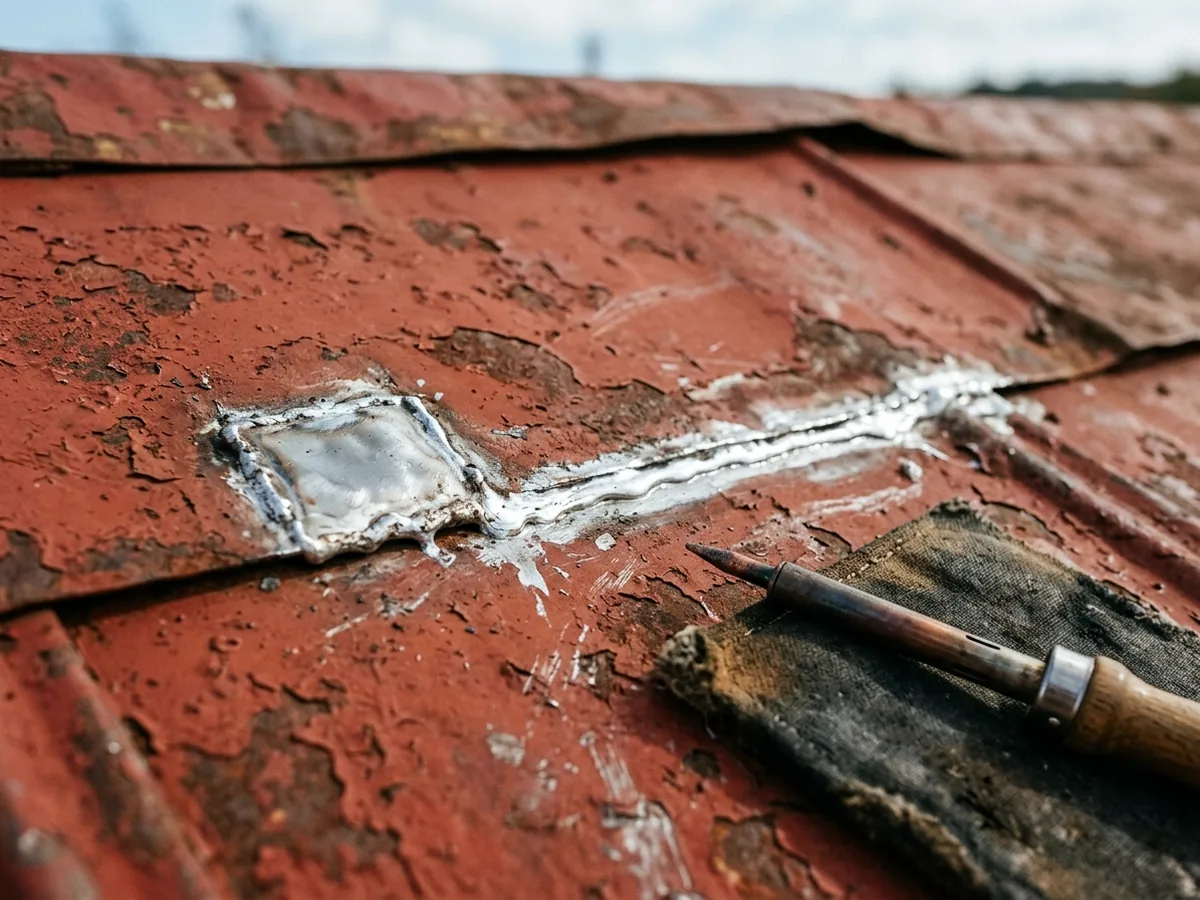
The Park Service notes that metal fatigue shows up at the joints and at anything that pokes through the roof, so seams, chimneys and vents are where a restoration starts. Opened seams get cleaned and re-soldered, and small holes get a soldered patch of a compatible metal. Often most of the sheet is still sound.
Two cautions from the Park Service guide are worth putting to any roofer. Patching a metal roof with caulk or asphalt compound is harmful and at best temporary: asphalt cracks as it hardens, blisters, and holds water against the metal, and it is hard to remove later. And soldering is a fire risk, from the open flame or from the old wood underneath overheating and smoldering unseen. Ask how the crew guards against that and how long someone checks the roof after the torch goes out.
Hand-Crimped Standing Seam Replacement In Kind
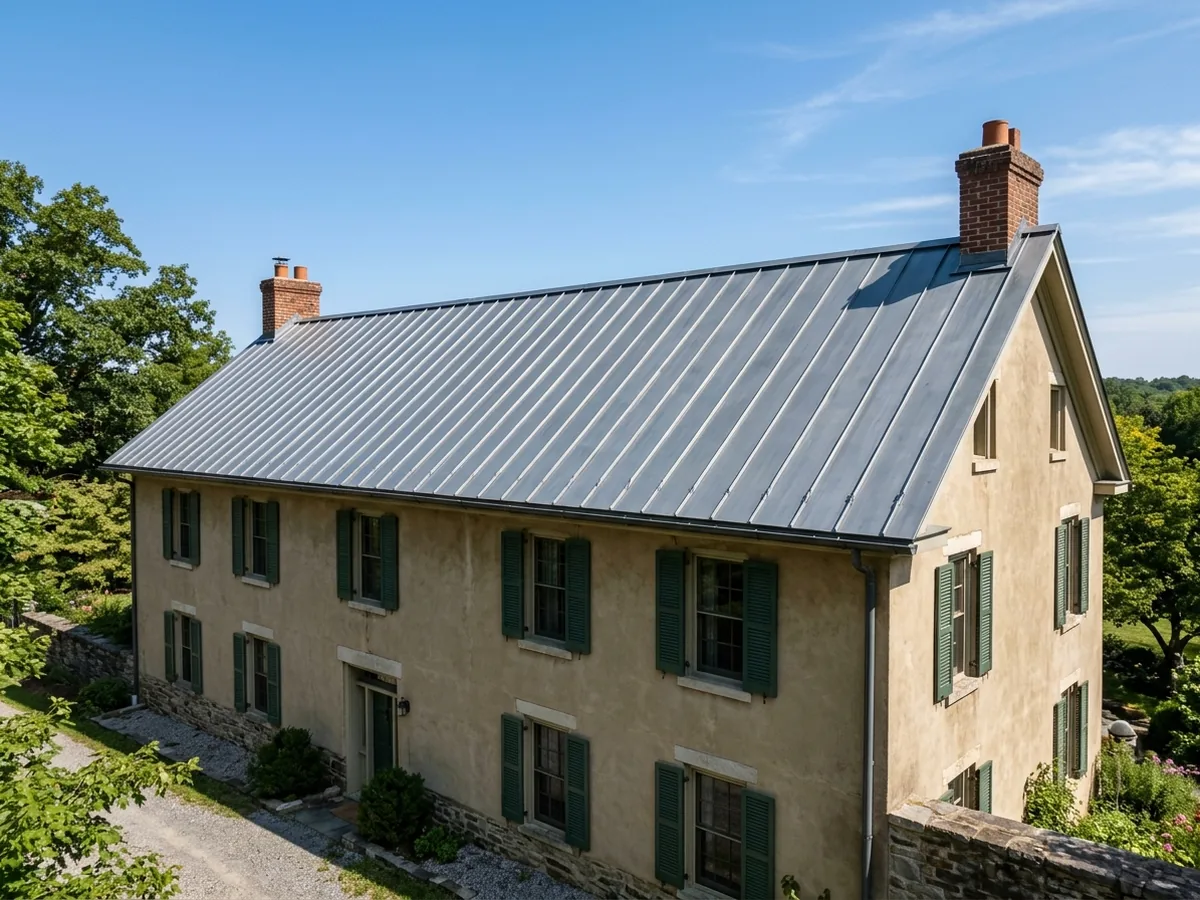
When a historic standing seam roof is past repair, the BAR expects it to be replaced in kind, built the way the original was. Standing seams on historic buildings have to be traditional hand-crimped detailing. Snap-lock panels and commercial-grade metal roofs are not approved.
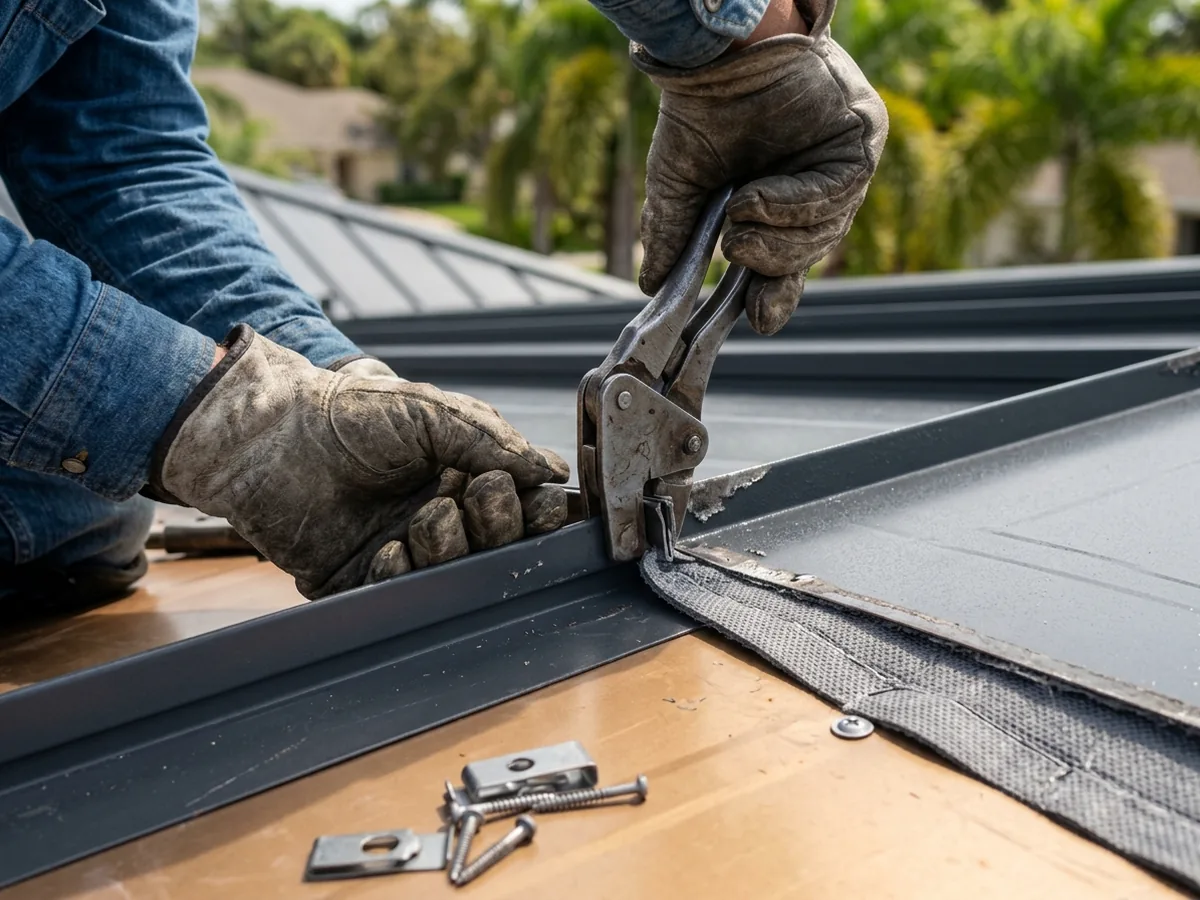
In practice that means pans with seams turned by hand tools, not a factory panel that clicks together. Not every metal roofer does this work, so mention the BAR district when you call, and ask on the visit how the seams will be formed.
Copper or Aluminum in Place of Terne
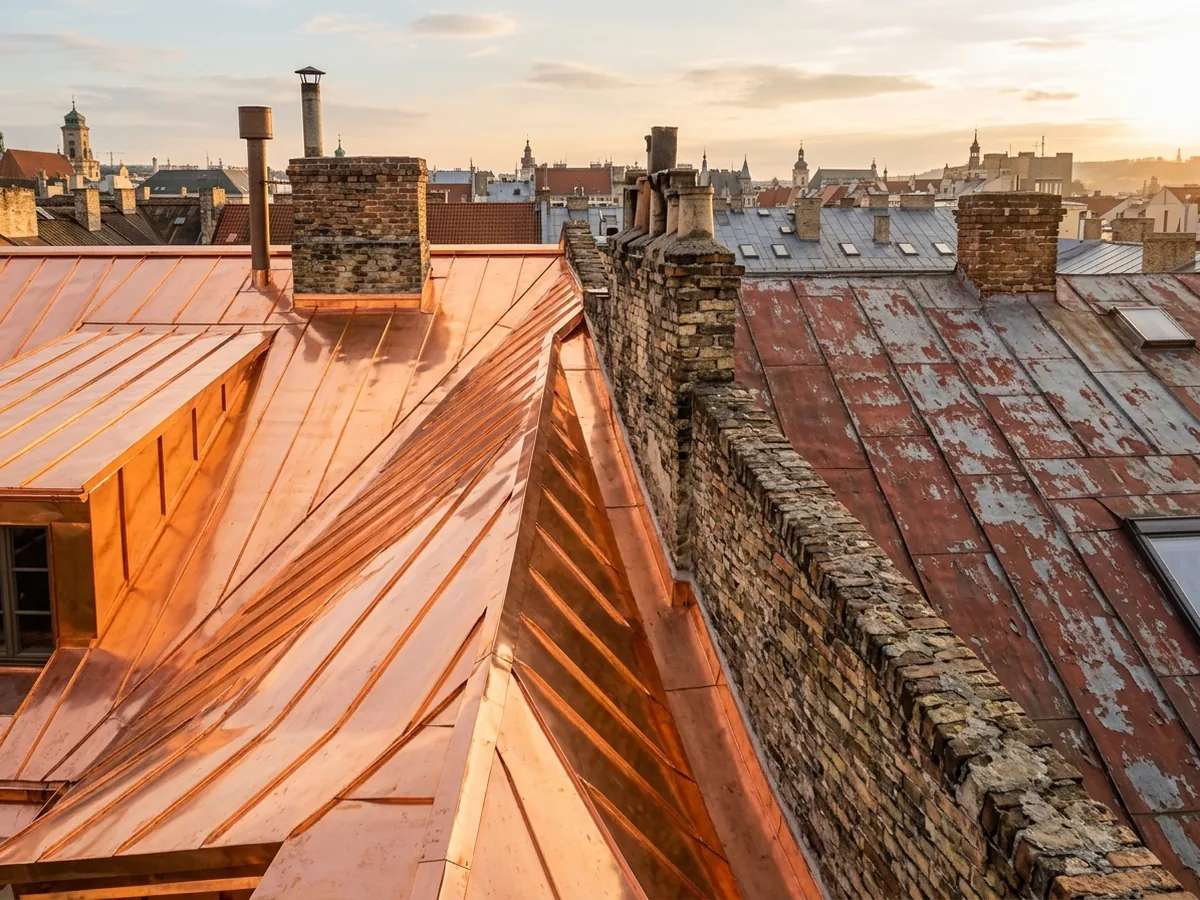
The BAR policy expects that terne metal won't always be available. If terne can't be had, BAR staff may sign off on aluminum or coated copper as the in-kind material. Staff can also approve replacing standing-seam terne with uncoated standing-seam copper, except on Category 1 and Category 2 buildings, where that swap is off the table.
The Park Service lists other substitutes for tin and terne: lead-coated copper, terne-coated steel and aluminum-zinc coated steel. It also warns that copper-coated steel is a cheaper but less durable stand-in for sheet copper. Copper's own details, from weight to patina, are on our copper roofing page.
Embossed Tin Shingles
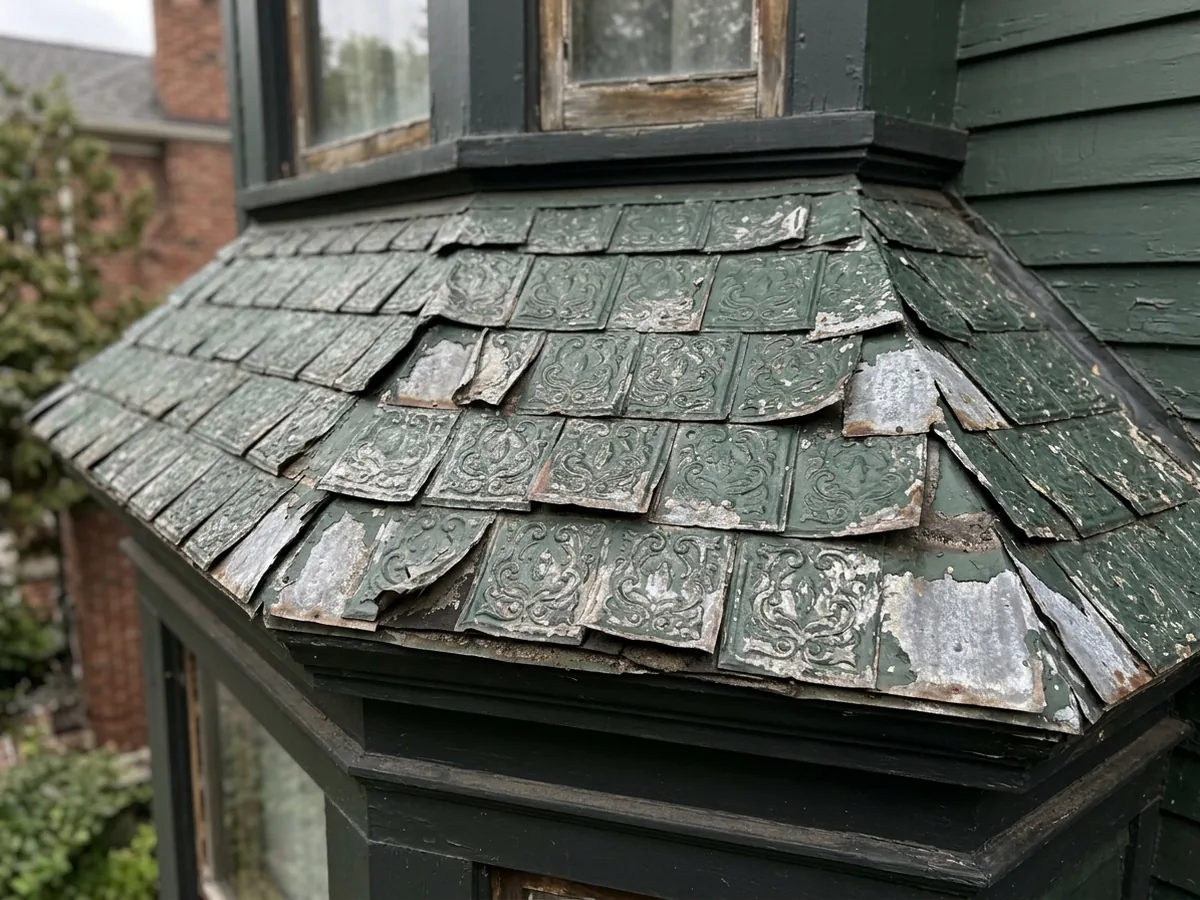
Some older roofs, porch roofs and bays carry small stamped tin shingles, embossed to look like wood or tile or with a decorative pattern. They were an inexpensive textured roof in their day, and they lock together at the edges. The Park Service notes that many have been repaired by nailing through the face, which can cause leaks. A good repair replaces damaged shingles with matching interlocking pieces rather than nailing through them.
Why Charleston homeowners call Charleston Metal Roofing Co.
- Estimate at no cost to you
- Metal, seam and fasteners named on paper
- Your request goes to a single local roofer
- Referral is free; you pay only the roofer you hire
Historic Metal Roofs and the Board of Architectural Review
Charleston adopted the first U.S. zoning ordinance with a defined historic district on 13 October 1931, creating the Old and Historic District. The Board of Architectural Review grew out of it. Its roofing policy, adopted on 10 December 2014, covers historic roofs in the Old and Historic and Old City Districts:
Repair first
A historic roof should be repaired rather than replaced wherever possible, and no historic roof can be replaced entirely unless it is documented as beyond reasonable repair.Replace in kind
A roof that must be replaced is replaced in kind, with construction methods that match the original.Substitutes for terne
Without terne, staff may approve aluminum or coated copper; uncoated standing-seam copper may replace terne except on Category 1 and 2 structures.Hand-crimped seams only
Standing seam roofs must have traditional hand-crimped detailing; snap-lock and commercial-grade metal roofs will not be approved.No synthetics
Artificial slate, artificial tile and similar synthetic materials are generally not appropriate.
Outside the BAR's districts, the city's normal roofing permit applies without board review. The permit, contractor registration and inspection steps are on metal roof replacement.
The "documented as beyond reasonable repair" line matters most. Before you ask to replace a historic metal roof, ask the roofer for photos and a written condition report of the seams, sheets and decking. That document is what supports a replacement request.
Historic Metal Roofs and the Age of Charleston's Housing
The city's housing stock is younger than the peninsula suggests. Census estimates put the median Charleston home's year built at 1996, across roughly 80,600 housing units. But about 7,300 homes, 9.1%, were built in 1939 or earlier, and about a third, 33.8%, were built before 1980.
Not every one of those older houses has a metal roof, and not every one sits inside a BAR district. For owners of the ones that do, the work above is normal upkeep. Painting and soldering a sound roof is also what the board's repair-first rule asks for, so keeping up with it avoids a replacement fight later.
See Copper Roofing in Charleston. See Metal Roof Coating and Painting in Charleston.