
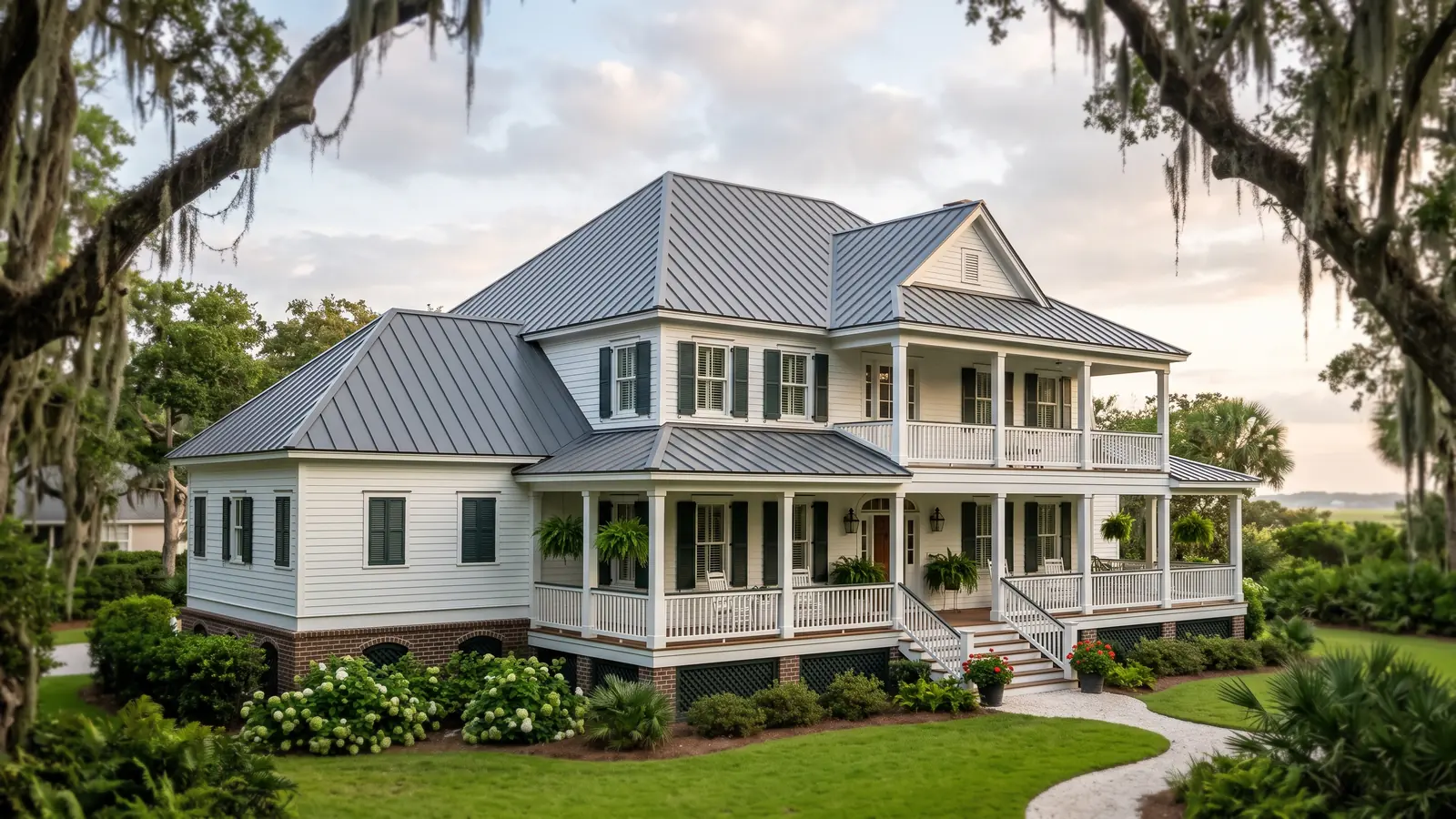
Metal Shingle Styles and Materials
Metal shingles are smaller pieces than standing seam panels, and they interlock on their edges. That lets them follow hips, dormers and turrets that would need a lot of cut panels in standing seam. Granule-coated steel is a separate product with its own page: stone-coated steel roofing.
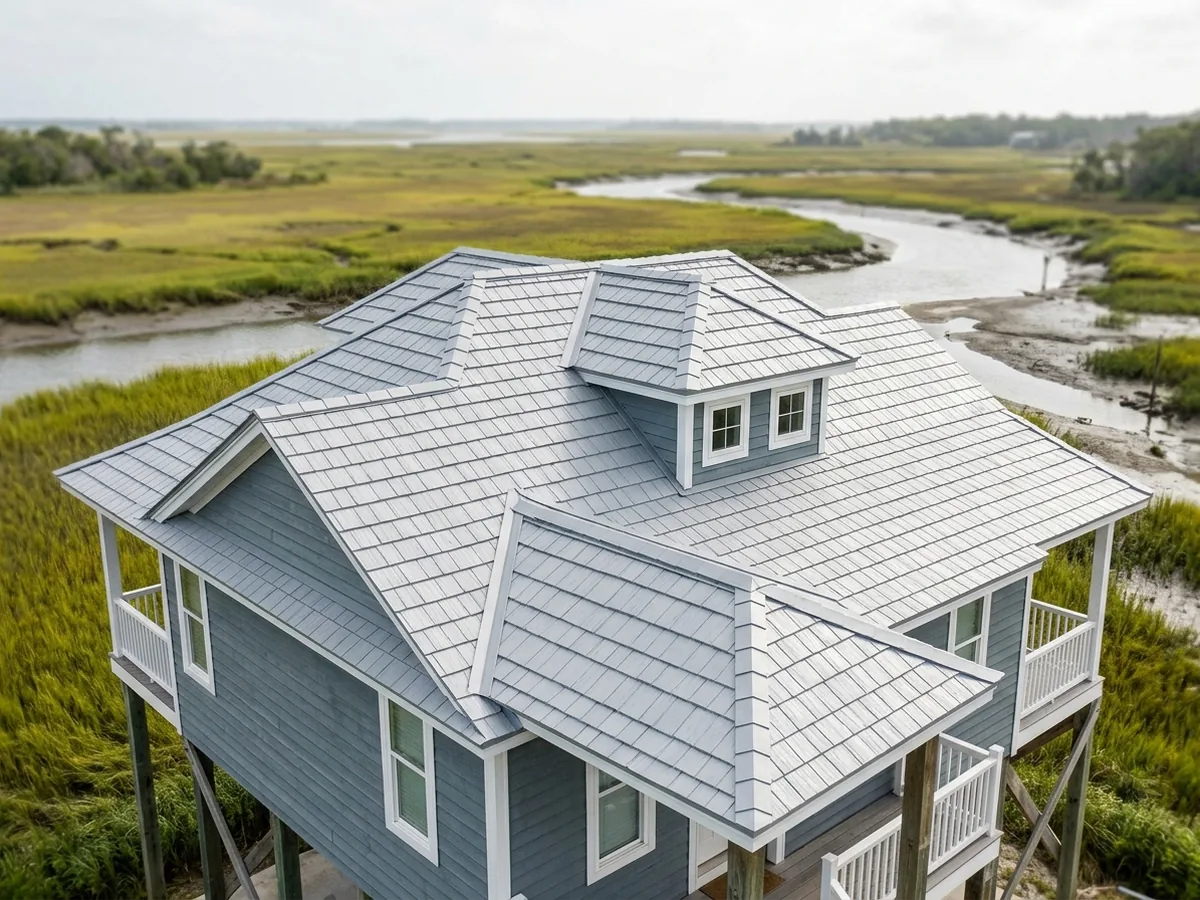
Aluminum Interlocking Shingles
Aluminum shingles are stamped to look like asphalt shingles and lock together on all four sides. One product described in a trade roundup is PVDF-coated 0.024 inch aluminum, 12 by 60 inches per piece, about 40 pounds per square, and rated for roofs down to 3:12.
Aluminum doesn't rust, which is why it's the shingle to look at first close to the marsh or harbor. The salt-water reasons for choosing aluminum, and what steel warranties exclude, are on aluminum roofing.
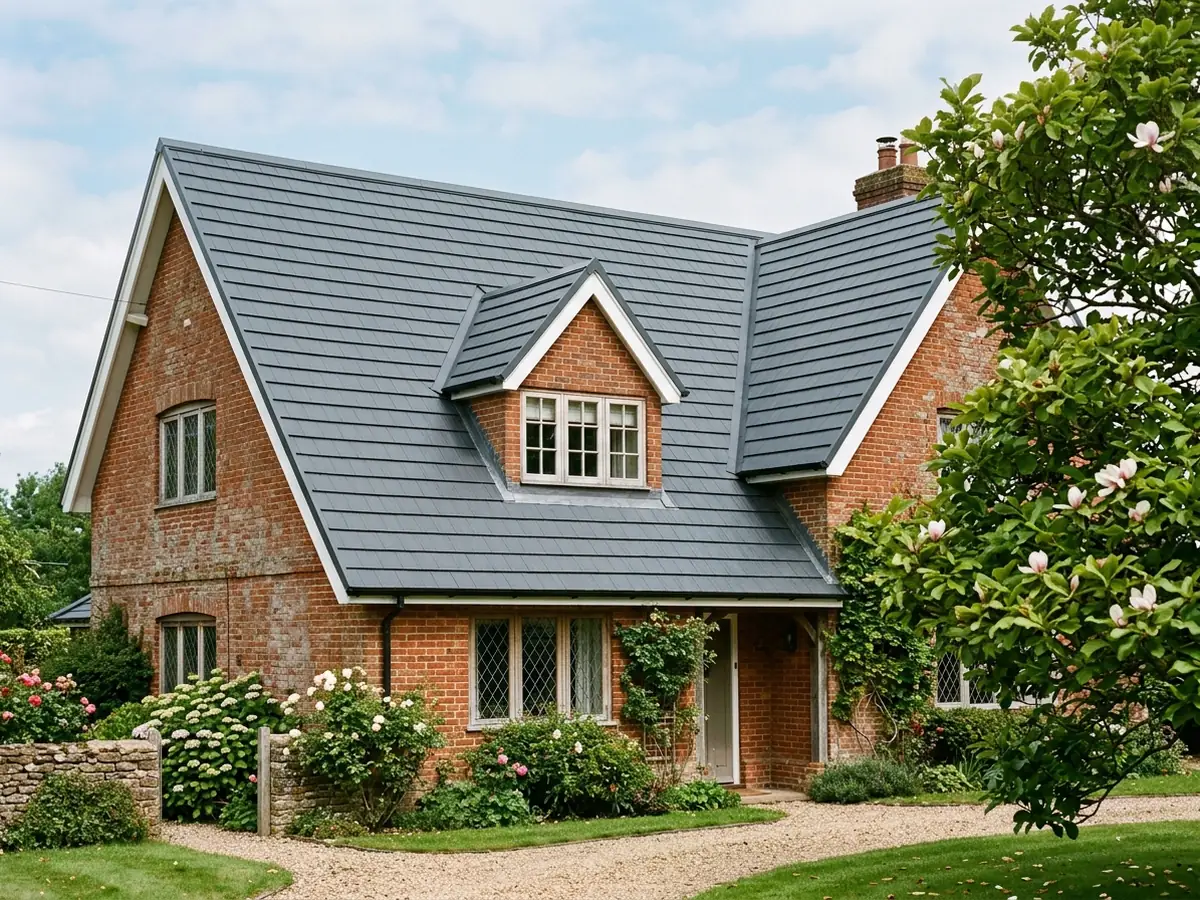
Slate-Look Steel Shingle Panels
Slate-look panels are pressed steel, usually several "slates" per panel. The roundup describes one at 50 by 12 inches with interlocking grooves and concealed fasteners, in PVDF finishes. From the street they read as slate.
In the city's historic districts, the review board's roofing policy treats artificial slate as generally inappropriate, so check your address before choosing a slate look; see historic metal roof restoration.
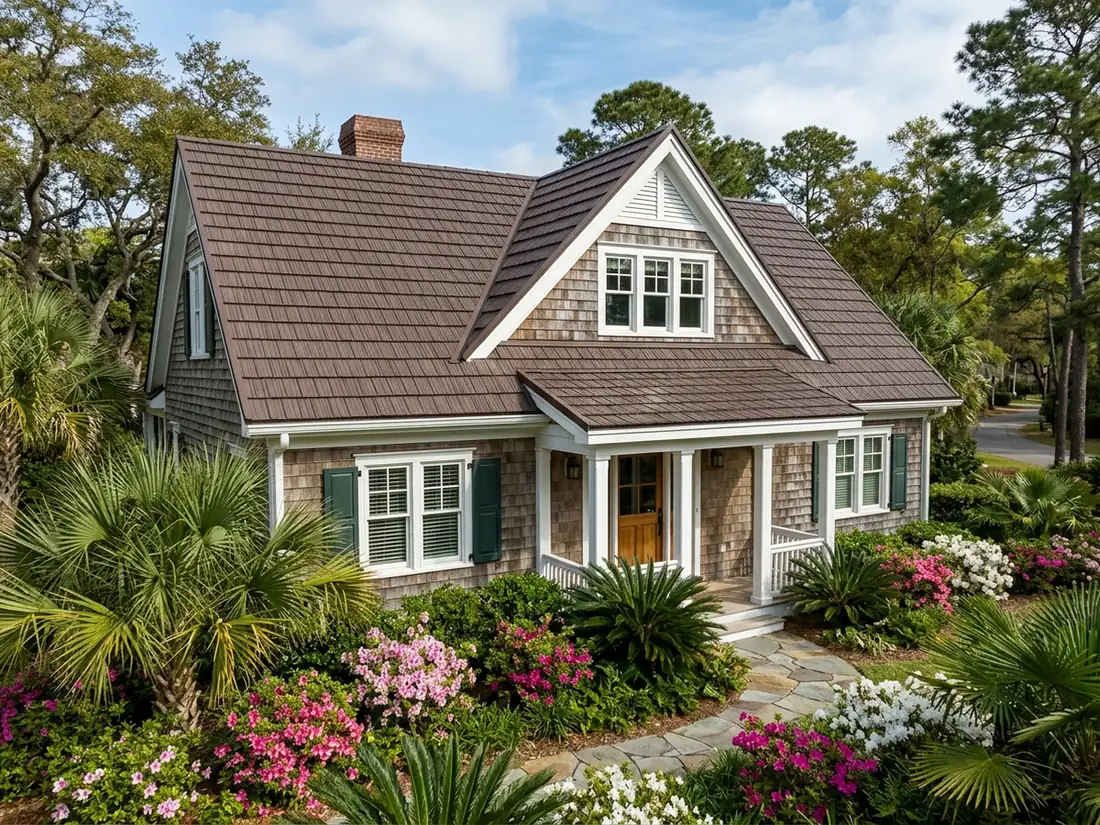
Shake-Look Steel Shingles
Shake-look shingles are formed with deep grooves to mimic hand-split cedar. One example in the roundup is G90 galvanized steel in a PVDF finish. They suit cottages and shingle-style houses where a smooth panel looks out of place.
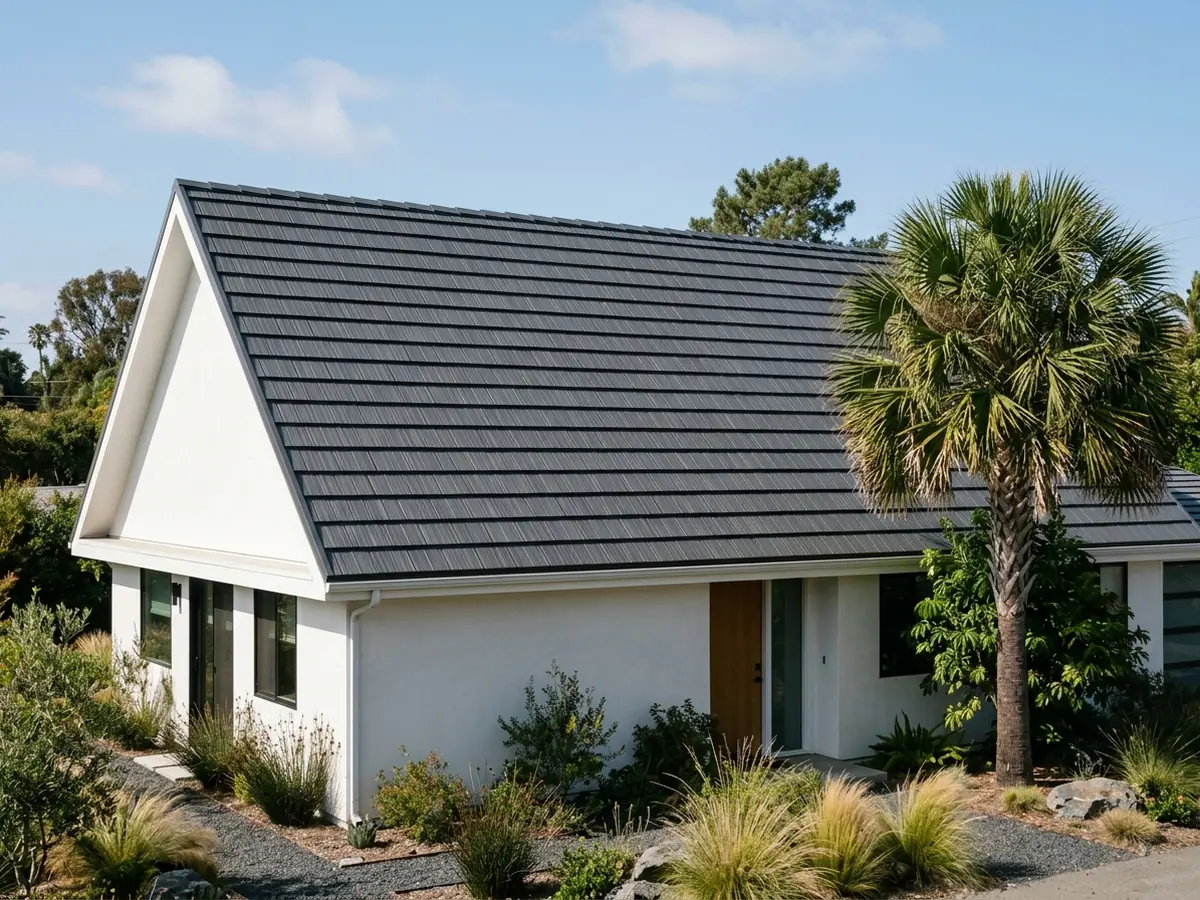
Stamped Metal Tiles
Stamped metal tiles are small flat pieces that interlock and hide their fasteners. One product in the roundup goes on at 3:12 and steeper, directly over plywood or on raised channels, and its small size lets each tile move with heat. The look is cleaner and more modern than shingle or shake, and it suits a contemporary house or an addition.
Why Charleston homeowners call Charleston Metal Roofing Co.
- Estimate at no cost to you
- Metal, seam and fasteners named on paper
- Your request goes to a single local roofer
- Referral is free; you pay only the roofer you hire
Metal Shingle Wind and Impact Ratings
The 2021 IRC requires metal roof shingles on a solid or closely fitted deck to be tested for wind resistance under one of four standards: ASTM D3161, FM 4474, UL 580 or UL 1897. Shingles tested to ASTM D3161 also have to meet the code's classification table for the design wind speed, and the package has to carry a label showing the class. Charleston's design wind speed is explained on hurricane metal roofs.
Impact is separate and optional. UL 2218 drops steel balls on the roof covering. A covering that survives a 2-inch ball dropped from 20 feet earns Class 4, the top class; one that survives a 1.75-inch ball from 17 feet earns Class 3. The rating says how a shingle handles a hit, whether from hail or a branch coming down in a storm.
What to ask for:
Wind test
Which of the four standards the shingle was tested to, and its class or result.Label
The class printed on the packaging, for D3161-tested shingles.Impact
The UL 2218 class, if any, by product name.Fastening
The fastener count and spacing the test was run with, and whether the quote matches it.
Metal Shingle Deck and Slope Requirements
The code adds two rules that rule some roofs out. Metal shingles need a solid or closely fitted deck unless the product is designed for spaced sheathing, and they can't go on slopes below 3:12. A low porch roof or a shallow rear addition won't qualify; standing seam is allowed far flatter, as the metal porch roof page lays out.
So a typical metal shingle job pairs two systems: shingles on the main roof, standing seam on the porch. Ask the estimate to show both, with the transition flashing between them.
The deck matters too. Shingles fasten into the deck through their hidden flanges, so soft or rotten sheathing has to be replaced first. A good roofer will walk the deck after tear-off and price replacement sheets per board rather than guessing. Ask for the underlayment to be named in the estimate as well.
Some owners ask about laying metal shingles over the existing asphalt roof. Whether that's allowed depends on how many layers are already there and whether the old roof is wet or damaged; the code rule and its exceptions are on metal roof over shingles.
Metal Shingles for a Charleston House: How to Choose
Three questions narrow the choice quickly.
How close is the water? Steel shingles rely on their zinc or aluminum-zinc coating and paint, and steel warranties often exclude homes near surf, bays and marshes. Aluminum shingles take that question off the table. The distance rules are on aluminum roofing.
What does the street expect? In an HOA or a neighborhood of shingle and shake houses, a shingle profile may fit where a panel roof stands out.
How cut up is the roof? Metal shingles have more joints than standing seam, since every piece meets its neighbors on four sides, so the interlock design and the wind test are what to compare between products. Standing seam runs in long continuous seams and suits simple roofs and low slopes.
Our take: metal shingles earn their place on cut-up roofs with many hips, valleys and dormers, and on houses where a panel roof would look wrong. On a plain gable roof, standing seam is usually the simpler roof to build and keep dry. National cost figures for metal roofs are on metal roof replacement.
See Stone-Coated Steel Roofing in Charleston. See Aluminum Roofing in Charleston.