
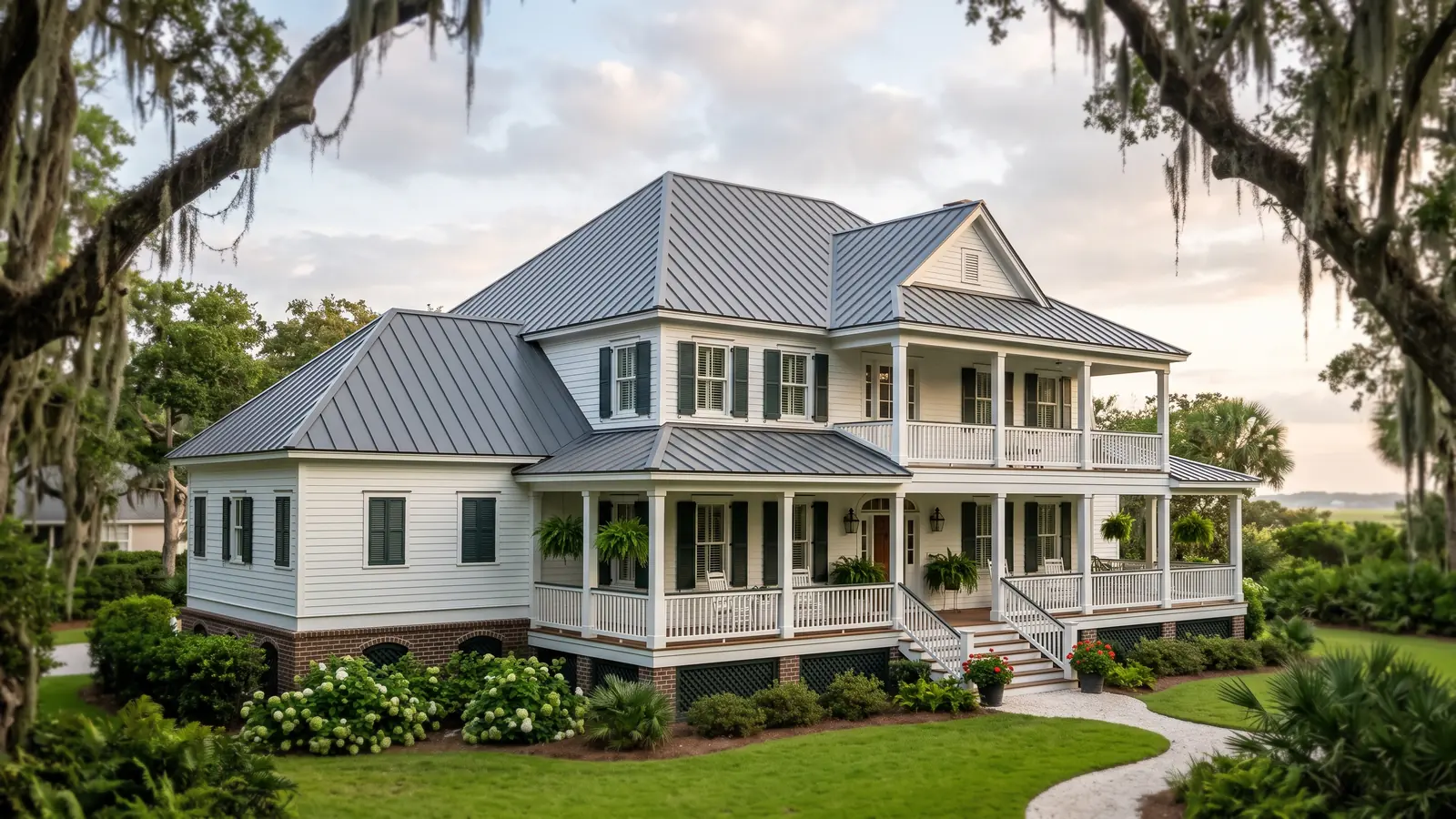
Hurricane Metal Roof Assemblies That Hold in High Wind
A metal roof comes off in a storm in a predictable order. Wind finds an edge, lifts the trim, gets under the first panel and peels from there. Each type of work below closes one of those openings.
Mechanically Seamed Standing Seam Panels
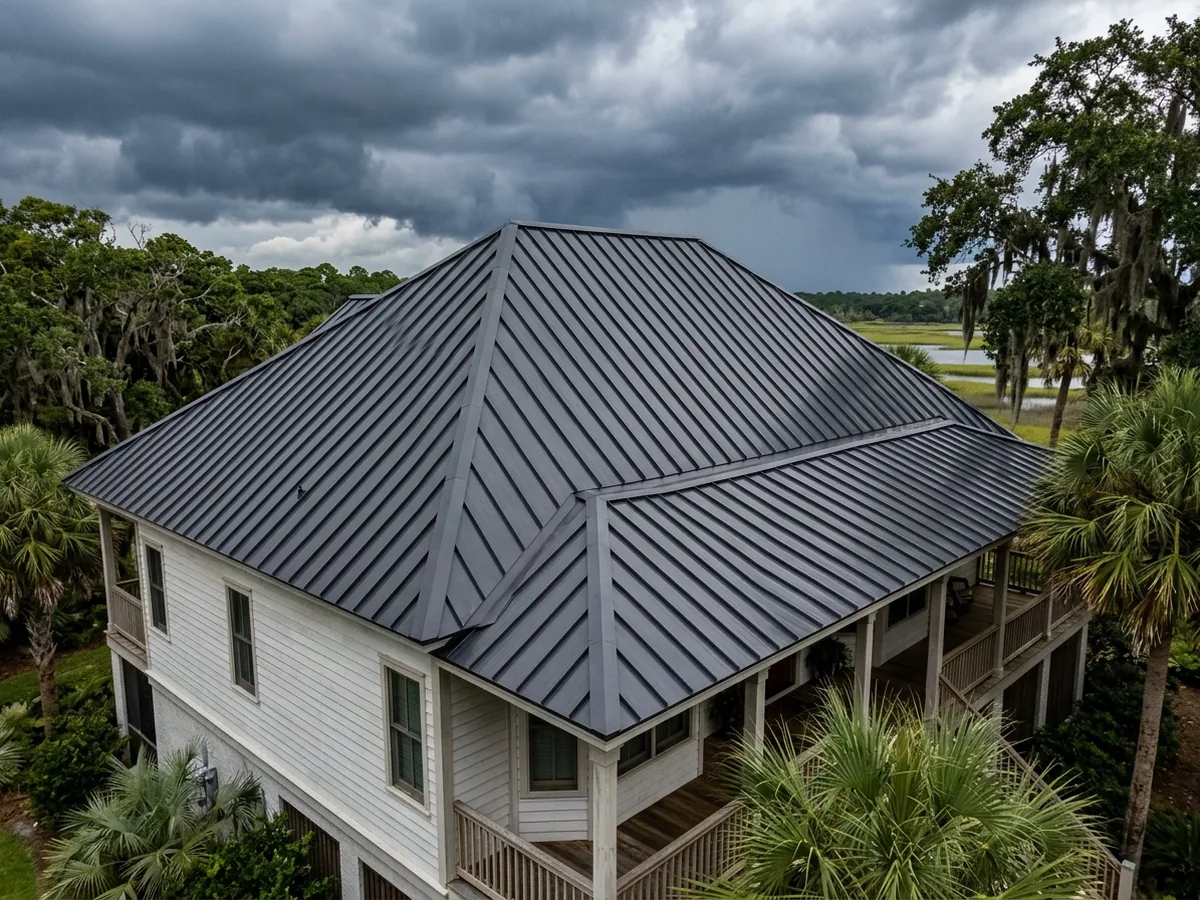
Of the common panel systems, mechanically seamed standing seam (single or double lock) carries the best uplift values, and snap-lock trails it. The full comparison and slope limits are on Standing Seam Metal Roofs. For a hurricane roof the question is narrower: which uplift test did this exact panel pass, at what clip spacing, on what deck? UL 580 runs a roof assembly through successive classes of static and oscillating pressure, and the strongest assemblies pass Classes 30, 60 and 90 in sequence. Ask for the class by product name, not "rated for hurricanes".
FORTIFIED Roof Re-Roofs
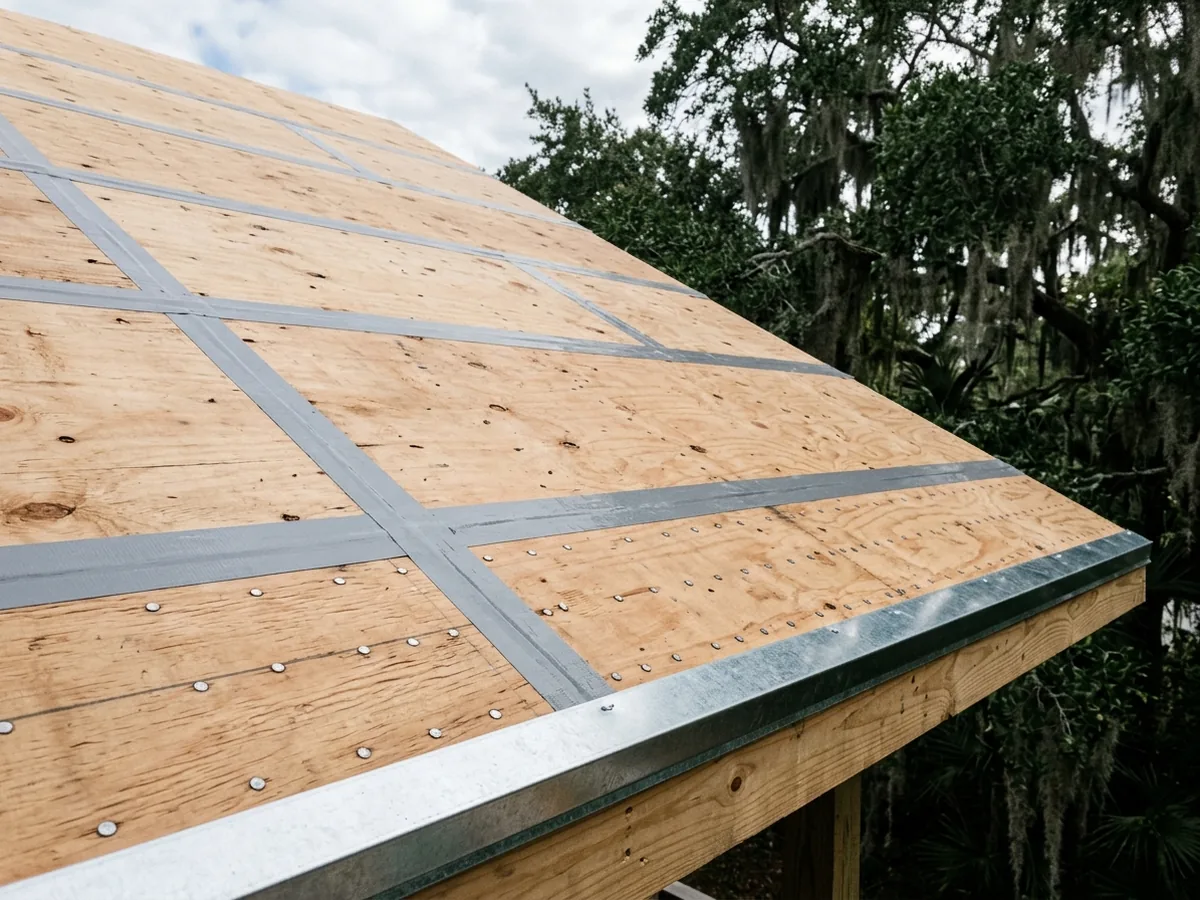
IBHS's FORTIFIED Roof standard starts below the metal. Its hurricane re-roofing checklist calls for removing all existing roofing, replacing damaged wood, re-nailing the deck with 8d ring-shank nails at 4 inches on center, sealing the deck (taped seams under underlayment, a two-layer felt system, or a full peel-and-stick membrane), and fastening drip edge at 4 inches on center, staggered. Metal coverings must be rated and installed for at least a 130 mph ultimate wind speed in Exposure C, and roof vents need TAS 100(A) testing or Miami-Dade approval.
A FORTIFIED designation needs an independent FORTIFIED evaluator, and the roofer signs compliance forms at the end. That designation is also what the top tier of the state grant asks for: see SC Safe Home Roof Upgrades before you sign anything.
Reinforced Eave, Rake and Ridge Metal
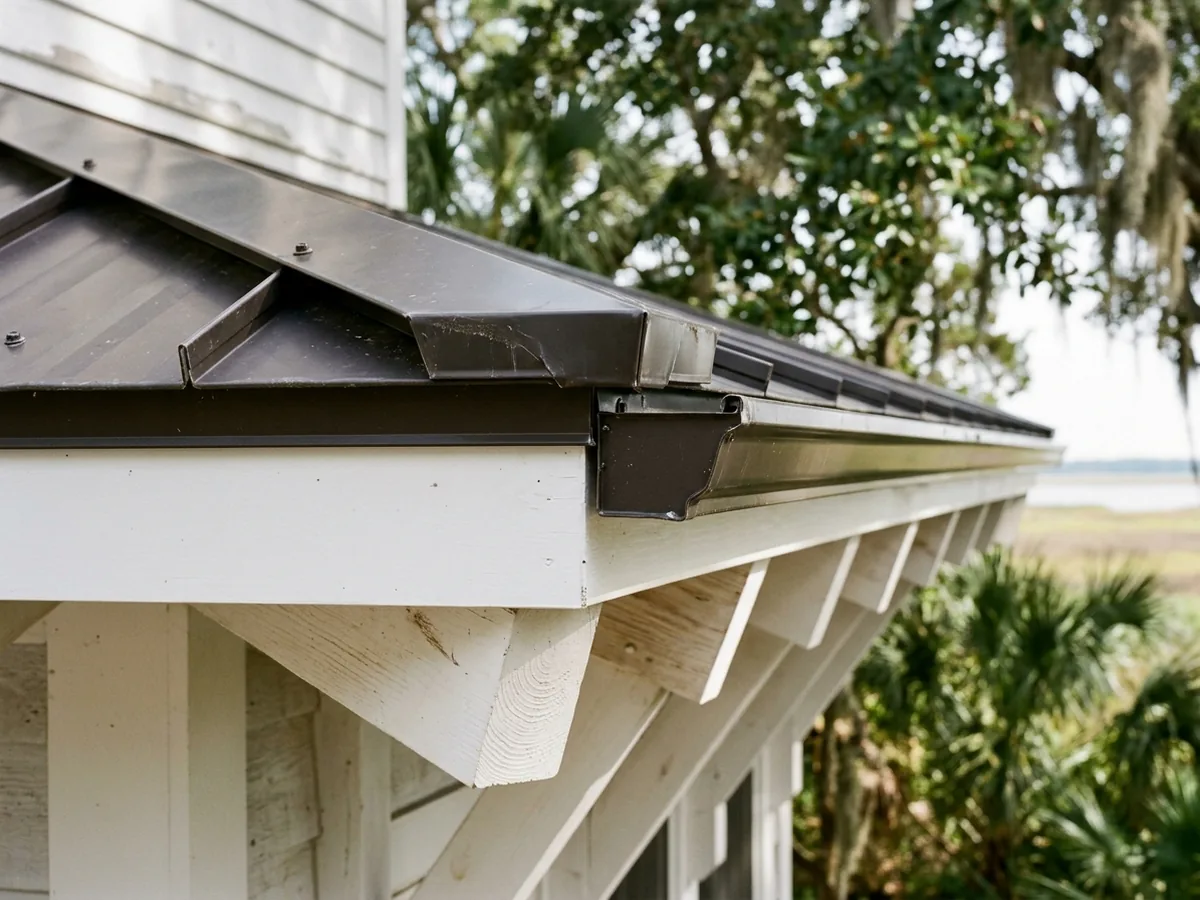
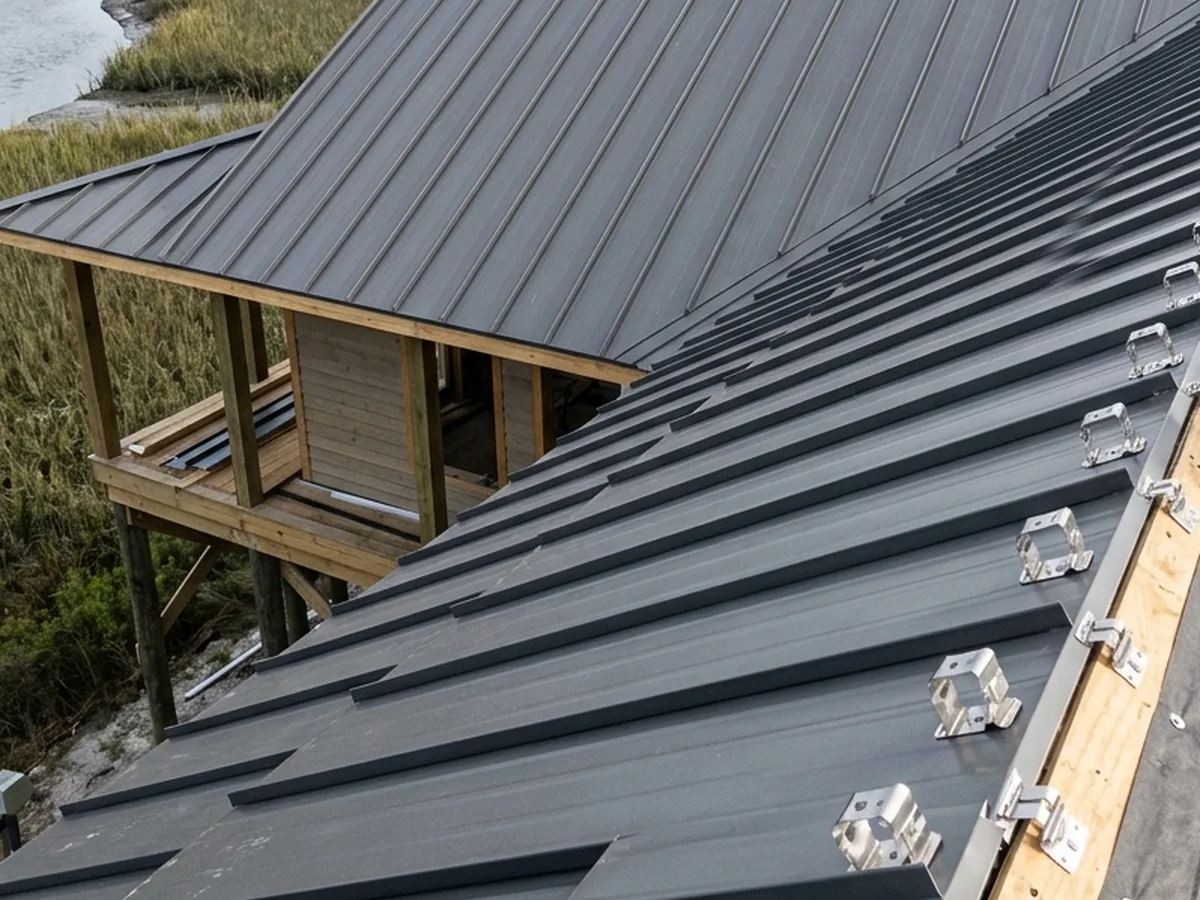
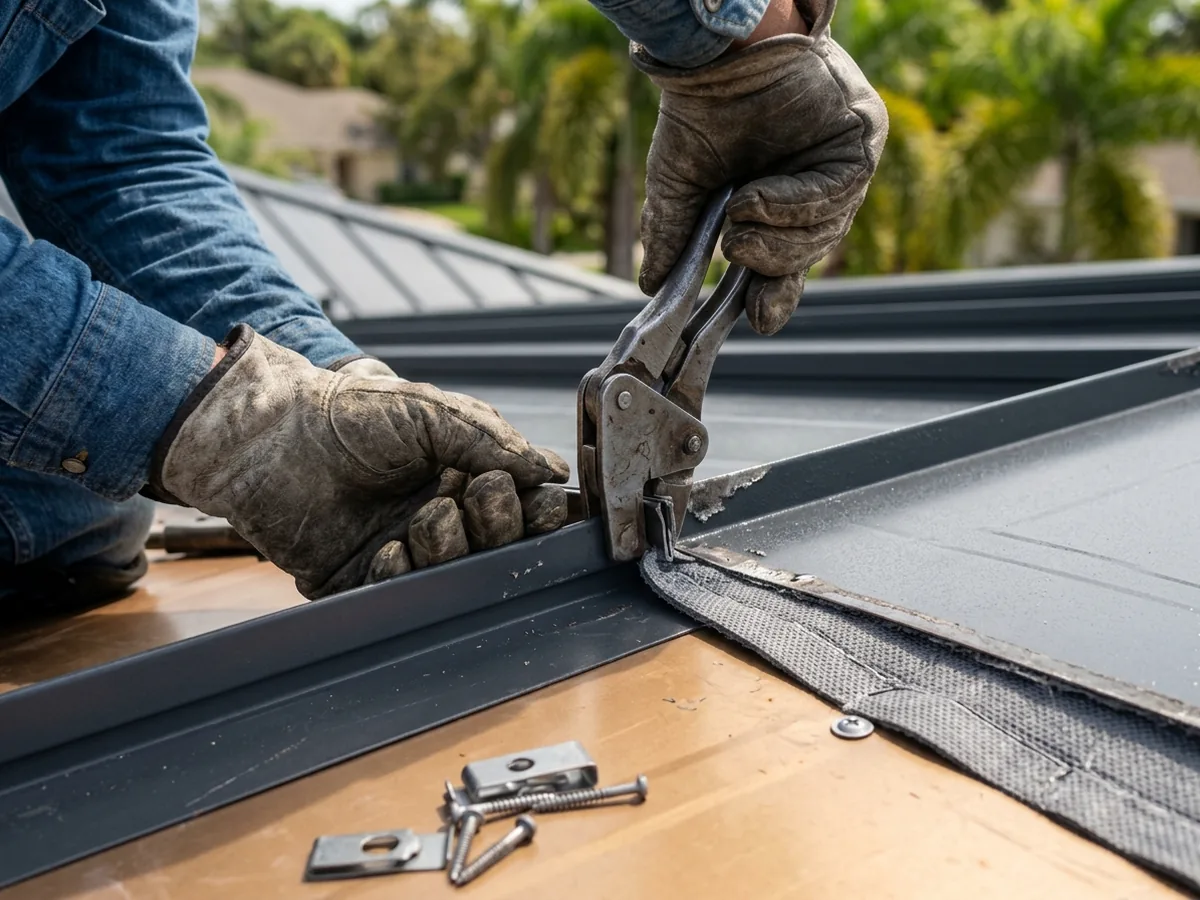
Lab uplift tests mostly measure the field of the roof. One manufacturer's high-wind guide points out that the usual UL 580 rig is a 10 by 10 foot deck that tests the panel, not the trim, and that a failure at the perimeter metal often takes the whole roof with it. Wind loads are highest at the perimeter and corners, so those zones need more clips or screws than the middle of the roof. The fixes are plain sheet metal work: a continuous cleat on the drip edge with the panel hooked into it, heavier closures at the gable, and riveted ridge and hip caps.
Salt-Rated Fasteners and Clips
A clip that has rusted through holds nothing. The FORTIFIED checklist requires hot-dip galvanized or stainless fasteners for any home within 3,000 feet of saltwater shoreline. In a city ringed by a harbor, two rivers and tidal creeks, plenty of homes sit inside that line, so measure yours. Fastener metal for each panel type is on Metal Roof Repair, and how close to the water steel panels stay under warranty is on Aluminum Roofing.
Why Charleston homeowners call Charleston Metal Roofing Co.
- Estimate at no cost to you
- Metal, seam and fasteners named on paper
- Your request goes to a single local roofer
- Referral is free; you pay only the roofer you hire
Hurricane Design Loads in the City of Charleston
The City of Charleston's design criteria table for the 2021 South Carolina building codes sets a design wind speed of 150 mph, with no special wind region and no topographic adjustment. The same table puts the city in wind-borne debris zone 2. Those two lines set the pressure a new roof assembly has to resist, so they belong in the conversation before anyone picks a panel.
What that means for a homeowner:
The tested assembly has to match the design pressure
An uplift rating is only valid for the deck, clip spacing and fasteners it was tested with. Ask for the test report or product approval that matches the installation drawn on your quote.Edges and corners get more fasteners
Expect the quote to show tighter spacing in the perimeter and corner zones than in the field.The permit file needs the maker's specs
The city wants manufacturer specifications with a metal roof permit. The permit and contractor registration rules are on Metal Roof Replacement.
Hurricane History Behind the Code
The storm record explains why owners here take the wind numbers seriously. From 1851 through 2018, 17 tropical cyclones made landfall in Charleston County, more than in any other county in the NWS Charleston forecast area, and most landfalls came in August and September. The National Weather Service calls the September 1752 "Great Hurricane", with storm surge near 17 feet at Charleston, probably the worst storm ever to hit the city.
Hurricane Hugo is the one most owners remember. It came ashore at Sullivan's Island around midnight on 22 September 1989 as a Category 4 storm with sustained winds estimated at 135-140 mph. Gusts reached 108 mph downtown, most downtown buildings were significantly damaged, and the storm tide reached 10.4 feet. Damage came to about $7 billion, the costliest U.S. hurricane up to then. Hugo is the storm worth planning a new roof around, and the edge, deck and fastener details above are what get tested first when the next one comes.
Hurricane Roof Quote: Lines to Get in Writing
A quote for a wind-resistant metal roof should let you check the whole load path, not only the price per square. Ask for these lines in writing:
Uplift test
The standard (UL 580 or another), the class or rating, and the product name it applies to.Clip and fastener spacing
Field, perimeter and corner zones listed separately.Deck work
Whether the deck will be re-nailed, with what nail and at what spacing, and how soft sheathing is handled.Secondary water barrier
Which deck-sealing method is used, in case panels are lost.Edge metal
Drip edge, cleats, rake and ridge details, and how they are fastened.Fastener metal
Galvanized, stainless (which series) or matched to aluminum or copper.FORTIFIED
If you want the designation, who the evaluator is and when they inspect.
Timing matters too. Season dates and the months the city gets most of its rain are on Storm Damage Roof Repair, along with what to do if a storm gets to the roof first.
See SC Safe Home Roof Upgrades in Charleston. See Standing Seam Metal Roofs in Charleston.