
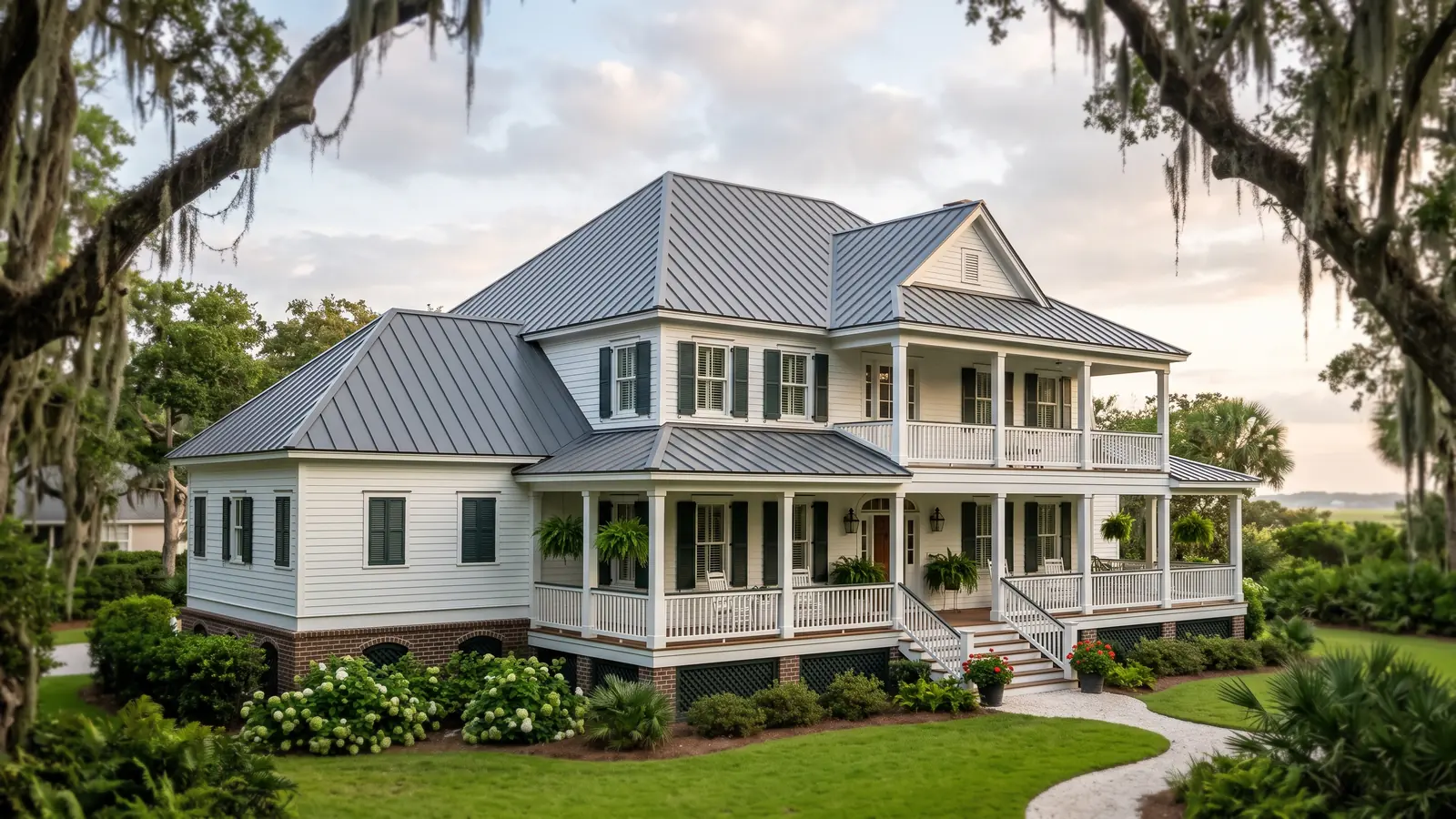
Metal Roof Flashing Types on Charleston Roofs
Every place the roof stops, turns or gets cut through needs its own flashing piece. These are the ones a metal roofer is asked to build or rebuild most often.
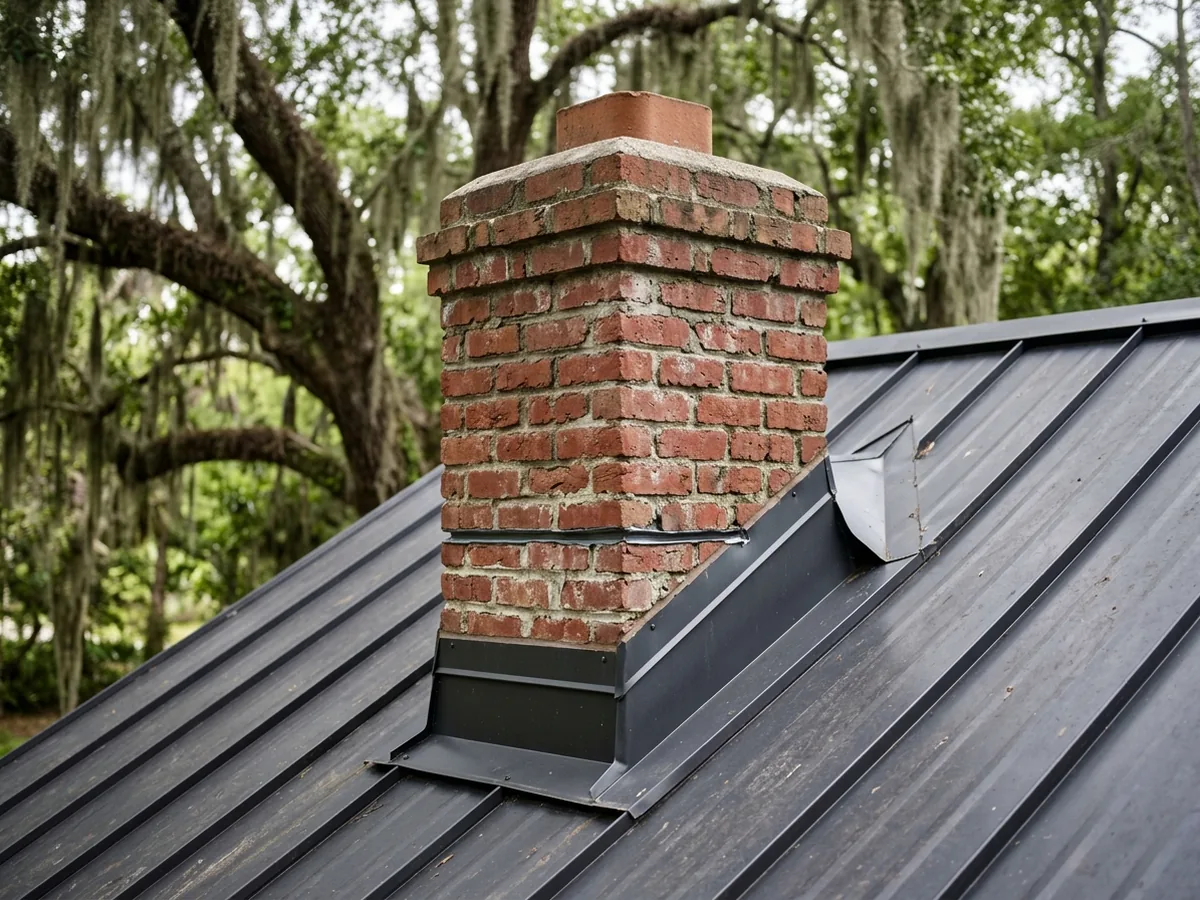
Chimney Flashing and Crickets
A chimney on a metal roof gets a base flashing that turns up the brick and a counterflashing let into a sawn mortar joint above it, so the two can slide past each other as the roof moves. On the uphill side, water piles against the brick. The 2021 IRC requires a cricket, a small peaked saddle that splits the flow, behind any chimney or penetration more than 30 inches wide, covered in sheet metal or the roofing material. An older chimney may never have had one, and a re-roof is the time to add it.
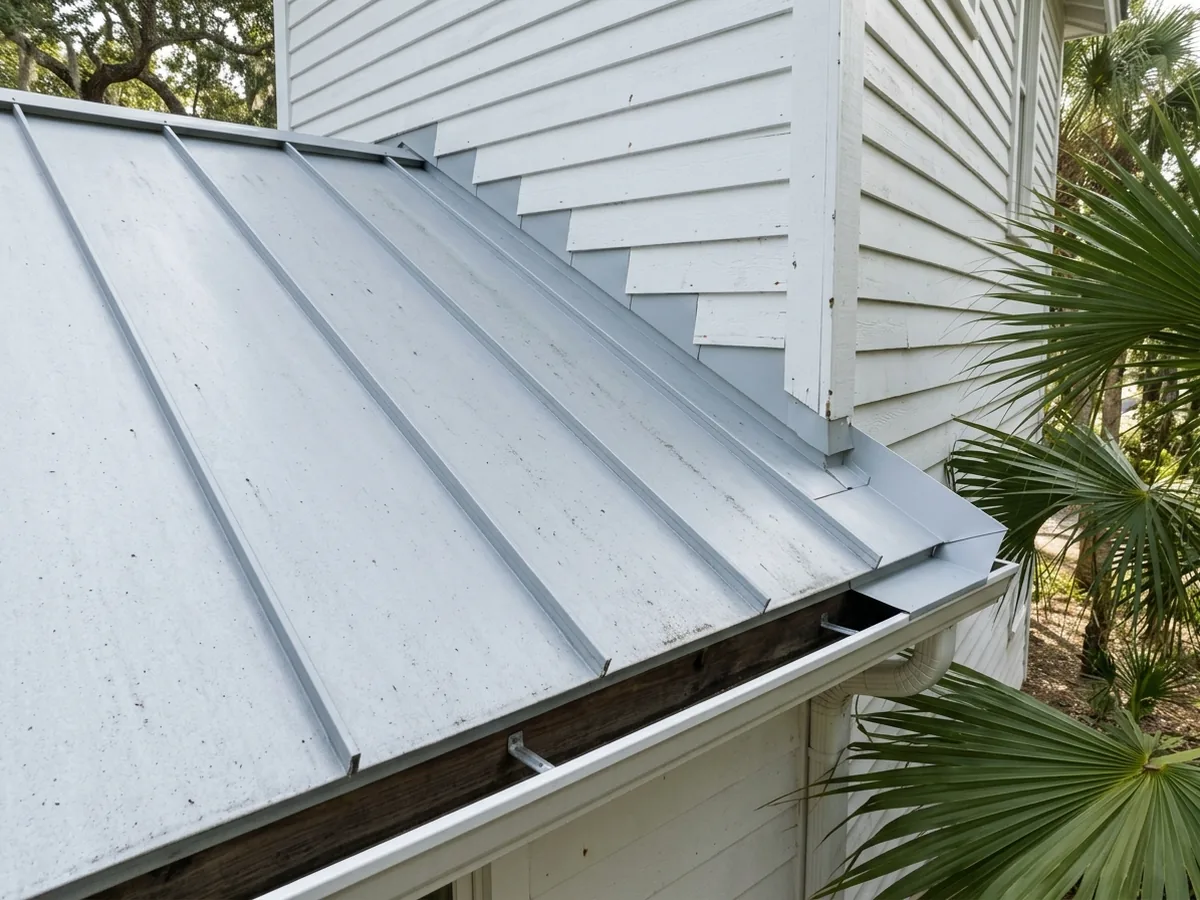
Sidewall and Kickout Flashing
Where a roof runs along a wall, as at a dormer cheek or the side of a second storey, a sidewall flashing sits under the siding and over the panel rib. The weak point is the bottom, where the eave meets the wall. The code calls for a flashing there that diverts water away from the wall, usually called a kickout. Without it, rain runs down behind the siding and into the sheathing, where the rot stays hidden until a board goes soft.
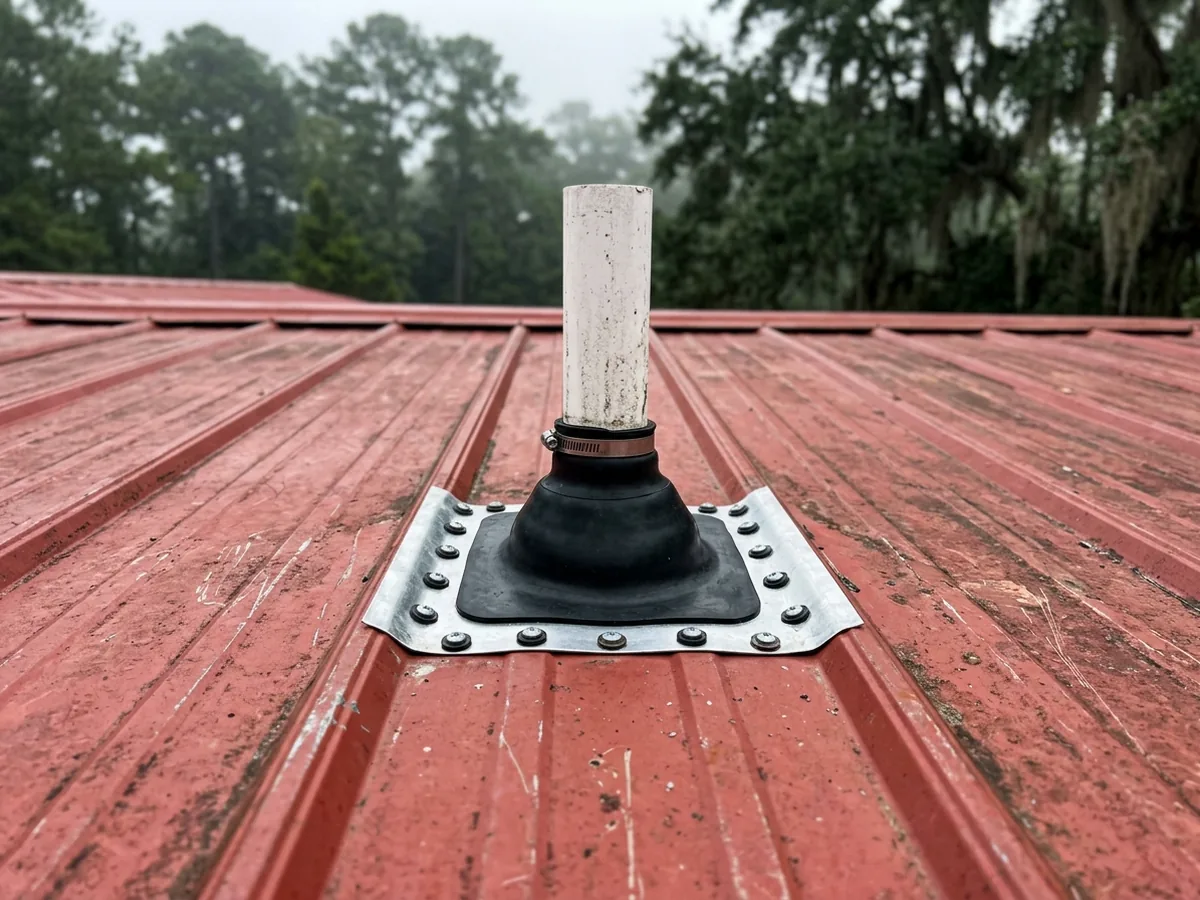
Pipe Boots and Vent Penetrations
Plumbing vents, bath fans and exhaust stacks come through the panel itself. On metal roofs they usually get a flexible EPDM or silicone boot whose base bends to the panel shape and is sealed and screwed to it. The two things that go wrong are a boot set across a seam or rib where it can't seal, and rubber that has cracked after years of summer sun. A new boot costs little next to the ceiling and insulation a split one can soak.
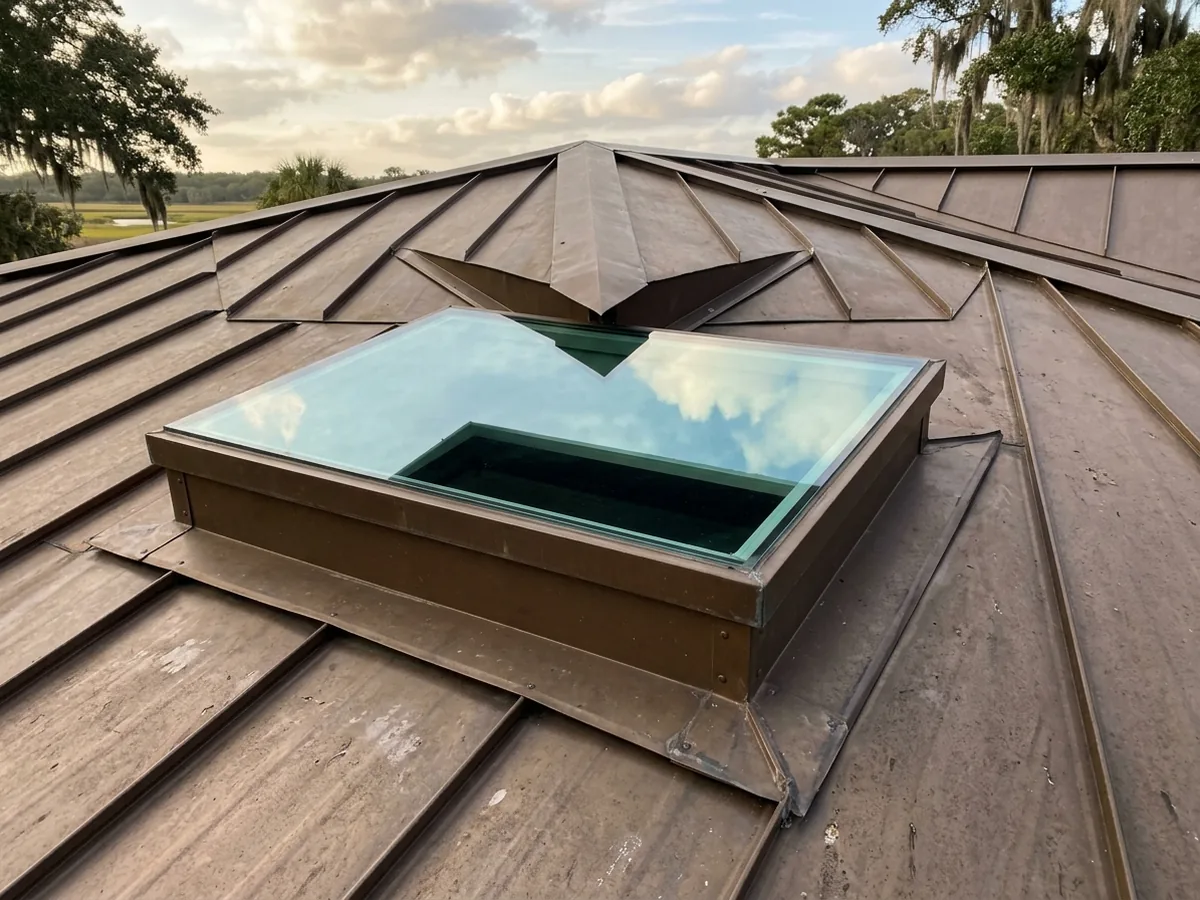
Skylight and Curb Flashing
A skylight on a standing seam roof sits on a curb, and the panels are cut and folded up around it, with a diverter on the uphill side that steers water around the corners. Flashing kits made for shingle roofs don't fit panel seams, so the curb flashing is usually bent to suit the panel. A re-roof is also the moment to decide whether an old skylight that has leaked before stays at all.
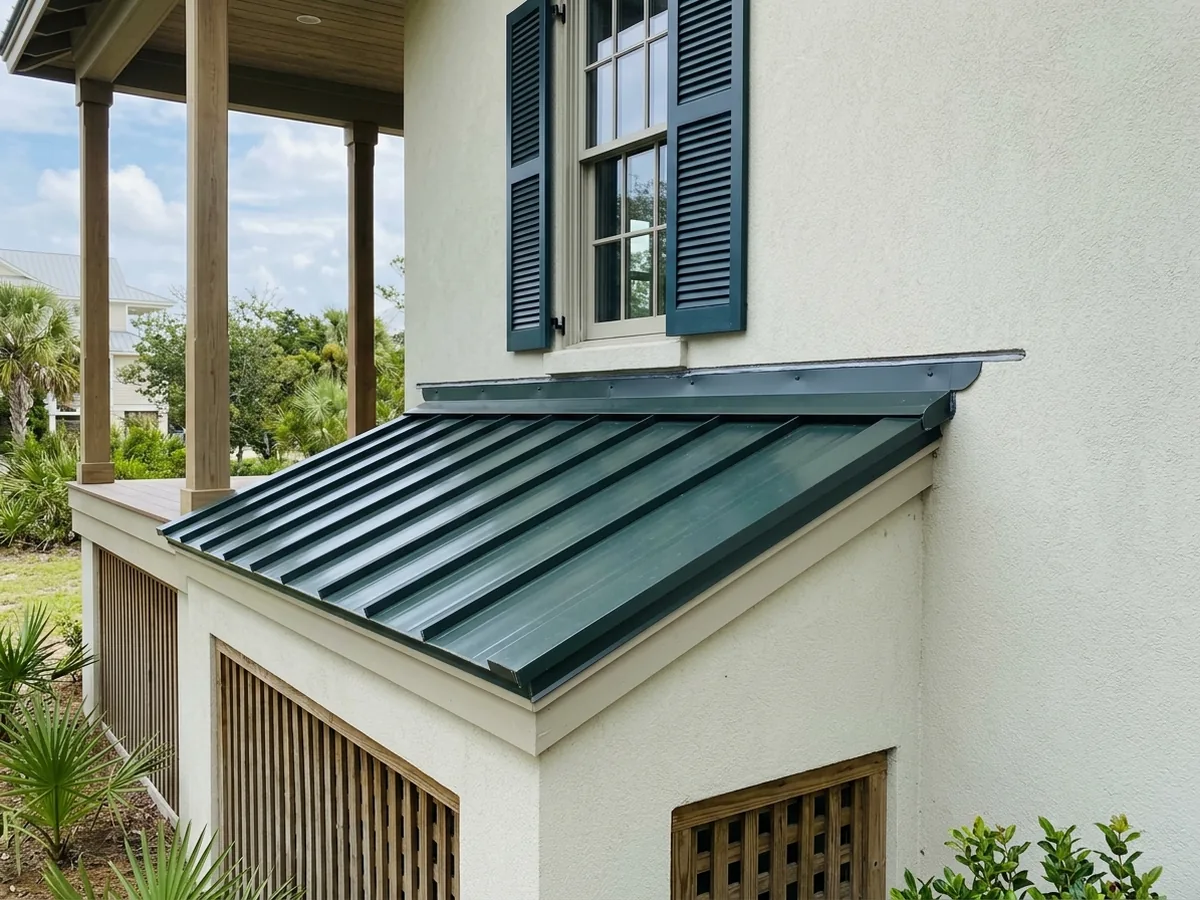
Endwall and Porch Tie-In Flashing
Where a porch or piazza roof butts into the house wall, the top of the panels needs an endwall or headwall flashing, with a counterflashing or a reglet cut into stucco or brick above it. Low porch roofs leak here more than anywhere else, because wind pushes rain uphill under a short flashing. For the porch roof itself, see Metal Porch Roofs.
Why Charleston homeowners call Charleston Metal Roofing Co.
- Estimate at no cost to you
- Metal, seam and fasteners named on paper
- Your request goes to a single local roofer
- Referral is free; you pay only the roofer you hire
Flashing Metal Matched to the Roof Panels
The flashing has to be compatible with the panel it touches. Dissimilar metals in contact, such as copper and iron, corrode each other through galvanic action, and the National Park Service's roofing brief notes this can happen even when they aren't touching, because rainwater carries the reaction from one to the other. So copper trim belongs with copper or terne, aluminum with aluminum, and painted Galvalume trim with painted Galvalume panels.
The code sets a floor for metal flashing: corrosion resistant and at least 0.019 inch thick. Panel makers' trim usually comes from the same coil as the roof, so the color and finish match too. Screws and rivets have to match as well; which fastener metals go with which roof is covered on Metal Roof Repair. On a house close to salt water, ask what metal the flashing is, not only the panels; the Aluminum Roofing page explains why that question matters near the marsh.
Metal Roof Flashing Repair or Full Re-Flash
The National Park Service calls failed flashing usually a major cause of roof deterioration, whether from poor workmanship, thermal stress or the flashing metal and its fasteners wearing out. On a metal roof that means sealant that has dried and pulled away, screws backing out of trim, or a bead of caulk standing in for a kickout or cricket that was never built.
Some flashing can be fixed in place: a new boot, re-set counterflashing, fresh fasteners. Some can't, because the original piece is too short or bent the wrong way. When a roof is replaced, the 2021 IRC says rusted, damaged or deteriorated flashings, edgings and vents must be replaced, not reused, and flashings rebuilt to the manufacturer's instructions. Finding the failed piece is half the visit. A roofer will usually start in the attic or under the ceiling stain, follow the water marks uphill along the rafters or decking, and then check the flashing directly above. When that doesn't settle it, a hose test does: water runs on one joint at a time, starting low and moving up, with someone watching inside, until the drip shows. It takes an hour or two and saves pulling up flashing that was fine. Ask how the leak will be traced before you agree to a price for fixing it.
After a storm, lifted or bent flashing is one of the first things to check; see Storm Damage Roof Repair.
Metal Roof Flashing Estimates: Questions to Ask
Which joints get new metal
Ask for each chimney, wall, vent and skylight to be listed, with repair or replace next to it.Cricket and kickout
Ask whether the chimney needs a cricket and every roof-to-wall eave gets a kickout.Metal and finish
Ask what metal the flashing is bent from and whether it matches the panels.Counterflashing method
Ask whether counterflashing is let into the mortar or stucco, or only surface-mounted with sealant.Photos
Ask for before-and-after photos of each flashed joint, since most of them are hard to see from the ground.