
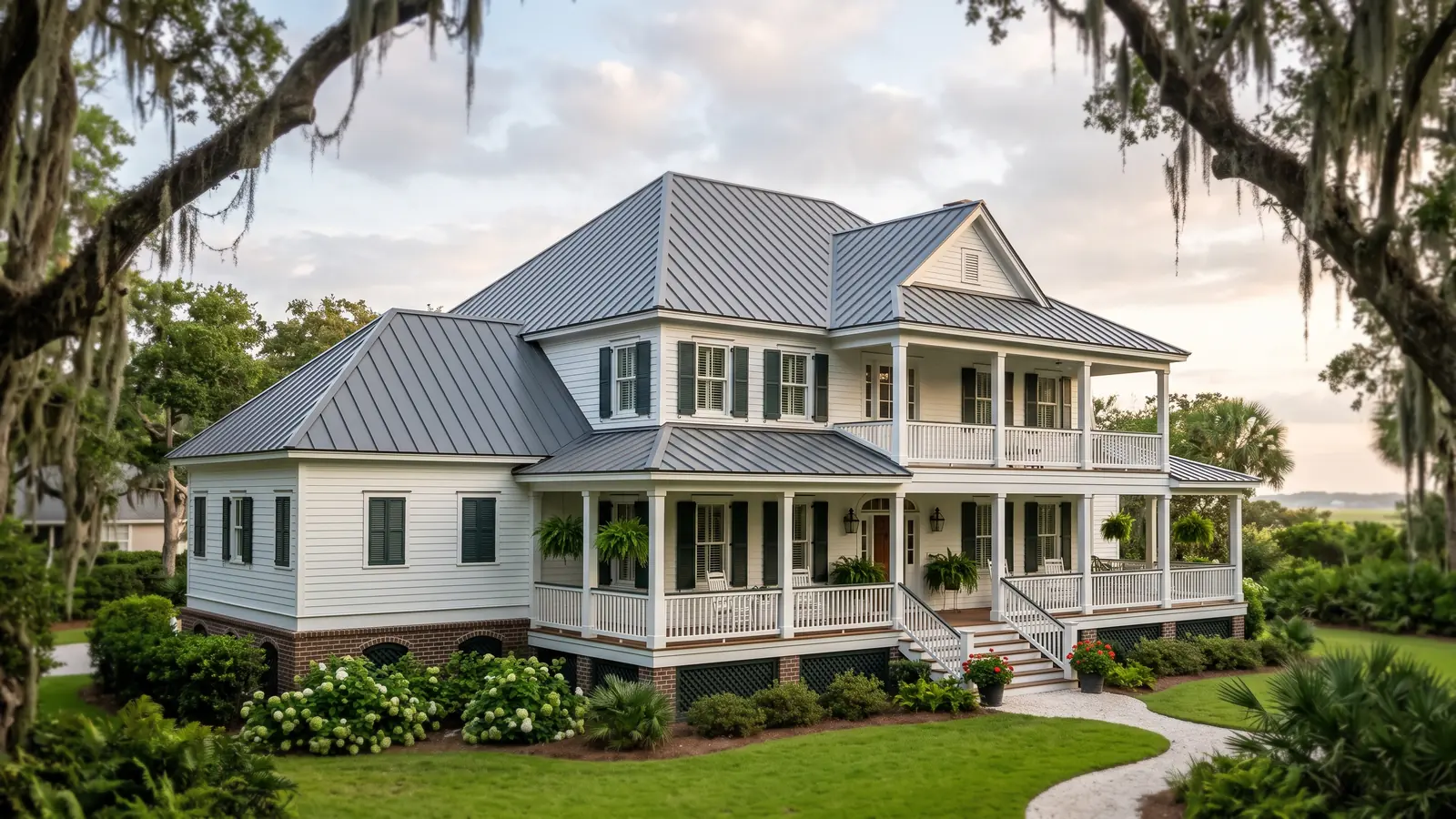
5V Crimp Roofing Options for Charleston Homes
A 5V panel is a flat sheet pressed with five V-shaped crimps. The crimps at the edges overlap the next panel, and the screws go through the face. The choices below come down to the finish and the building.
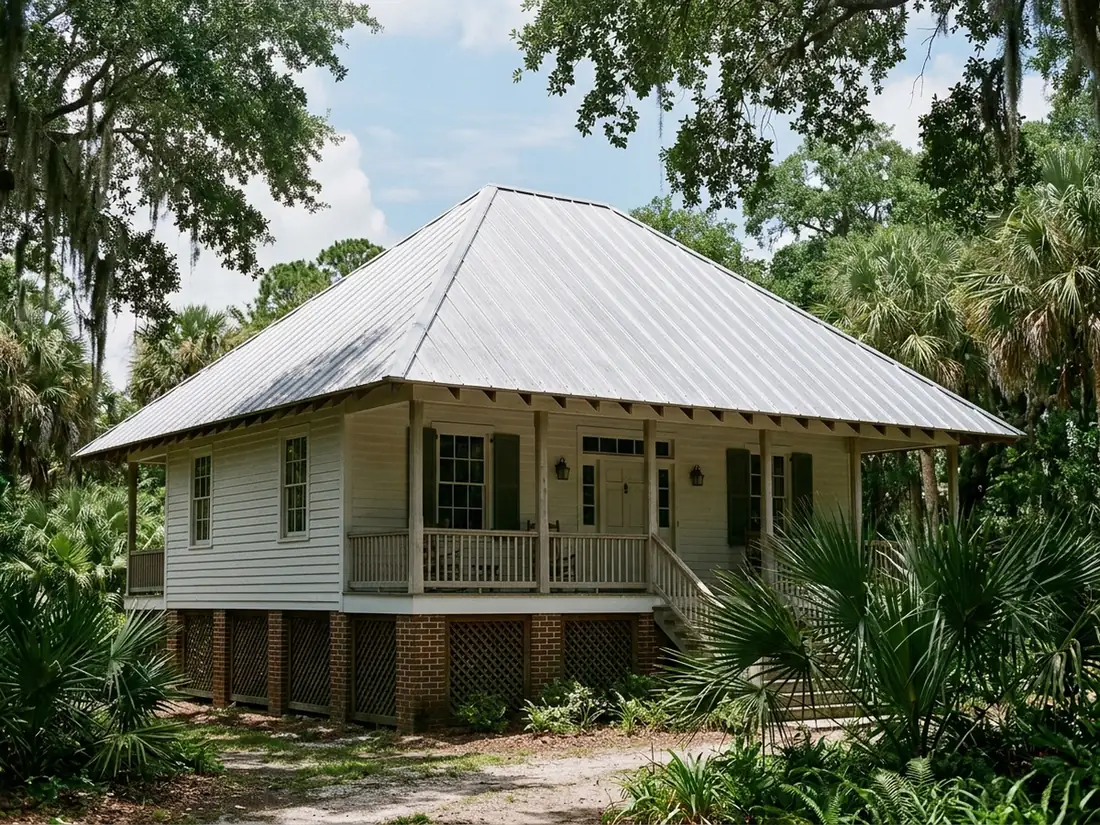
Unpainted Galvalume 5V Crimp
Bare Galvalume is the classic silver 5V roof. Without paint, the metallic coating does all the work, so check what weight of coating the panel carries. One maker's data sheet lists a heavier AZ55 coating for its unpainted Galvalume 5V and AZ50 for its painted panels. The code minimums for steel panels are on our standing seam metal roof page.
Bare Galvalume suits a plain cottage or a working building. It also makes scratches and cut edges easy to spot on an inspection, since there is no paint hiding them.
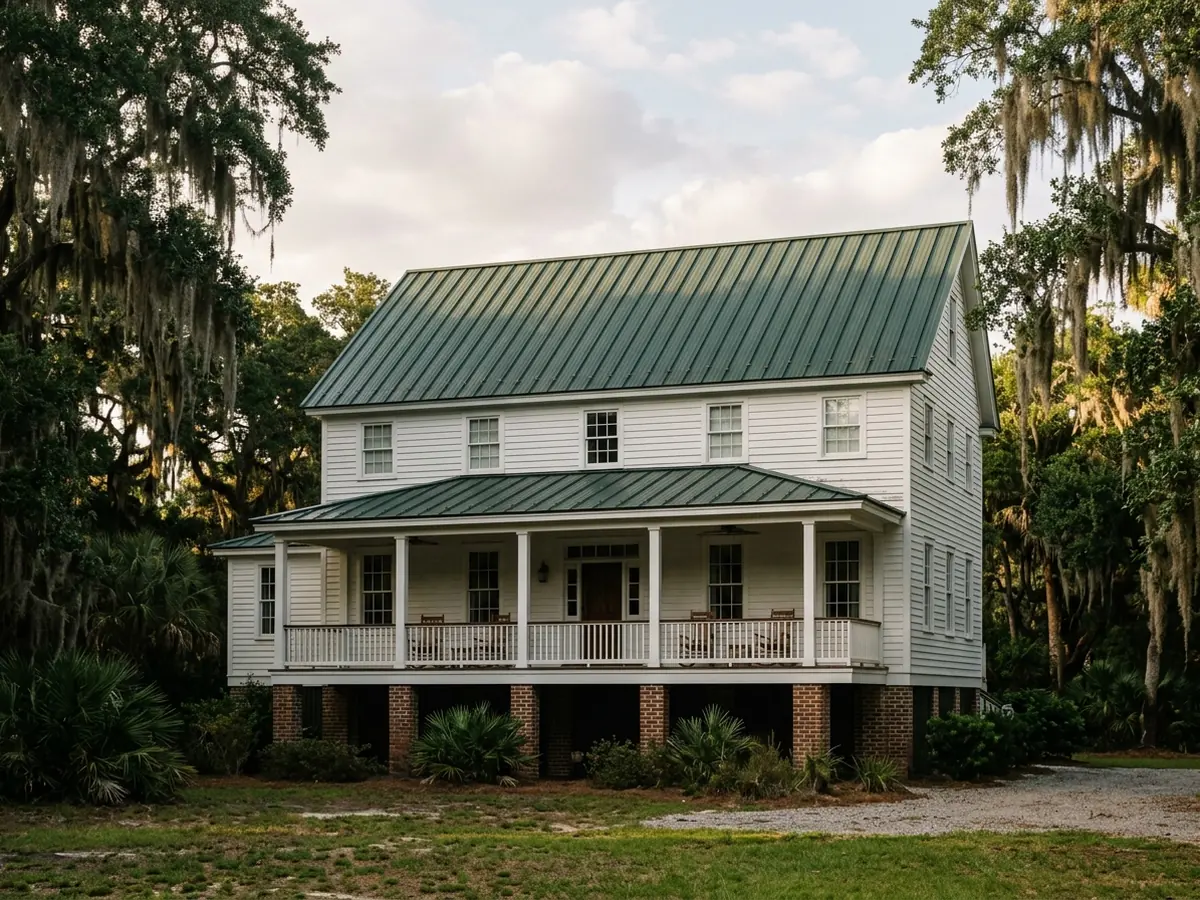
Painted 5V Crimp
Painted 5V lets the roof match shutters or trim, and the paint sits on top of the same Galvalume or galvanized coating. The type of paint matters as much as the color. One maker sells its 5V in its own paint system or as acrylic-coated Galvalume, while it offers PVDF paint on some of its other panels. What PVDF means, and why it matters in salt air, is covered on aluminum roofing.
Ask for the finish name and its chalk and fade terms in writing before comparing two 5V quotes. Two panels in the same color can carry very different paint.
5V Crimp on Raised Cottages and Farmhouses
On a raised cottage or farmhouse, 5V is often the original roof type, and replacing like with like keeps the house looking right. These roofs are usually steep and simple, often a plain gable or hip, which suits a lapped panel well. Panels can be ordered long enough that most house slopes need no end lap at all.
Ask the roofer to check the deck before any panels go on. 5V is screwed into wood, so soft or delaminated plywood under an old roof means screws that won't hold. Whether the panels can go over the existing shingles instead of a tear-off depends on how many layers are already there; the code rule is on metal roof over shingles.
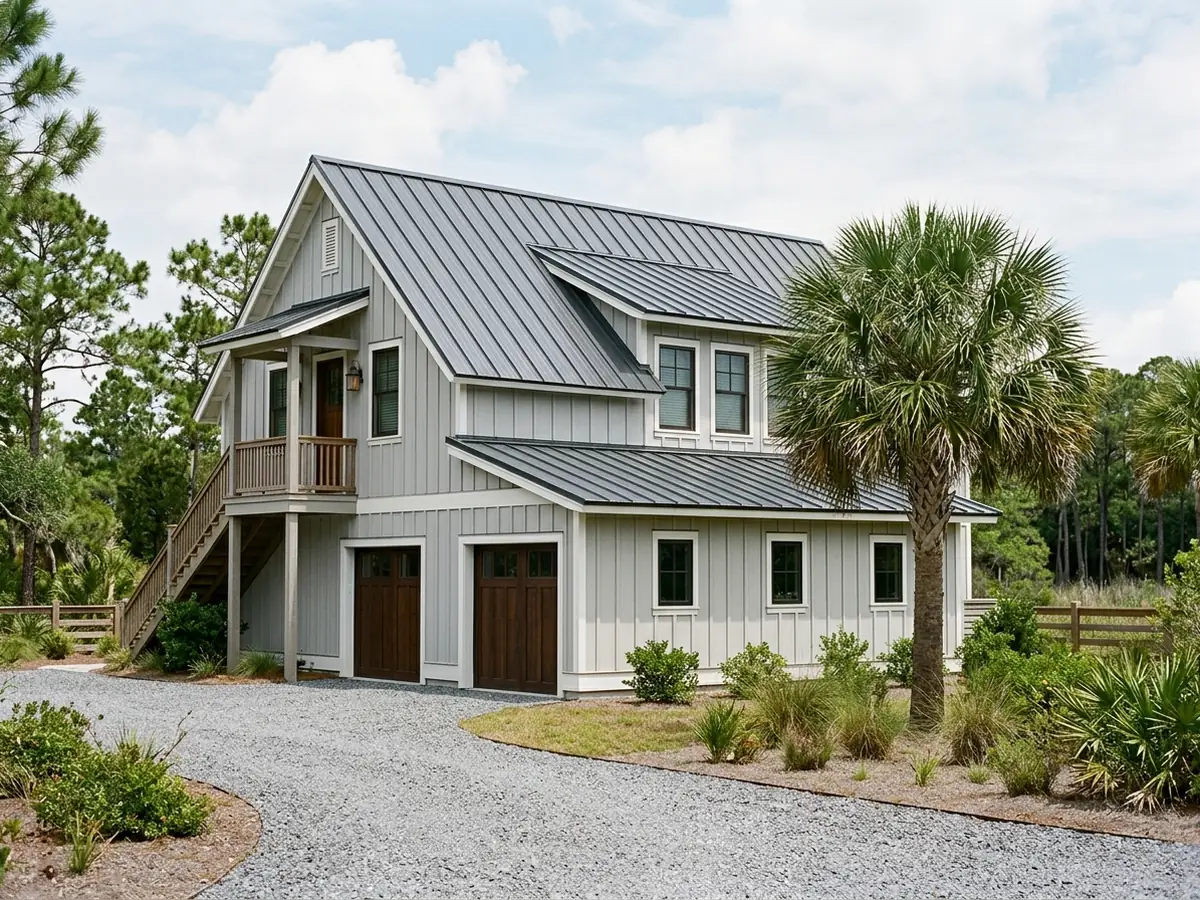
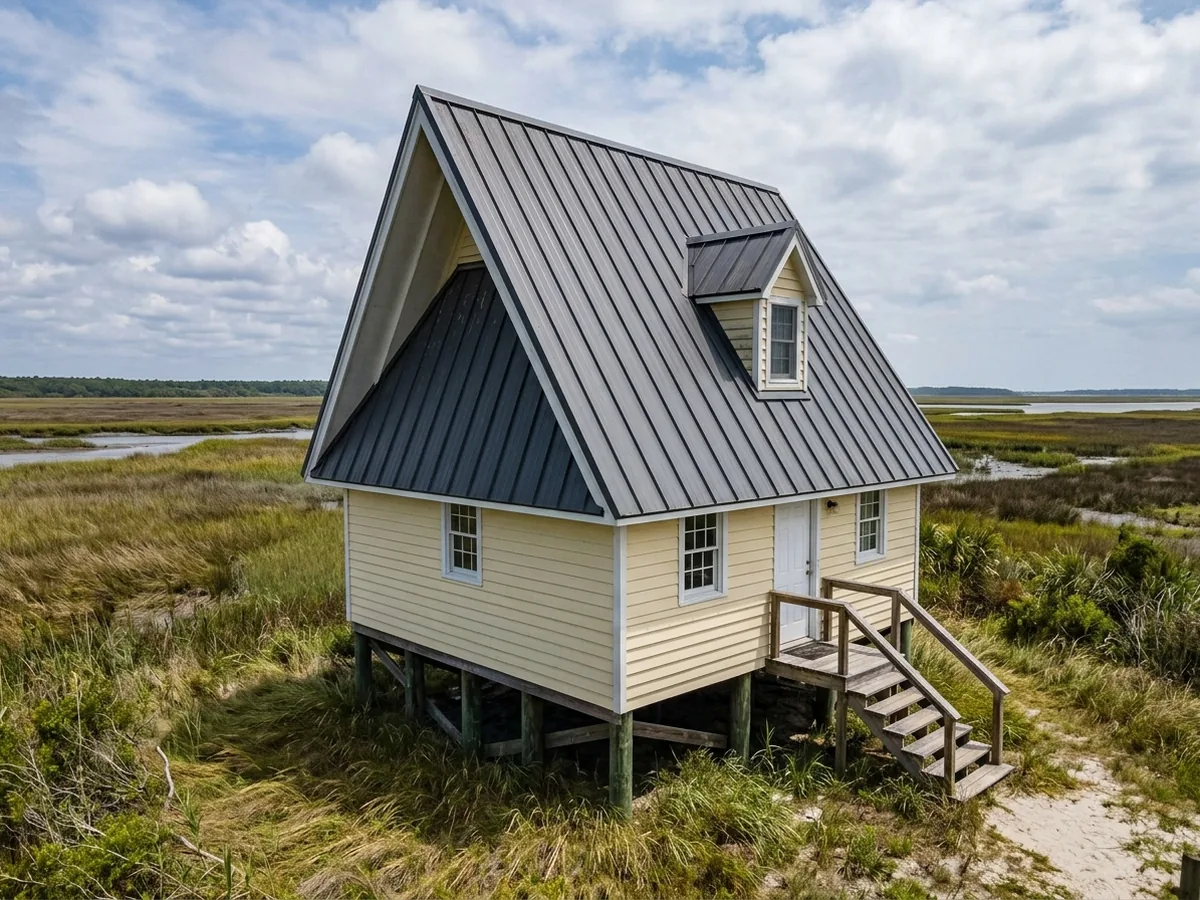
5V Crimp on Additions and Outbuildings
A rear addition, a garage apartment or a garden studio is often roofed in 5V to match or echo the main house. Smaller buildings are where 5V's lower price shows most, because standing seam's clips and seaming add cost on short runs. For a barn, carport or dock house built over open framing, see metal shed and barn roofs instead, since those usually take a different panel.
Why Charleston homeowners call Charleston Metal Roofing Co.
- Estimate at no cost to you
- Metal, seam and fasteners named on paper
- Your request goes to a single local roofer
- Referral is free; you pay only the roofer you hire
5V Crimp Panel Details Worth Checking
One manufacturer's technical sheet for 5V crimp gives a useful picture of what the panel is and what it needs:
Coverage
Each panel covers 24 inches of roof width, with a rib about half an inch tall.Deck
It goes over a solid wood deck (plywood) with at least 30-pound felt underneath, not over open purlins.Slope
The maker's minimum is 3:12. The code's slope rules for lapped panels, with and without sealant, are on metal porch roofs.Length
Panels are made from 5 feet up to 45 feet recommended.Thickness
That maker lists 26 gauge as standard, with 29 and 24 gauge as options. Ask which one is in your quote.
These numbers come from one product, so treat them as a guide to the questions, not a spec for every 5V panel. Ask for the data sheet of the exact panel in your quote and check it against this list. The same sheet lists the panel's UL 580 uplift and UL 2218 impact results for specific tested constructions. A rating only applies when the roof is built the way it was tested.
5V Crimp Screws and Laps
Every 5V roof is held down by screws through the face, and each one is a hole with a rubber washer sealing it. That is the trade-off for the lower price. Two things from the same manufacturer's sheet are worth knowing before work starts. Overdriven screws distort the panel, so a crew that cranks every screw down as hard as it will go is bending the panel around each hole. Screws should reach at least half an inch past the inside face of the deck or support they go into.
The sheet also shows separate screw patterns for the ends of a panel and for the field in between. So the number of screws on a 5V roof is a wind question as much as a panel question, and Charleston's design wind speed (see hurricane metal roofs) is the starting point. Ask the estimate to name the screw pattern, not only the panel.
Near salt water, the screw metal decides how soon the roof needs attention. Which fasteners hold up and which need replacing early is covered on metal roof repair. Ask what the screws and washers are made of, and whether the trim screws match.
5V Crimp or Standing Seam?
5V costs less than standing seam per square foot, and a national cost guide's ranges for both are on metal roof replacement. Standing seam hides its fasteners under the seams and can go on much flatter roofs; 5V puts every screw in the weather and needs a steeper slope.
Our take: 5V makes the most sense on steep, simple roofs where the traditional look suits the house and the budget matters. On a low-slope porch, a complicated roof with many valleys, or a house right on the marsh, standing seam or aluminum earns its higher price.
See Standing Seam Metal Roofs in Charleston. See Corrugated Metal Roofing in Charleston.