
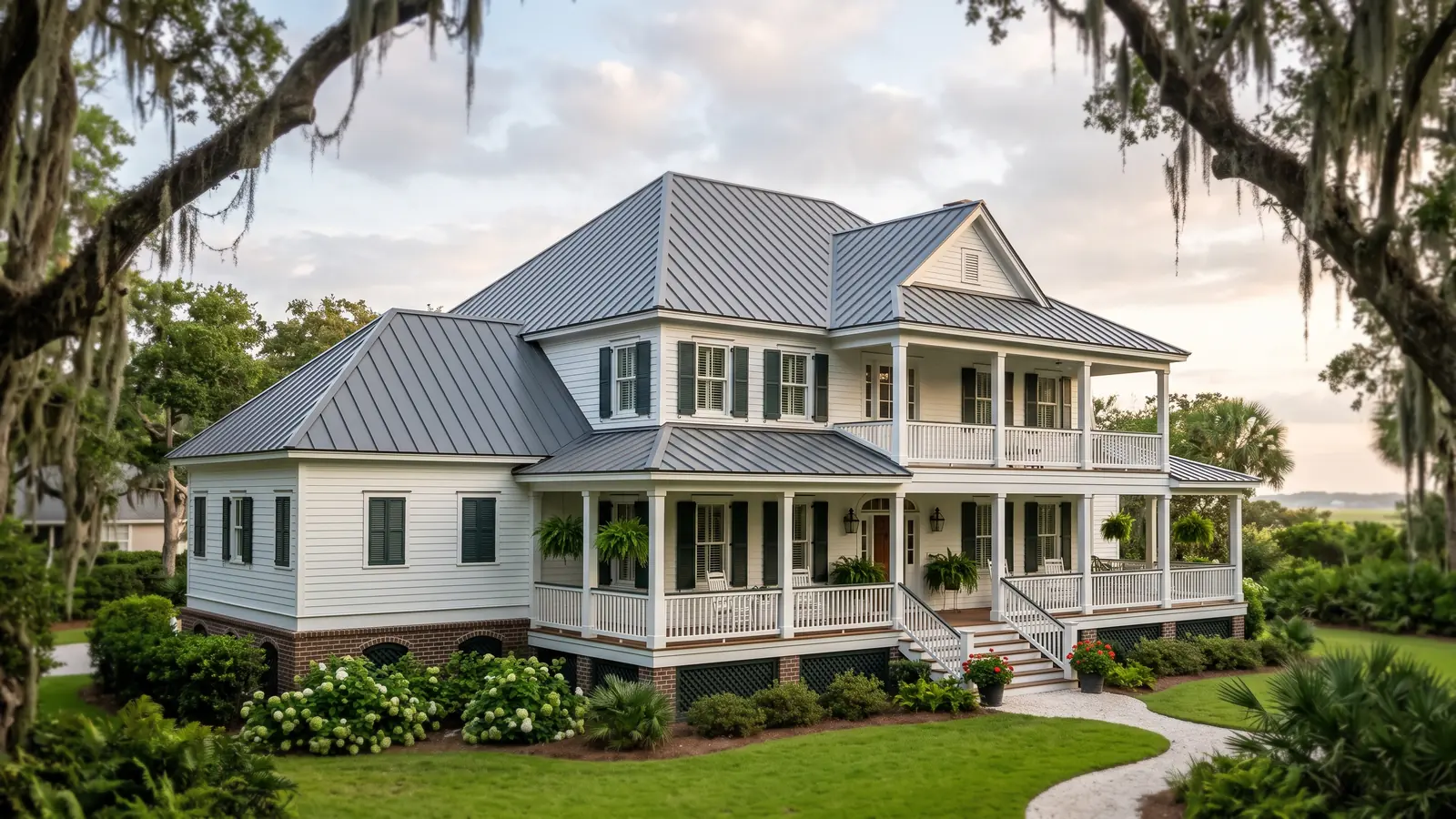
Solar Panel Mounts by Metal Roof Type
How the array attaches depends on the panel profile under it. Each type below changes what gets drilled, what gets sealed and who should be on the roof.
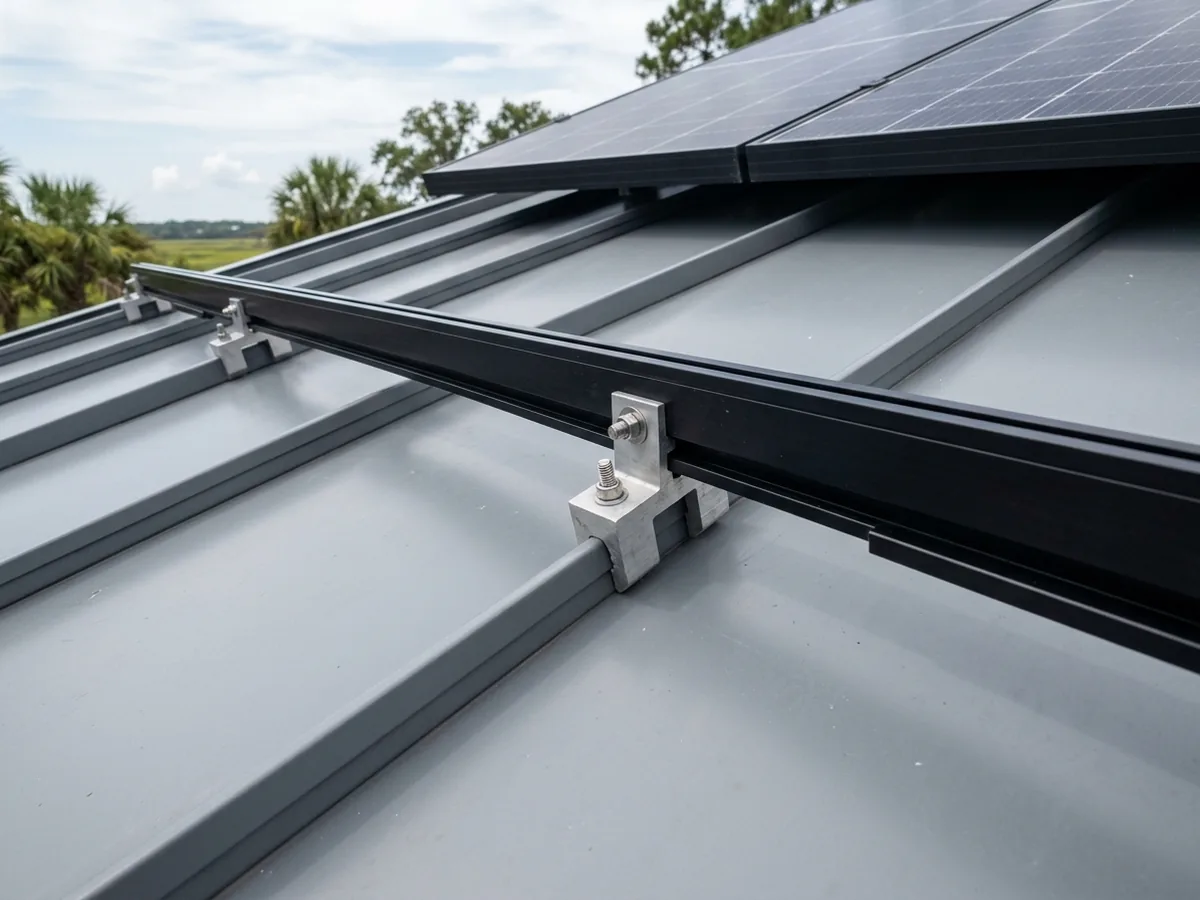
Seam Clamps on Standing Seam
Standing seam is the easiest roof to put solar on. The racking sits on clamps that grip the raised seam, so nothing goes through the panel. An article on solar-ready roofs in The Construction Specifier describes these non-penetrating clamps anchoring the modules and other rooftop equipment, and notes that some clamps are listed for electrical continuity under UL 2703, the standard the 2021 IRC names for mounting systems. Seam shapes vary from one panel to the next, so ask which clamp is rated for your seam and what spacing the clamp and roof makers call for.
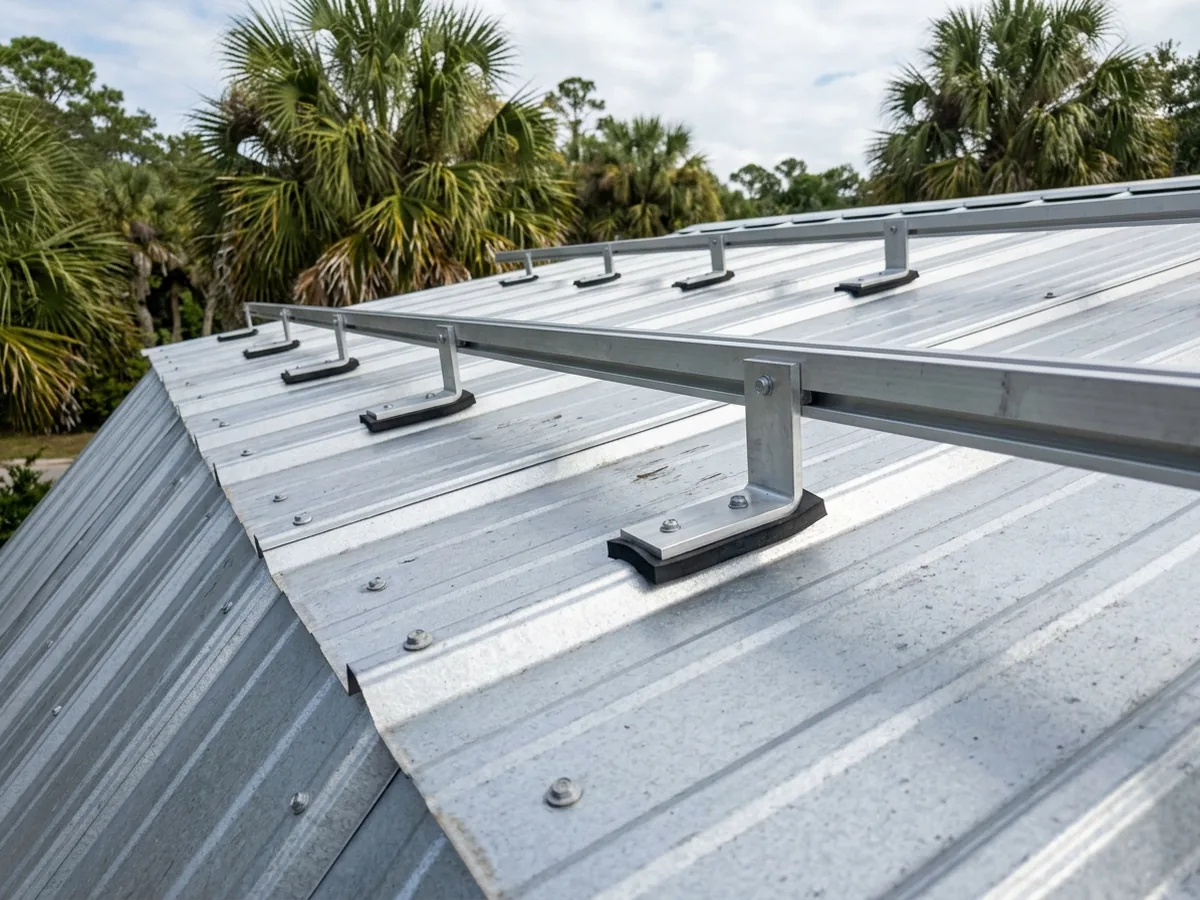
Brackets on 5V Crimp and Exposed-Fastener Panels
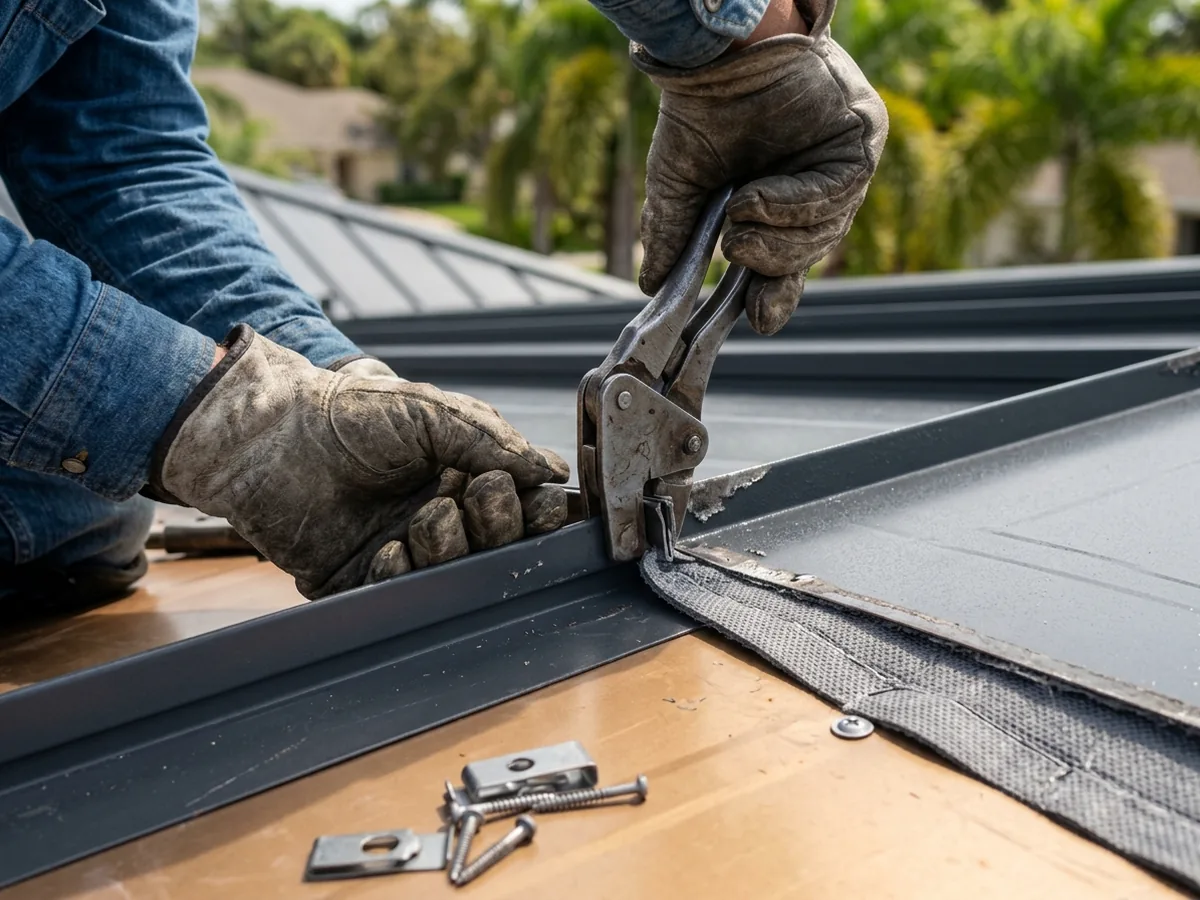
Exposed-fastener roofs (5V crimp, R-panel, corrugated) have no seam to clamp. The mounts are brackets screwed through the panel ribs into the purlins or rafters below, each with a gasket or butyl pad. The code says roof penetrations for solar must be flashed and sealed like any other. Brackets on the high rib keep the hole above the water running in the flat of the panel, and the screws and gaskets should be the same quality as the roof's own fasteners. For those roofs, see Corrugated Metal Roofing and 5V Crimp Metal Roofing.
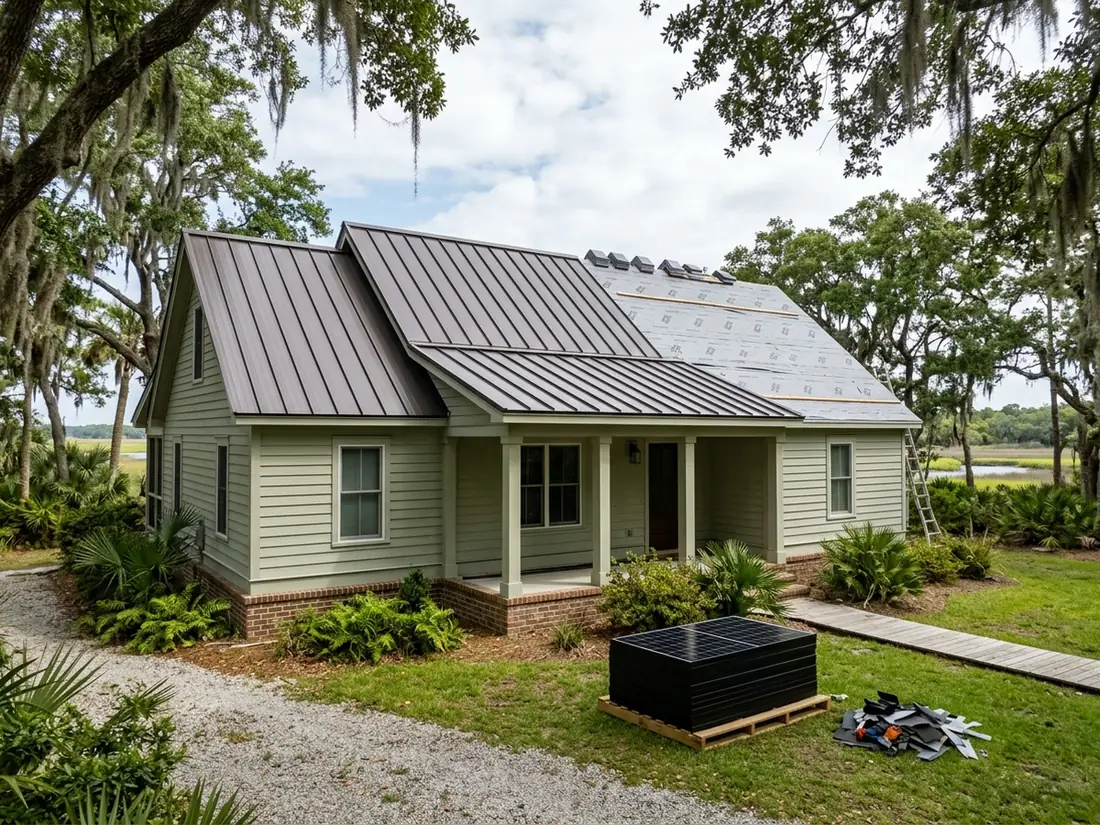
Re-Roofing With Metal Before Solar
A solar module's warranted life is about 25 years, and modules often last past three decades, according to the same Construction Specifier article. If the roof under them wears out first, the array has to be taken down, stored and put back to replace it, and that is paid labor on top of the roof. So a roof with a few years left is usually replaced before the array goes on, not after. For the shingle-to-metal job itself, see Metal Roof Replacement.
Solar on Garages, Carports and Low-Slope Porches
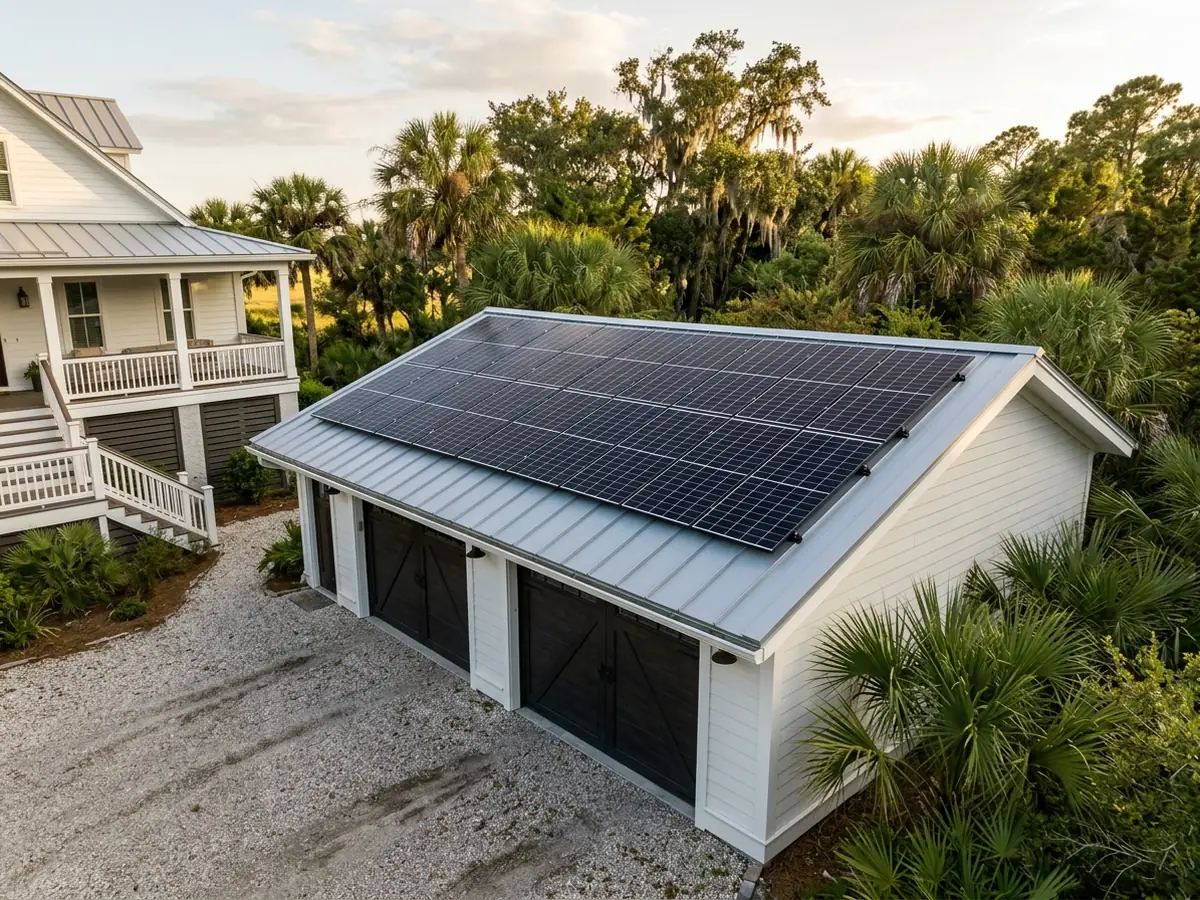
A detached garage, carport or workshop with a metal roof is often the easier place for an array. The 2021 IRC's firefighter pathway rules don't apply to detached nonhabitable structures, or to roofs of 2:12 or flatter, so a low metal roof can usually be covered edge to edge. Check that the structure can carry the load first; the code requires the roof under a solar array to be designed for it.
Why Charleston homeowners call Charleston Metal Roofing Co.
- Estimate at no cost to you
- Metal, seam and fasteners named on paper
- Your request goes to a single local roofer
- Referral is free; you pay only the roofer you hire
Solar Panel Layout on a Metal Roof: Pathways and Ridge Setbacks
On a house roof steeper than 2:12, the 2021 IRC keeps room for firefighters. There have to be at least two pathways 36 inches wide, on separate roof planes, from the lowest edge to the ridge, and one of them on the street or driveway side. The array also stays back from the ridge: 18 inches on both sides when it covers no more than a third of the roof's plan area, 36 inches when it covers more. Modules also can't sit on the part of a roof below an emergency escape window, and a 36-inch path has to reach that window.
On a metal roof these rules decide where the clamps or brackets go, so the roofer and the solar designer need the same layout. Ask whether the clamp positions match the seam spacing and the setback lines before anything is fastened.
The smaller parts of a solar job need homes too. Conduit runs, junction boxes and combiner boxes on a standing seam roof can sit on the same seam clamps as the modules, so they don't need their own holes, according to the Construction Specifier article. On an exposed-fastener roof each of those supports is another sealed penetration. Ask for the conduit route to be on the roof plan, and for any hole through the panels to be flashed by the roofer rather than sealed by whoever happens to be up there.
Order matters on the day, too. On a new roof, the panels, trim and flashing go on first and the roofer finishes before the solar crew arrives, so nobody is walking on fresh seams with racking in hand. Ask for a walk-through of the finished roof before the array covers it.
Solar Panel Costs, Tax Credits and the Roof in 2026
The federal 30% Residential Clean Energy Credit is gone for new systems: the IRS says it is not available for property placed in service after December 31, 2025. South Carolina's own credit is still in the state code. Section 12-6-3587 allows 25% of the cost of buying and installing a solar energy system, capped at $3,500 a year per facility or half the tax owed, with unused credit carried forward up to ten years.
The state definition of "system" leaves out structural elements of the building, and names roofs. So the cost of a new metal roof under the array doesn't count toward the credit. Ask for the roof and the solar work to be priced as separate lines, which makes the tax paperwork cleaner and lets you compare the roof bid with other roof bids.
Solar Panels in Hurricane Wind
The 2021 IRC requires rooftop arrays and their supports to resist the same component and cladding wind loads as the roof itself, adjusted for height and exposure. On a metal roof that comes down to clamp or bracket spacing, and to how well the roof panels are attached underneath, since the array can only hold as well as the panel it is fixed to. Charleston's design wind speed and the uplift tests for metal roofs are covered on Hurricane Metal Roofs. Ask for the attachment layout to be engineered for that wind speed, with tighter spacing near edges and corners.
See Standing Seam Metal Roofs in Charleston. See Hurricane Metal Roofs in Charleston.